Whether a Dremel Suits a Mastiff’s Nails
Taking care of a Mastiff's nails can feel like wrestling a small bear, especially when you're trying to use traditional clippers on those thick, formidable claws. Many Mastiff owners dread nail trimming day, not just because of the sheer strength of their dog, but also the legitimate fear of cutting too far back and hurting their beloved giant. This guide will explore whether a Dremel rotary tool is a suitable and stress-reducing alternative for managing your Mastiff's nails, offering practical advice and step-by-step instructions to make the process smoother for both of you.
The Unique Challenges of Mastiff Nail Care
Let's be real: nail care for a Mastiff isn't like trimming a tiny Chihuahua's tips. Everything about a Mastiff is on a grand scale, and their nails are no exception. They're often thick, incredibly hard, and those quicks can be notoriously difficult to see, especially on dark nails. This combination creates a perfect storm of anxiety for many owners, and rightly so.
Why Traditional Clippers Often Fail
When you're dealing with a dog that can easily outweigh a grown person, simply holding them still enough to get a good angle with clippers is a Herculean task. Traditional clippers, even heavy-duty ones, can struggle to make a clean cut through a Mastiff's dense nails, sometimes crushing or splintering them rather than slicing cleanly. This can be painful for your dog and make future attempts even more challenging. The abrupt "snap" of clippers can also be jarring, leading to a negative association with nail trims. Many Mastiffs develop a deep-seated aversion to clippers after a bad experience, perhaps a quicking incident, which is unfortunately common due to the difficulty of seeing the quick. This isn't stubbornness, it's genuine fear. They may plant their enormous weight and simply refuse to cooperate, making the task nearly impossible for one person. It's not uncommon for owners to resort to vet visits just for nail trims, adding another layer of cost and stress. Whether a Mastiff Tolerates Nail Trims is a very real concern, and often, they don't.
The Importance of Short Nails for a Mastiff
Beyond aesthetics, keeping a Mastiff's nails short is absolutely critical for their health and comfort. Long nails force their toes upwards, putting unnatural pressure on their paw joints and altering their natural gait. Imagine walking around with shoes that are too small, constantly pushing your toes back – that's what long nails do to a Mastiff. This constant, subtle misalignment can contribute to joint pain, exacerbate existing conditions like hip or elbow dysplasia, and even lead to arthritis over time. A Mastiff's massive weight already puts immense strain on their joints, and long nails only add to that burden.
Furthermore, overly long nails can reduce a Mastiff's traction, especially on slippery surfaces like hardwood or tile. A dog trying to grip with splayed toes and long nails is like trying to run on ice with skis that are too long. They slip, they slide, and they can injure themselves. This is particularly problematic for a breed prone to joint issues, as a simple slip can lead to a serious sprain or worse. A Mastiff needs every advantage for stable footing, especially as they age. Think about A Mastiff Lying Two Hundred Pounds on One Elbow All Day – that kind of pressure needs optimal support from all four paws. If their nails are clicking on the floor, they're too long.
Understanding Rotary Tools for Nail Trimming
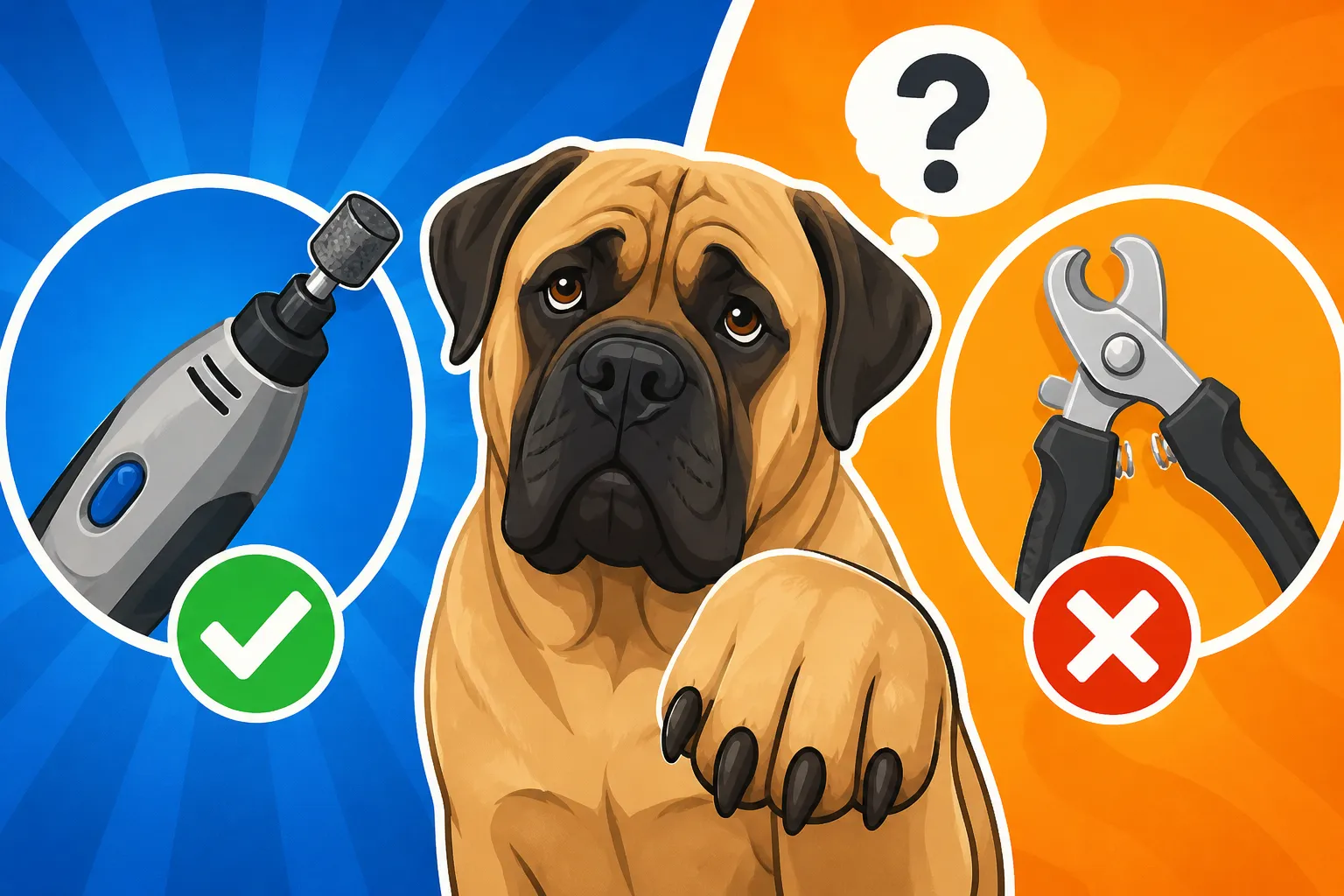
If traditional clippers have you and your Mastiff in a standoff, a rotary tool, often generically called a Dremel (after a popular brand), might be the game-changer you need. It approaches nail care from an entirely different angle, literally.
What is a Dremel or Rotary Tool?
A Dremel, or any similar rotary tool designed for pet nails, is essentially a handheld device with a motor that spins an abrasive head. Instead of cutting the nail, it grinds it down slowly and smoothly. These tools typically come with various attachments, such as sanding drums or grinding stones, that abrade the nail material. The principle is similar to a nail file, but motorized and far more efficient, especially for tough, thick nails like those of a Mastiff. They operate on batteries or plug into an outlet, offering different levels of power and speed. Many pet-specific grinders are designed to be quieter and vibrate less than industrial Dremel tools, but the general concept is the same.
Pros of Using a Dremel for Mastiff Nails
There are several compelling reasons why a Dremel can be a superior option for your Mastiff:
- Precision and Safety: The biggest advantage is the ability to remove small layers of nail at a time. This significantly reduces the risk of cutting into the quick, which is the sensitive part of the nail containing blood vessels and nerves. For Mastiffs with dark nails where the quick is invisible, this precision is invaluable. You can gradually grind, watching for the small dark dot (the beginning of the quick) that appears as you get closer, allowing you to stop just in time.
- Smooth Edges: Unlike clippers that can leave sharp or jagged edges, a Dremel creates a smooth, rounded finish. This is not only more comfortable for your dog but also prevents snagging on carpets or furniture, and reduces the chance of scratches when your Mastiff inevitably leans on you.
- Less Stress for Some Dogs: While the noise and vibration can be an initial hurdle, many dogs find the grinding sensation less alarming than the sudden, sharp squeeze and clip of traditional shears. There's no crushing pressure, just a gentle wearing away of material. Over time, with positive reinforcement, many Mastiffs become quite tolerant, even relaxed, during Dremel sessions.
- Effectiveness on Thick Nails: Those rock-hard Mastiff nails that dull clippers or cause them to struggle are no match for a good rotary grinder. The abrasive surface steadily wears them down, making quick work of even the toughest claws.
- Encourages Quick Receding: Regular, consistent dremeling, especially if you can get just to the edge of the quick without hitting it, can actually encourage the quick to recede over time. This allows you to gradually shorten the nails more than you ever could with clippers, ultimately leading to healthier, shorter nails.
Cons and Potential Difficulties
It's not all smooth sailing, however. Using a Dremel comes with its own set of challenges:
- Noise and Vibration: This is often the biggest hurdle. The buzzing sound and subtle vibration can be very intimidating for sensitive dogs, especially a Mastiff who might already be wary of having their paws handled. Some Dremels are louder than others, so choosing a quieter model (often marketed as "pet nail grinders") can help.
- Heat Generation: Friction creates heat. If you hold the Dremel on a nail for too long, it can get uncomfortably hot and even burn your dog's quick. You must use short bursts and touch the nail frequently to check for warmth.
- Time Commitment: Initially, Dremeling can take longer than a quick clip, especially during the desensitization phase and if your dog has very long nails that need significant reduction. You might only get a nail or two done in a session at first.
- Learning Curve: Both you and your Mastiff will need to learn. You'll need to develop the right technique for holding the tool, managing the paw, and observing the quick. Your dog needs to learn to tolerate the sound and sensation. Patience is key.
- Power and Battery Life: If you opt for a cordless model, ensure it has enough power for a Mastiff's thick nails and a decent battery life to get through all four paws, or be prepared to recharge or switch batteries.
- For extreme cases where a Mastiff is completely uncooperative or has severely overgrown nails causing pain, professional veterinary assistance might be needed, potentially involving sedation. This is where you might encounter the costs associated with How Much Anesthetic a Two Hundred Pound Mastiff Takes.
Getting Your Mastiff Comfortable with a Dremel
The success of using a Dremel hinges almost entirely on your Mastiff's comfort level. Rushing this process will only create a negative association and make future attempts harder. Remember, The Sensitivity Nobody Expects in a Two Hundred Pound Mastiff means they can be surprisingly delicate in their reactions to perceived threats or discomfort.
Desensitization and Positive Reinforcement
This is a marathon, not a sprint. Start slowly, and make every interaction positive.
- Introduce the Tool Off: Let your Mastiff see and sniff the Dremel while it's turned off. Place it near them during meal times or while giving treats. Don't push it; let them explore it at their own pace. Reward any calm curiosity.
- Introduce the Sound: Turn the Dremel on briefly in another room, then closer, gradually decreasing the distance over several days or weeks. Each time it's on, even for a second, immediately follow with a high-value treat and praise. The goal is for them to associate the sound with good things.
- Introduce the Vibration: Once they tolerate the sound, turn the Dremel on and touch it to your fingernail or finger first, showing them it's not scary. Then, touch it briefly to a non-sensitive part of their body, like their shoulder or flank, with the motor running. Again, immediate treats and praise.
- Touch the Paw, No Grind: With the Dremel on, gently hold their paw and touch the side of a nail, not the tip, for just a split second. Treat immediately. Repeat this, gradually moving to touching the tip of one nail.
- First Grind: When they are completely comfortable with the above steps, you can attempt the first actual grind. Choose one nail, preferably one that's easy to access. Turn the Dremel on, touch it to the very tip of the nail for less than a second, pull it away, and provide an instant, lavish reward. That's it for the first session.
- Build Gradually: Over subsequent sessions, slowly increase the duration of grinding per nail and the number of nails you tackle. Always end on a positive note, even if you only do one nail. If your Mastiff shows any signs of stress, back off to an earlier step. This is about building trust and comfort.
Essential Equipment and Setup
Having the right tools and a well-planned setup will significantly improve your chances of success.
- The Right Dremel: Look for a variable-speed pet nail grinder. Variable speed allows you to start slower and increase as needed. Cordless models offer more maneuverability, but check battery life and power. Brands like Dremel itself offer pet-specific versions, and other companies like Casfuy and LuckyTail are popular choices for pet owners and can often be found on online retailers like Chewy or Amazon. Make sure it's robust enough for Mastiff nails.
- Grinding Bits: Most Dremels come with sanding drums. These wear down, so have replacements on hand. Some prefer diamond grinding bits as they last longer and can be very effective.
- Safety Glasses: For you! Tiny nail dust can fly, and protecting your eyes is paramount.
- Styptic Powder: Always have this on hand. Even with a Dremel, accidents happen, or you might misjudge the quick. Products like Kwik Stop are essential for quickly staunching any bleeding.
- High-Value Treats: Think cheese, cooked meat, peanut butter (xylitol-free!), or whatever your Mastiff absolutely goes wild for. These are your most important tools for positive reinforcement.
- A Comfortable, Non-Slip Surface: Your Mastiff needs to feel secure. A mat or rug on the floor is ideal, preventing slips and allowing them to relax. Trying to Dremel on bare hardwood, where your Mastiff already struggles for Traction: Why a Mastiff Cannot Live on Bare Hardwood, will only add to their stress. A comfortable bed or even a large dog bed can also work, as long as it's stable.
- Good Lighting: You need to clearly see the nail and, if possible, the quick. A headlamp can be incredibly useful.
A Step-by-Step Guide to Dremeling Mastiff Nails
Once your Mastiff is reasonably comfortable with the Dremel, you can start establishing a routine. Remember, consistency and patience are your best friends here.
Prepping for the Grind
Before you even touch a nail, get everything ready:
- Gather Supplies: Dremel (charged/plugged in), extra grinding bits, styptic powder, high-value treats, towel for drool/cleanup, and your safety glasses. Make sure everything is within arm's reach.
- Calm Your Mastiff: Choose a time when your Mastiff is naturally relaxed, perhaps after a short, gentle walk or a cuddle session. Avoid times when they're overly energetic or stressed. A calm Mastiff is a cooperative Mastiff.
- Positioning: Find a comfortable position for both of you. Many owners find kneeling or sitting on the floor with their Mastiff lying down or standing comfortably to be effective. For some, having the Mastiff on a sturdy grooming table (if they tolerate it and you have one rated for their weight) can help with ergonomics, but many Mastiffs are too large for this. Often, you'll need to work with them on the floor. Remember that lifting a Mastiff, especially into a car or onto a high surface, can be incredibly difficult, as explored in Whether a Mastiff Can Be Lifted at All. So plan for ground-level work.
The Grinding Technique
This is where the magic happens, but it requires careful attention to detail:
- Hold the Paw Firmly: Gently but securely hold one of your Mastiff's paws. Use your thumb to push back the fur around the nail you're working on to get a clear view. Isolate the nail you're grinding by holding the toe firmly.
- Short Bursts, Avoid Heat: Turn the Dremel on (start at a lower speed) and touch it to the tip of the nail for only 1-2 seconds at a time. Pull it away, check the nail's temperature with your finger, and praise/treat your dog. Repeat. The friction generates heat, and you want to prevent any discomfort. You can also alternate between nails to allow each one to cool.
- Grind at an Angle: Don't just grind straight across. Aim to shape the nail so it's short but also mimics the natural angle of the paw. Grind from the bottom of the nail up towards the top, creating a smooth, rounded edge. This helps the quick recede over time and allows the paw to sit correctly. Focus on rounding the sides and top, then shortening the tip.
- Watch for the Quick: For light-colored nails, you might see the pink quick. For dark nails, watch for a small, dark, shiny dot that appears in the center of the nail as you grind closer to the quick. This is your cue to stop. If you see it, move to the next nail. If you accidentally nick the quick, don't panic. Apply styptic powder firmly to stop the bleeding. Remain calm, reassure your dog, and continue if they are comfortable, or take a break.
- Front vs. Back Paws: Often, the nails on the front paws grow faster and get more wear than the back. You might find you need to Dremel the front paws more frequently or take more off each time.
- Reward and Progress: After each nail or every few nails, give a treat and praise. Keep the sessions positive and relatively short, especially in the beginning. Remember, the goal isn't to get all nails perfect in one go, but to make steady, comfortable progress. Many find that online retailers like Chewy and Amazon are great places to stock up on all your Dremel accessories, from replacement bands to styptic powder.
Post-Dremel Care and Routine
Once the grinding is done, your work isn't quite finished.
- Final Rewards: Lavishly praise and reward your Mastiff. Make the end of the session a truly enjoyable experience with extra treats or a favorite toy.
- Check for Irritation: Briefly examine your Mastiff's paws for any redness or irritation, especially if they have sensitive skin or any skin folds around the toes.
- Establish a Schedule: Consistency is crucial for keeping those Mastiff nails in check and for ensuring the quick recedes. For most Mastiffs, Dremeling every 1-2 weeks is ideal. This routine will keep the nails short enough so they don't click on the floor, which is a good indicator of proper length. Regularly trimming will also make each session quicker and less stressful. Keeping a Mastiff's Nails Short Enough for Traction is a continuous commitment, but a Dremel can make it a manageable one.
| Feature | Traditional Clippers | Dremel / Rotary Tool |
|---|---|---|
| Method | Cuts/snips the nail | Grinds down layers of the nail |
| Nail Type Suitability | Best for thinner, softer nails | Excellent for thick, hard nails |
| Quick Visibility | High risk of quicking if quick is hidden | Lower risk, allows visual monitoring as you go |
| Edge Finish | Can leave sharp or jagged edges | Smooth, rounded finish |
| Dog's Sensation | Sudden "snap" and pressure | Vibrating, grinding sensation |
| Noise Level | Relatively quiet (the snap) | Buzzing sound (can be intimidating) |
| Heat Generation | None | Potential for heat buildup if used improperly |
| Time Investment | Can be faster if dog cooperates | Often takes longer initially, then faster with practice and routine |
| Skill Level | Requires confidence to avoid quicking | Requires practice for proper angle and heat management |
| Quick Receding | Less effective | Encourages quick to recede over time |
Using a Dremel for your Mastiff's nails can truly transform a dreaded chore into a manageable part of their care routine. It requires patience, consistent positive reinforcement, and a bit of a learning curve, but the benefits for your Mastiff's comfort, joint health, and your own peace of mind are immeasurable. With the right approach, you can ensure your giant companion has healthy, perfectly trimmed paws, supporting their impressive bulk throughout their years.
Disclaimer
This article is for general informational purposes only and does not constitute professional advice. Laws, prices and regulations vary by location and change over time. Consult a qualified professional for guidance on your specific situation.