How High a Mastiff’s Bowl Should Sit
One of the most common worries among Mastiff owners is bloat, a life-threatening condition that can strike with terrifying speed. In an effort to mitigate this risk, many of us have been taught for years that an elevated food and water bowl is a must-have. But does raising your giant's dinner truly help, or could it inadvertently make things worse? This comprehensive guide will delve into the long-held beliefs, the evolving science, and the practical considerations for choosing the optimal feeding height for your beloved Mastiff, ensuring their comfort and well-being at every meal.
The Long-Standing Belief: Elevated Bowls and Bloat Prevention
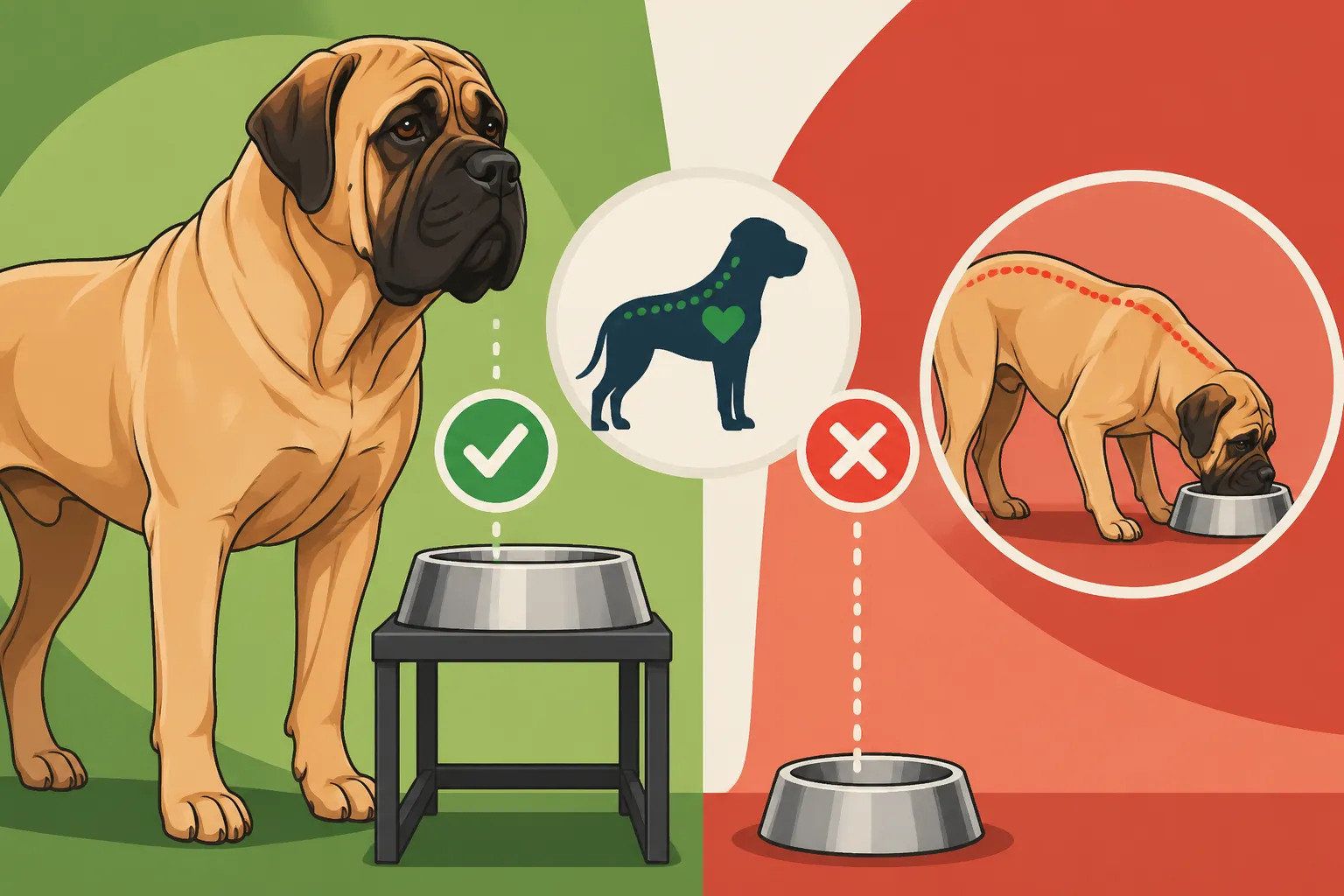
For decades, the conventional wisdom in the giant breed community, including among Mastiff owners, was that elevated feeding bowls were a crucial tool in preventing Gastric Dilatation-Volvulus (GDV), more commonly known as bloat. The theory was simple enough: if a dog didn't have to bend down to eat, they would ingest less air, and the food would travel more smoothly to the stomach, thus reducing the risk of the stomach distending and twisting.
The Rationale Behind Elevated Feeding
Imagine your Mastiff, with its impressive stature and deep chest, bending its neck and torso almost to the floor to reach its kibble. It looks a bit awkward, doesn't it? Proponents of elevated bowls believed this posture could lead to a faster eating pace, gulping air along with food. The thought was that by raising the bowl, a more natural, upright eating position would encourage slower consumption, less air intake, and better digestion. It felt intuitively right, a common-sense approach to a serious concern. Many breeders and experienced owners swore by it, seeing it as one piece of the puzzle in managing the unique health challenges of a giant breed. We're all looking for any edge we can get to protect our gentle giants from Bloat in the Deepest Chest of Any Breed: the Mastiff.
Beyond bloat, there was also the consideration of overall comfort, especially for older dogs or those with joint issues. Bending down repeatedly might put strain on the neck, shoulders, and spine. For a dog that could weigh upwards of 200 pounds, minimizing any physical discomfort during daily activities seemed like a compassionate choice. So, the practice became widespread, and elevated feeders became a staple in many Mastiff households.
The Weight of Tradition in Mastiff Care
It’s easy to understand why this belief took such strong root. When you're dealing with a breed prone to serious health conditions, you cling to any advice that promises prevention. The idea of preventing bloat, a condition that can be fatal in a matter of hours, made elevated feeders almost a non-negotiable item for many. Owners shared anecdotes of their dogs eating more comfortably, seeming to digest better, and generally looking less strained. Without concrete scientific data readily available or widely disseminated to the general public, anecdotal evidence and the wisdom passed down through generations of Mastiff owners became the guide. It's a natural inclination to follow established practices, especially when they come from a place of genuine concern for our dogs' well-being. This desire to do everything right for our Mastiffs shapes many of our care decisions, from diet to exercise to how we manage their feeding environment.
Challenging the Conventional Wisdom: What Science Says About Elevated Bowls
While the traditional advice regarding elevated bowls made logical sense for many years, the scientific community began to investigate this theory more rigorously. The results of these studies have presented a more nuanced, and in some cases, a contradictory picture, leaving many Mastiff owners wondering what the best approach truly is. It's a prime example of how dog care, like human health, is an evolving field.
The Purdue Study and Its Findings
The most frequently cited research on the topic of bloat and elevated bowls comes from a large-scale study conducted at Purdue University in the late 1990s. This study, which looked at numerous risk factors for bloat in giant and large breed dogs, actually found something quite surprising, and for many, unsettling. Their findings suggested that, for certain large and giant breeds, elevated feeding might actually be associated with an increased risk of GDV, rather than a decreased one.
The study hypothesized that elevated bowls could encourage dogs to eat faster, despite the more "comfortable" posture. When dogs eat faster, they may still gulp more air, increasing the chance of gastric distension. The faster ingestion of food and air might overwhelm the stomach's natural ability to process contents, leading to a higher risk of the stomach flipping. This was a significant shift from the long-held belief and naturally sparked considerable debate within the canine health community and among owners. It meant that a practice many had adopted with the best intentions might not be serving its intended purpose. Understanding What Triggers Bloat in a Mastiff is complex, and this study added another layer to that complexity.
Interpreting the Research for Your Mastiff
It's important to understand that while the Purdue study found an association, it didn't definitively prove a direct causation for every single dog or breed. Canine research is incredibly complex, and there are many contributing factors to bloat, including genetics, temperament, diet, stress, and exercise habits around meal times. So, what does this mean for your Mastiff?
Firstly, it means that simply elevating the bowl isn't a magic bullet for bloat prevention, and it could potentially be a risk factor for some. This doesn't mean you should panic and immediately lower your Mastiff's bowl if they are currently using an elevated one without issues. The critical takeaway is to observe your individual dog. Does your Mastiff wolf down their food, regardless of bowl height? Do they seem to gulp air? A Whether a Slow Feeder Reduces a Mastiff's Bloat Risk might be a more impactful intervention if your dog is a fast eater, regardless of the bowl's position. Many owners find effective slow feeders on Chewy or Amazon.
Secondly, the science prompts us to consider other, perhaps more impactful, bloat prevention strategies. These include feeding multiple smaller meals throughout the day instead of one large one, ensuring a calm environment during meals, avoiding vigorous exercise or stress immediately before and after eating, and providing plenty of fresh water. Making sure your Mastiff has How Long a Mastiff Must Rest After a Meal is often more critical than the bowl's exact height.
Ultimately, the science challenges us to move beyond blanket statements and consider a more personalized approach to our Mastiffs' care, always weighing potential risks and benefits.
Beyond Bloat: Other Considerations for Your Mastiff's Feeding Posture
While bloat prevention is a paramount concern for Mastiff owners, the height of a food bowl impacts more than just gastrointestinal health. We need to think about their musculoskeletal system, their comfort, and even practical matters like cleanliness. After all, a Mastiff’s body is a magnificent, weighty structure that deserves careful consideration in all aspects of its daily life.
Comfort for Joints and Neck Strain
Imagine having to bend over drastically multiple times a day to eat and drink, especially if you had a stiff neck or achy knees. For many Mastiffs, especially as they get older, perpetually lowering their head to floor level can become uncomfortable. This is particularly true for those gentle giants starting to experience age-related joint issues like Arthritis in a Mastiff at Four or hip and elbow dysplasia. Raising the bowl to a comfortable height can reduce strain on the neck, shoulders, and forelegs, allowing them to maintain a more natural and relaxed posture while eating. This isn't about bloat; it's about making mealtime a more pleasant, less taxing experience for a dog with a massive frame. Just as we might adjust our own chairs or workstations for ergonomic benefit, we can do the same for our dogs. As Mastiffs age, we're keenly aware of Why a Mastiff Is Old at Five, and prioritizing their comfort becomes even more important.
Consider a Mastiff recovering from an injury or surgery. Having their food and water at a more accessible height can make a huge difference in their recovery and overall comfort. It minimizes unnecessary movement and bending, allowing them to focus on healing. For dogs on a long-term regimen of Joint Supplements for a Mastiff, alleviating physical strain during daily activities like eating is a logical extension of their care plan.
Digestion and Swallowing Ease
While the bloat connection with elevated bowls is debated, some veterinarians and owners still advocate for elevated bowls based on improved swallowing and digestion in general, especially for dogs with certain conditions. For dogs that suffer from megaesophagus (a condition where the esophagus dilates and loses its ability to move food to the stomach), elevated or even vertical feeding is crucial to allow gravity to assist food transit. While megaesophagus is not typically considered a common Mastiff ailment, the principle of gravitational assistance can still play a role for some individual dogs.
A more upright eating posture can also prevent food or water from being aspirated, which is a concern for dogs that eat too quickly or have certain neurological conditions affecting their swallow reflex. For the average, healthy Mastiff, the impact might be minimal, but it’s another layer of consideration for owners looking to optimize every aspect of their dog’s well-being.
The Drool and Mess Factor
Let’s be honest, Mastiffs are champions of drool. The physics of Mastiff drool, especially after a drink, are legendary. The Staining a Mastiff's Drool Leaves on walls and floors is a common complaint. While not directly a health concern, an elevated bowl can sometimes help manage the mess. When a Mastiff bends down, its massive jowls can drag in the water, only to be flung outwards with the inevitable head shake. With an elevated bowl, some owners report less splashing and less "dribble" collecting on the floor directly around the bowl. It might not eliminate drool entirely – that's a losing battle with a Mastiff – but it can sometimes contain it slightly better, making cleanup a little less arduous. This might seem like a minor point, but for those of us living with a drool-tastic Mastiff, every little bit helps.
Finding the Right Height for Your Gentle Giant
So, with conflicting information and various factors at play, how do you actually decide on the optimal bowl height for your Mastiff? The key is personalization and careful observation, rather than blindly following a single piece of advice. What works best for one Mastiff might not be ideal for another, even within the same household.
Measuring for Optimal Comfort
The best way to determine a starting point for bowl height is to measure your Mastiff. Here’s a simple method:
- Stand naturally: Have your Mastiff stand in a comfortable, natural position. Avoid posing them or forcing any posture.
- Measure to the top of the shoulder: Using a measuring tape, measure from the floor to the top of your Mastiff’s shoulder (the withers).
- Adjust downwards: A good rule of thumb is to have the bowl positioned at a height that allows your Mastiff to eat with their head in a relatively neutral, natural position, without excessive bending or stretching downwards. This is often around the middle of their chest, or just slightly below their shoulder height. The top of the bowl should typically be at or slightly below your dog's elbow joint when they are standing. The goal is to let them eat without needing to crane their neck excessively up or down.
Once you have a measurement, you can look for elevated feeders that are adjustable or come in various fixed heights. Remember, this is a starting point. Observe your dog as they eat. Do they seem comfortable? Are they gulping air? Are they struggling? These observations are crucial.
Adjustable Feeders vs. Fixed Heights
When it comes to elevated feeders, you'll generally find two types: those with fixed heights and those that are adjustable.
- Fixed Height Feeders: These are usually sturdy, often made of wood, metal, or heavy plastic. They come in specific sizes, so you need to be sure the chosen height matches your Mastiff's needs. The downside is if your puppy grows or your senior dog's needs change, you might need a new unit. However, they are often very stable, which is a big plus for a powerful dog like a Mastiff who might accidentally knock over a flimsier stand. You can find solid options on Chewy or even through specialty Mastiff supply stores.
- Adjustable Height Feeders: These are fantastic for growing puppies or for households with multiple dogs of different sizes, or if you're experimenting to find the perfect height. They usually feature legs that extend or bowls that can be placed at various levels on a frame. This flexibility is invaluable. However, ensure that any adjustable feeder you choose is incredibly robust and stable. A wobbly feeder will not only be annoying but could also be a safety hazard for a large, enthusiastic eater. Brands like OurPets and K&H often offer good adjustable options, readily available on platforms like Amazon.
Observing Your Mastiff's Eating Habits
Ultimately, your Mastiff will tell you what works best. Here's what to watch for:
- Eating Speed: If your Mastiff still inhales their food at an alarming rate, regardless of bowl height, consider integrating a slow feeder insert or a specially designed slow-feed bowl. Which Slow Feeder Survives a Mastiff is a common question, as these dogs can be quite powerful. Many of these are available through retailers like Chewy.
- Posture: Does your Mastiff look relaxed while eating, or are they still craning their neck, hunching their back, or stretching awkwardly? Adjust the height until they seem comfortable.
- Gulping Air: Some dogs are just noisy eaters. But if you notice excessive gulping and audible sucking in of air, especially when eating from an elevated bowl, it might be worth trying a lower height or a slow feeder, and ensuring the food isn't too dry or crumbly.
- Regurgitation: While rare, if your dog is frequently regurgitating food, especially immediately after eating, consult your vet. Bowl height might be a factor they suggest exploring, alongside other diagnostic tests.
Remember that feeding routine plays a huge part too. Providing How Much an Adult Mastiff Eats by Weight Each Day in two to three smaller meals can also help, regardless of bowl height.
Choosing the Right Elevated Feeder for Your Gentle Giant
Once you've decided that an elevated feeder is right for your Mastiff, or you're ready to experiment with different heights, selecting the actual feeder requires a few practical considerations. These aren't just aesthetic choices; they impact durability, hygiene, and your dog's safety and comfort.
Material and Durability
Mastiffs are big, strong dogs, and they need equipment that can stand up to their size and enthusiasm.
- Stainless Steel Bowls: These are almost always the best choice for the bowls themselves. They are hygienic, easy to clean, resistant to bacteria, and incredibly durable. Avoid plastic bowls, which can harbor bacteria, scratch easily, and might even cause skin irritation on your Mastiff's sensitive chin and jowls.
- Stand Materials:
- Wood: Wooden stands can be aesthetically pleasing and sturdy, but ensure they are sealed properly to resist water damage from slobber and spills. They can be heavy and difficult to move, which adds to stability.
- Metal (Wrought Iron/Steel): Metal frames are often the most durable and easy to clean. Look for powder-coated finishes to prevent rust. They offer excellent stability.
- Heavy-Duty Plastic: Some high-quality, thick plastics can be very durable, but ensure they have enough weight and a wide base to prevent tipping. Lighter plastic stands are generally not suitable for a Mastiff.
Always prioritize stability. A Mastiff pushing against a wobbly feeder during mealtime could tip it over, leading to spilled food, a startled dog, or even injury if the stand is heavy enough.
Design and Stability
Beyond material, the design of the feeder is critical for a Mastiff.
- Wide Base: Look for feeders with a wide, stable base that makes it difficult to tip over. Square or rectangular bases are generally more stable than slender, leggy designs.
- Non-Slip Feet: Rubberized or non-slip feet on the bottom of the stand will prevent it from sliding across your floor as your Mastiff eats, which is important for both stability and protecting your floors.
- Bowl Retention: The bowls should fit snugly into the stand so they don't rattle or pop out easily when your Mastiff is eating. Some stands have rubber rings or grips to hold the bowls firmly in place.
- Easy to Clean: Mastiffs are messy eaters. Jowls, drool, and sometimes half-chewed food can end up on the stand. Choose a design that's easy to wipe down and doesn't have too many intricate nooks and crannies where food debris can accumulate.
What to Avoid
- Lightweight, flimsy stands: These are a recipe for disaster with a Mastiff. They'll get knocked over constantly.
- Plastic bowls: As mentioned, prone to scratches and bacteria.
- Overly complicated designs: More parts mean more places for dirt and drool to hide, making cleaning harder.
- Uncoated metal: Can rust, especially if frequently exposed to water and drool.
When shopping, whether online at a place like Amazon, or a dedicated pet supply store, always check reviews from other large or giant breed owners to gauge a product's true durability and stability. Investing in a good quality, well-designed elevated feeder is an investment in your Mastiff's comfort and your peace of mind.
| Bowl Type | Pros | Cons | Best For |
|---|---|---|---|
| Floor Bowl | Natural eating position (if not too much bending); easy to access | Potential for neck/joint strain in older/arthritic Mastiffs; more mess around bowl; potential for faster eating/air gulping | Young, healthy Mastiffs with good posture and slower eating habits; owners who prefer simple setup. |
| Elevated Bowl | Reduces neck/joint strain; can be tidier with less floor mess; easier for dogs with certain medical conditions | Potential (per Purdue study) increased bloat risk if not carefully managed; can encourage faster eating; takes up more space | Older Mastiffs, those with arthritis or mobility issues; dogs who eat at a moderate pace; owners prioritizing ergonomics. |
| Slow Feeder | Significantly reduces eating speed; promotes better digestion | Some designs may not be durable enough for a Mastiff; might not be elevated (consider combining); requires more effort to clean | Fast-eating Mastiffs, regardless of bowl height; dogs prone to bloat due to rapid ingestion. |
This article is for general informational purposes only and does not constitute professional advice. Laws, prices and regulations vary by location and change over time. Consult a qualified professional for guidance on your specific situation.