Keeping a Mastiff’s Nails Short Enough for Traction
One of the most insidious problems Mastiff owners face, often without even realizing the full extent of the damage it's doing, is overgrown nails. It's not just about aesthetics; those long nails can severely impact your gentle giant's mobility, comfort, and long-term joint health. This guide will walk you through why keeping your Mastiff's nails short is absolutely critical, how to recognize when they're too long, the unique challenges of trimming such a massive dog, and effective strategies to keep those paws healthy and happy.
The Critical Importance of Short Nails for a Mastiff
For a breed as massive as the Mastiff, weighing in at hundreds of pounds, every single aspect of their physical structure contributes to their overall well-being. Their nails are no exception. Far from being a mere cosmetic concern, overgrown nails can initiate a cascade of problems that impact everything from their gait to their comfort, and ultimately, their joint health. We're talking about a dog with immense weight, and that weight needs to be distributed correctly across their paws to prevent undue stress on their joints.
The Impact of Long Nails on Joint Health
Imagine trying to walk comfortably while wearing shoes that are too small, forcing your toes back into an unnatural position. That's essentially what long nails do to a Mastiff's paws. When a Mastiff's nails are allowed to grow too long, they push the toes upwards and backwards, altering the natural angle of the foot. This seemingly small change actually shifts the weight distribution across the entire paw, putting excessive strain on the toe joints. Over time, this abnormal pressure can lead to painful arthritis in the toes and other compensatory issues further up the leg. It's a subtle, constant stress that chips away at their comfort and mobility.
This constant strain isn't just localized to the paws. Because the entire limb is a connected system, changes at the paw level reverberate through the carpus (wrist), elbow, and shoulder joints. A Mastiff already carries immense bulk, and their joints are under significant stress even when perfectly aligned. Adding the incorrect biomechanics caused by long nails exacerbates this pressure, potentially worsening or accelerating conditions like elbow dysplasia or arthritis. For a breed already prone to joint issues, proactive nail care becomes a critical preventative measure in maintaining their quality of life. Owners should consider how something as seemingly minor as nail length can contribute to larger health concerns, especially as their Mastiff ages and becomes more susceptible to joint pain. You might also want to read about A Mastiff Lying Two Hundred Pounds on One Elbow All Day as it pertains to joint health.
How Long Nails Compromise a Mastiff's Balance and Traction
Picture your Mastiff trying to navigate a slick kitchen floor with nails that are too long. Instead of their paw pads making full, firm contact with the ground, the nails hit first, acting like tiny skates. This significantly reduces their ability to grip surfaces, making them unsteady and prone to slipping and falling. For a dog weighing upwards of 150-200 pounds, a slip isn't just a minor inconvenience; it can lead to serious injuries, from muscle strains and sprains to ligament tears and even fractures. Think about the impact of such a heavy dog falling awkwardly.
Beyond the risk of acute injury, the chronic instability caused by long nails can erode a Mastiff's confidence. They might become hesitant to move quickly, navigate stairs, or even walk on certain surfaces. This reluctance to move can then lead to a more sedentary lifestyle, which in turn contributes to weight gain and muscle atrophy, creating a vicious cycle that further compromises their joint health and overall fitness. Ensuring optimal traction is foundational to a Mastiff's active and confident life, making proper nail length a non-negotiable part of their routine care. This issue is very much tied to Traction: Why a Mastiff Cannot Live on Bare Hardwood and What Bare Floors Do to a Growing Mastiff.
Preventing Pain and Injury from Overgrown Nails
Aside from the long-term joint implications, overgrown nails are a direct source of immediate pain and acute injury for a Mastiff. Nails that are excessively long are far more susceptible to snagging on carpets, furniture, or rough terrain. A Mastiff's sheer weight and momentum can easily lead to a torn nail when this happens, which is an incredibly painful injury. Torn nails often bleed profusely, expose sensitive nerve endings, and are ripe for bacterial infection, sometimes requiring veterinary intervention, pain medication, and even sedation for proper care.
Furthermore, severely overgrown nails can start to curl under and grow into the paw pads, a condition that is excruciatingly painful and can lead to deep infections. This is particularly common in the dewclaws, which don't make contact with the ground and therefore don't wear down naturally. Regular inspection and trimming prevent these agonizing scenarios, ensuring your Mastiff remains comfortable and pain-free. It's a small task that prevents a lot of suffering and expense down the line.
Recognizing When Your Mastiff's Nails Are Too Long
It can be surprisingly easy to overlook nail length, especially if your Mastiff is mostly on soft surfaces or you're simply used to seeing them a certain way. However, being attuned to the subtle cues, both auditory and visual, can help you intervene before problems become severe. For a giant breed, early detection and consistent care are key to preventing discomfort and serious health issues.
The "Clicking" Sound and Other Auditory Cues
One of the easiest and most reliable indicators that your Mastiff's nails are too long is the sound they make when walking on hard surfaces. If you hear a distinct "click-clack" as your Mastiff moves across tile, hardwood, or concrete, their nails are definitely too long. In an ideal scenario, a Mastiff's nails should be short enough that they don't make any sound when walking on these surfaces. The pads of their feet, not their nails, should be making primary contact with the ground.
This clicking sound isn't just an annoyance; it's a physical symptom of poor foot posture. Each click means the nail is hitting the ground before the paw pad can properly engage, forcing the foot into an unnatural position and putting unnecessary stress on the joints. Pay close attention, especially when they are walking calmly through the house. If you're hearing that tell-tale tap, it's time to get those clippers or grinder out. For more on this, you might find Whether a Mastiff's Nails Wear Down Naturally insightful.
Visual Cues and the Ground Contact Rule
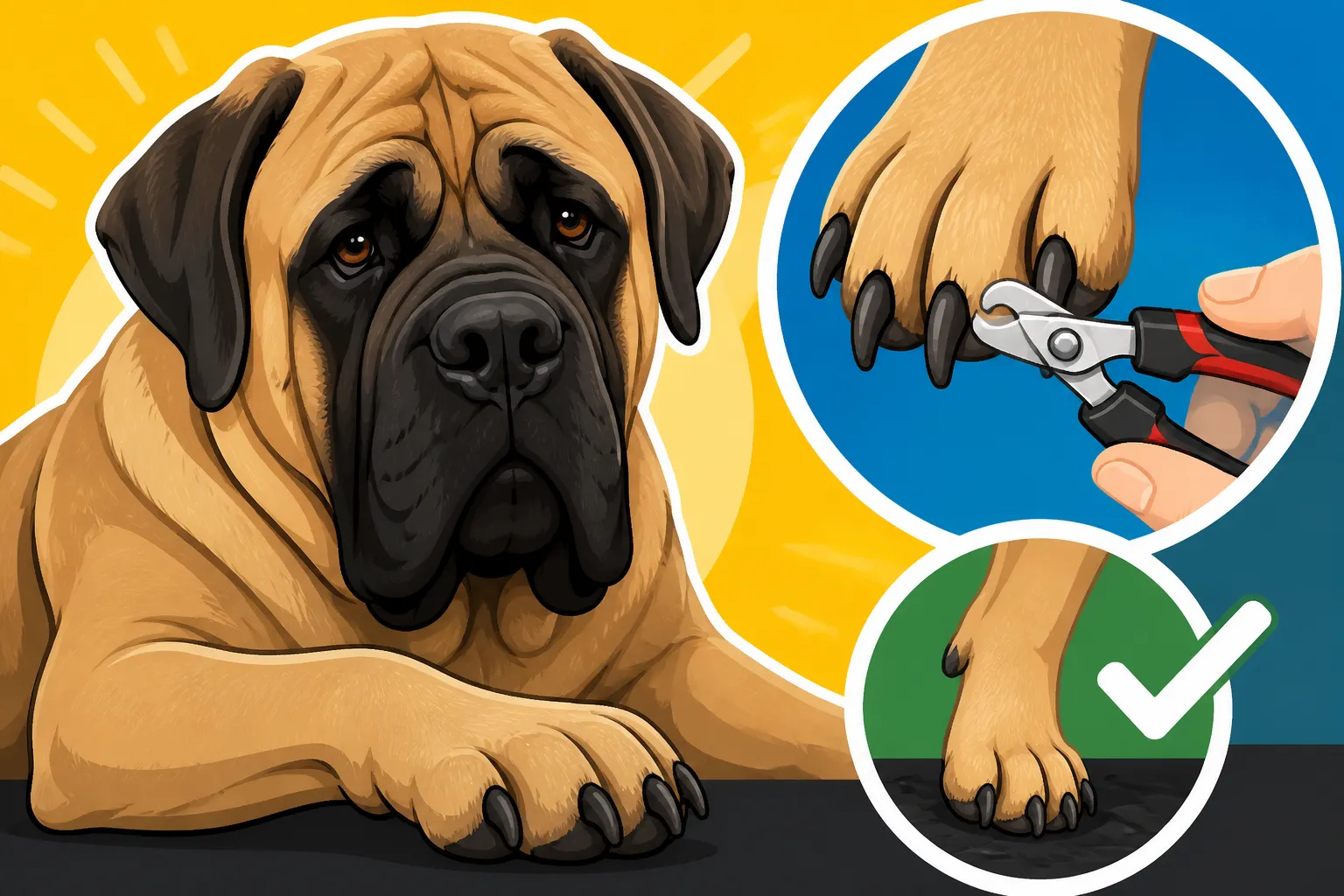
Beyond the sound, visual inspection is crucial. The cardinal rule for nail length is simple: when your Mastiff is standing on a flat, level surface, their nails should not touch the ground. You should be able to slide a piece of paper underneath the tip of each nail. If the nails are visibly contacting the floor, or worse, pushing their toes upwards, they are too long. Observe their stance from the side and the front. Are their toes splayed? Are the nails curving significantly? These are all visual red flags.
Another visual cue is the condition of their paw pads. If the nails are consistently hitting the ground, the paw pads may not develop the full, tough cushioning they need, or they might become more susceptible to injury or infection because they aren't making proper contact. Regular checks of their paws are essential for early identification. This isn't just a quick glance; it requires a focused examination of each paw and nail to truly gauge their length and health.
Behavioral Signs of Discomfort
Sometimes, a Mastiff won't outwardly show pain, but their behavior might change in subtle ways due to long nails. If you notice your Mastiff seems hesitant to walk on certain surfaces, especially hard floors, or is more reluctant to go for walks than usual, long nails could be a contributing factor. They might shift their weight unusually, stand with their feet further apart, or appear to be trying to "walk on their heels" to avoid putting pressure on their toes.
In more advanced cases, you might observe a definite limp, especially after activity, or they might lick their paws excessively. This licking can be a sign of discomfort, inflammation, or even an infection stemming from an ingrown or torn nail. Any change in gait, activity level, or increased paw attention warrants a thorough check of their nails, as these gentle giants often try to hide their pain, making these behavioral cues even more important to recognize.
The Challenges of Trimming a Mastiff's Nails
Let's be real: trimming a Mastiff's nails is not like trimming a Chihuahua's. Their sheer size, combined with the often-dark color of their nails and potential apprehension, makes it a task that many owners dread. It requires patience, strength, and a clear strategy to ensure both your safety and your Mastiff's comfort.
Navigating Black Nails and the Quick
One of the biggest anxieties for Mastiff owners, particularly those with darker-nailed dogs, is the fear of cutting into the "quick." The quick is the sensitive part of the nail that contains blood vessels and nerves, and cutting it is painful for the dog and messy for the owner. For light-colored nails, the quick is usually visible as a pink area. However, most Mastiffs have black or dark nails, making the quick incredibly difficult, if not impossible, to see. This leads to apprehension and often results in owners trimming too conservatively, which perpetuates the problem of long nails.
The key to navigating black nails safely is to trim small amounts frequently. Instead of trying to take off a large chunk, aim for tiny slivers. As you trim, you'll see a white or grey outer ring, and then a darker, sometimes shiny, center. This darker center is where the quick begins. Stop when you see that. With consistent, frequent trimming (every few days), the quick will gradually recede, allowing you to get the nails shorter over time without causing pain. Always have styptic powder or a styptic pencil on hand, just in case of an accidental quicking, which can be easily ordered from retailers like Chewy or Amazon for quick delivery.
Managing a Large, Uncooperative Dog
A Mastiff who doesn't like nail trims can be a formidable challenge. Their size and strength mean that wrestling them into submission is not only dangerous for both of you but also counterproductive to building a positive association with the process. A negative experience can make future trims even harder. The solution lies in patience, positive reinforcement, and sometimes, a little help.
Start early with puppies, desensitizing them to paw handling and the sight and sound of the clippers or grinder. Use high-value treats and praise generously, even for just touching their paw or letting you hold a clipper near them. For adult Mastiffs who are already apprehensive, break the process down into tiny, manageable steps. Perhaps one day you just touch their paw, the next you touch the clippers to a nail without actually trimming, always rewarding heavily. If your Mastiff is truly uncooperative, consider enlisting a second person to help gently hold and distract them, or seeking professional help from a vet or groomer who has experience with giant breeds. This is where Whether Two People Are Needed to Trim a Mastiff's Nails comes into play.
The Physical Demands of the Task
Let's not sugarcoat it: kneeling on the floor, trying to hold a wriggling, two-hundred-pound Mastiff's paw steady while accurately trimming their nails is physically demanding. It can be hard on your back, your knees, and your patience. The sheer muscle mass of a Mastiff means even a slight resistance on their part can feel like moving a small pony. This physical aspect is often underestimated, but it's a real barrier for many owners.
To mitigate this, find a comfortable position for both you and your dog. Some owners find it easier to have their Mastiff lie down, while others prefer to have them stand with a paw elevated. Good lighting is essential. If you have physical limitations, or simply can't manage the physical struggle, it's perfectly okay, and often safer, to outsource this task to a professional. Veterinary clinics and professional groomers often have specialized equipment and techniques for handling giant breeds, making the experience less stressful for everyone involved.
Effective Strategies for Keeping Mastiff Nails Short
Successfully maintaining your Mastiff's nails isn't a one-time event; it's an ongoing commitment. The good news is that with consistent effort and the right approach, you can keep those nails in tip-top shape, ensuring your Mastiff enjoys optimal comfort and mobility throughout their life.
The Power of Frequent, Consistent Trimming
This is perhaps the single most important strategy for managing Mastiff nails, especially if they are currently too long. Instead of attempting a major trim every few weeks, aim for very light, frequent trims – ideally every few days, or at least once a week. The goal here isn't just to keep the length down; it's to encourage the quick to recede. The quick, that sensitive part of the nail, will actually shrink back towards the paw if the nail tip is consistently short. This allows you to gradually take off more nail over time without hitting the quick.
Think of it like training. Short, positive sessions are far more effective than long, stressful ones. If you only trim a tiny bit each time, the experience remains quick and relatively stress-free for your Mastiff. This builds trust and makes them more tolerant of future sessions. Make it a part of your weekly routine, like checking their ears or brushing their coat. The consistency is what truly makes the difference in achieving and maintaining ideal nail length for a giant breed.
Utilizing Grinders vs. Clippers
When it comes to tools, you generally have two main options: traditional clippers or a nail grinder (like a Dremel-style rotary tool). Both have their pros and cons, and the best choice often comes down to your Mastiff's preference and your comfort level.
Clippers: These are generally faster, but they require a steady hand and a good understanding of where the quick is. For Mastiffs with thick, dark nails, the risk of quicking is higher. If you opt for clippers, ensure they are heavy-duty, sharp, and designed for large breeds to prevent crushing the nail. There are scissor-style and guillotine-style clippers; many find scissor-style more robust for giant breed nails.
Grinders: A grinder files the nail down slowly, making it easier to avoid the quick, especially with dark nails. You can see the dark center of the quick emerge as you grind, allowing you to stop just in time. Grinders also create a smoother, rounder nail edge, which can be more comfortable for your Mastiff and less prone to snagging. The main downsides are the noise and vibration, which some Mastiffs dislike, and the fact that it takes longer. However, desensitization to the sound and sensation is possible with patience and treats. Many owners find that once their Mastiff tolerates it, grinding is a much safer and more effective long-term solution. You may want to check out Whether a Dremel Suits a Mastiff's Nails.
| Feature | Nail Clippers | Nail Grinders |
|---|---|---|
| Speed | Generally faster for quick trims | Slower, requiring more patience |
| Precision | Requires good judgment to avoid the quick | Allows for more gradual removal, easier to avoid quick |
| Noise | Silent (aside from the "snip" sound) | Produces a humming noise and vibration |
| Finish | Can leave sharp edges, prone to splitting | Creates smooth, rounded edges, less snagging |
| Cost | Relatively inexpensive upfront | Higher upfront cost, requires replacement sanding bands |
| Fear Factor | Higher risk of quicking for dark nails, more anxiety for some dogs | Noise/vibration can be a barrier for some dogs, but less pain risk |
| Best For | Confident owners, dogs with light nails, or dogs that tolerate quick handling | Owners wary of quicking, dogs with dark nails, or sensitive dogs once desensitized |
Positive Reinforcement and Desensitization
No matter which tool you choose, the most crucial element in successful nail care is making it a positive experience for your Mastiff. Start with desensitization. This means gradually introducing your dog to the tools and process, pairing each step with high-value treats and praise.
For a grinder, let them see it, smell it, and hear it from a distance, rewarding calm behavior. Then, turn it on in another room, slowly bringing it closer. Eventually, touch the inactive grinder to their paw, then the active grinder to a non-sensitive area (like your own hand), and finally, to their actual nails, always praising and rewarding. For clippers, let them see and smell them, touch them to their paws, then make clipping sounds without actually touching a nail, rewarding each step. This process can take days, weeks, or even months, but it's an investment that pays dividends in a lifetime of stress-free nail trims. Never force your Mastiff; a negative experience can set you back significantly.
Tools and Aids for Mastiff Nail Maintenance
Having the right equipment can make all the difference in keeping your Mastiff's nails in top condition. Given their size and strength, you can't just grab any old pet store clippers. You need tools that are robust, effective, and safe for both you and your giant companion.
Heavy-Duty Clippers and Dremel-Style Grinders
When selecting clippers for a Mastiff, "heavy-duty" isn't just a suggestion; it's a necessity. Their nails are thick and strong, and flimsy clippers will only crush or splinter them, causing pain and fear. Look for large, sturdy, scissor-style clippers with sharp blades. Brands like Millers Forge or Safari often make models suitable for large and giant breeds. Ensure the grip is comfortable for your hand, as you'll need a firm hold.
For grinders, a powerful, cordless rotary tool with multiple speed settings is ideal. A Dremel-brand tool is a popular choice, but other pet-specific nail grinders from brands like Conair or Casfuy can also work well. The cordless feature is great for maneuverability, and variable speeds allow you to start slow and increase as your Mastiff becomes more comfortable. Make sure to use appropriate grit sanding bands – a coarser grit for initial shaping and a finer one for smoothing. You can often find these tools and replacement parts on Amazon or specialized pet supply sites.
Styptic Powder and Other First Aid Essentials
Accidents happen, even to the most careful trimmers. Nipping the quick is a common mishap, and while it's painful and bleeds a lot, it's usually not serious if handled correctly. The most important first aid item to have on hand is styptic powder. This powder, often containing ferric subsulfate, helps to clot blood quickly. Simply apply a pinch of the powder directly to the bleeding quick with firm pressure for about 30 seconds. You can purchase styptic powder from most pet stores or online retailers.
Beyond styptic powder, having a clean cloth or paper towels nearby is always a good idea, as is a little bit of antibiotic ointment for after the bleeding has stopped, just to prevent infection. Keep a small first-aid kit specifically for nail trims, so you're always prepared. Being able to quickly stop the bleeding minimizes the stress for both you and your Mastiff and ensures the injury doesn't escalate.
Traction Aids and Home Modifications
While perfectly trimmed nails are the primary way to improve your Mastiff's traction, sometimes environmental factors also play a significant role. If your home has a lot of hard, slick surfaces like hardwood, tile, or laminate, your Mastiff may still struggle with grip, even with short nails. This is where home modifications and traction aids can make a huge difference in their confidence and joint health.
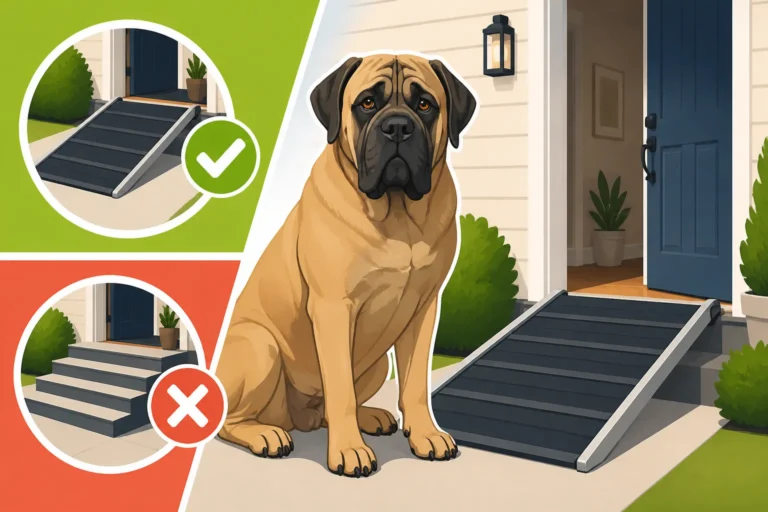
Consider placing area rugs, runners, or carpet tiles in high-traffic areas where your Mastiff walks or rests. These provide much-needed grip and cushioning. Another option is paw pads or "toe grips" that can be glued onto your Mastiff's nails (above the quick) to provide extra traction. These products, like Dr. Buzby's ToeGrips, are designed to give them better footing. For older Mastiffs or those with mobility issues, a non-slip ramp can be invaluable for navigating stairs or getting into vehicles. Remember, a Mastiff's physical environment greatly impacts their ability to move safely and comfortably, so creating a "traction-friendly" home is an essential part of their care. This ties directly into What Flooring Suits a Mastiff and Whether Toe Grips Help a Mastiff.
Seeking Professional Help for Difficult Mastiff Nails
Sometimes, despite your best efforts, trimming your Mastiff's nails at home can feel like an insurmountable task. There's absolutely no shame in recognizing your limits and seeking professional assistance. In fact, for a breed of this size, it's often the safest and most stress-free option for everyone involved.
The Benefits of a Professional Groomer or Vet Tech
Professional groomers and veterinary technicians have specialized training and experience in handling dogs of all temperaments and sizes, including giant breeds like Mastiffs. They often possess heavy-duty equipment that can make quick work of even the most stubborn nails, and they know the techniques to keep dogs calm and compliant. A professional groomer might have a specialized grooming table with a heavy-duty hydraulic lift, making it easier to position your Mastiff without injury to either of you. Vet techs are particularly skilled at managing anxious or aggressive dogs and have the medical knowledge to deal with any quicking accidents or underlying paw issues.
Booking regular appointments with a professional ensures consistency and proper length. They can also provide tips and demonstrate techniques for home maintenance, empowering you to gradually take over some aspects of care if you wish. Investing in professional nail trims can save you stress, potential injury, and ultimately contribute to your Mastiff's long-term health and happiness.
Sedation for Stress-Free Nail Trims
For Mastiffs with extreme anxiety or aggression surrounding nail trims, where even professional groomers struggle, sedation might be the kindest and safest option. Administered by a veterinarian, light sedation can help calm your Mastiff enough to allow for a thorough and pain-free nail trim. This isn't a first resort, but it's a valuable tool in specific situations, especially if nails are severely overgrown and causing pain, or if regular trims become a source of significant trauma for your dog.
It's important to discuss the risks and benefits of sedation with your vet. They will assess your Mastiff's overall health to determine if they are a good candidate and advise on the appropriate type and dosage of sedative. While it adds to the cost, a stress-free experience can be invaluable for both your Mastiff's mental well-being and the physical necessity of maintaining proper nail length. Sometimes, a few sedated trims can help reset your Mastiff's association with the process, making future, non-sedated trims more feasible. Don't let fear or difficulty compromise your Mastiff's paw health; talk to your vet about all available options.
Disclaimer
This article is for general informational purposes only and does not constitute professional advice. Laws, prices and regulations vary by location and change over time. Consult a qualified professional for guidance on your specific situation.