Signs a Mastiff’s Fold Has Become Infected
The adorable, weighty folds of a Mastiff are undeniably one of their most charming features, but as any Mastiff parent knows, these luscious wrinkles can also become hidden trouble spots. Moisture, warmth, and debris can easily get trapped deep within those skin folds, creating a perfect storm for nasty infections that can leave your gentle giant uncomfortable and in pain. This comprehensive guide is here to walk you through exactly how to spot the early signs of a skin fold infection, empowering you to act quickly and keep your beloved Mastiff happy and healthy.
The Anatomy of a Mastiff's Folds and Why They're Trouble Spots
Mastiffs, with their regal, massive heads and often loose skin, carry a lot of beautiful, characteristic folds. While these wrinkles contribute to their distinguished appearance, they also create unique challenges for owners when it comes to hygiene and health. Understanding where these folds are most prone to problems is the first step in prevention and early detection.
Where Mastiff Folds Are Most Vulnerable
When you think of Mastiff wrinkles, your mind probably jumps straight to their face, and you'd be right. The deep folds around their muzzle, often called the nose rope, are prime real estate for irritation. These folds can become incredibly deep, trapping food, water, and tear stains. But it doesn't stop there. The prominent jowls and lip folds, especially after a good drink or a messy meal, can also harbor moisture and debris. Beyond the face, don't forget the folds around their neck, under their chin, and even, for some Mastiffs, folds at the base of their tail or armpits. Each of these areas can become a warm, dark, and often moist incubator for bacterial or yeast overgrowth. It's a constant battle to keep these magnificent animals pristine, and many owners feel a certain degree of guilt when they discover a problem, but it's important to remember just how challenging these unique anatomical features make things. It really takes diligence. The Wrinkles and Folds a Mastiff Owner Cleans Every Week are a constant focus for dedicated owners.
The Ideal Breeding Ground for Bacteria and Yeast
Imagine a tiny, dark cave. It’s warm, humid, and rarely sees the light of day. Now imagine that cave is regularly exposed to moisture from drool, tears, or bathwater, and perhaps even a stray crumb of kibble or two. That’s essentially what a Mastiff's skin fold can become. This environment is an absolute paradise for microorganisms like bacteria and yeast, which thrive in such conditions. When these areas aren't regularly cleaned and dried, the natural flora on the skin can multiply rapidly, leading to an imbalance that manifests as an infection. The skin itself, being constantly rubbed and softened by moisture, becomes more fragile and susceptible to microscopic breaks, providing even more entry points for pathogens. This often results in a condition called skin fold dermatitis, a frustrating and sometimes painful ailment for our big friends. Where a Mastiff's Skin Folds Are is something every owner should know intimately.
Common Visible Signs of a Skin Fold Infection
It’s easy to miss subtle changes in those deep folds, but once you know what to look for, you'll become much more adept at early detection. Visible cues are often the first strong indicators that something is amiss, signaling that it's time to take action.
Redness and Inflammation
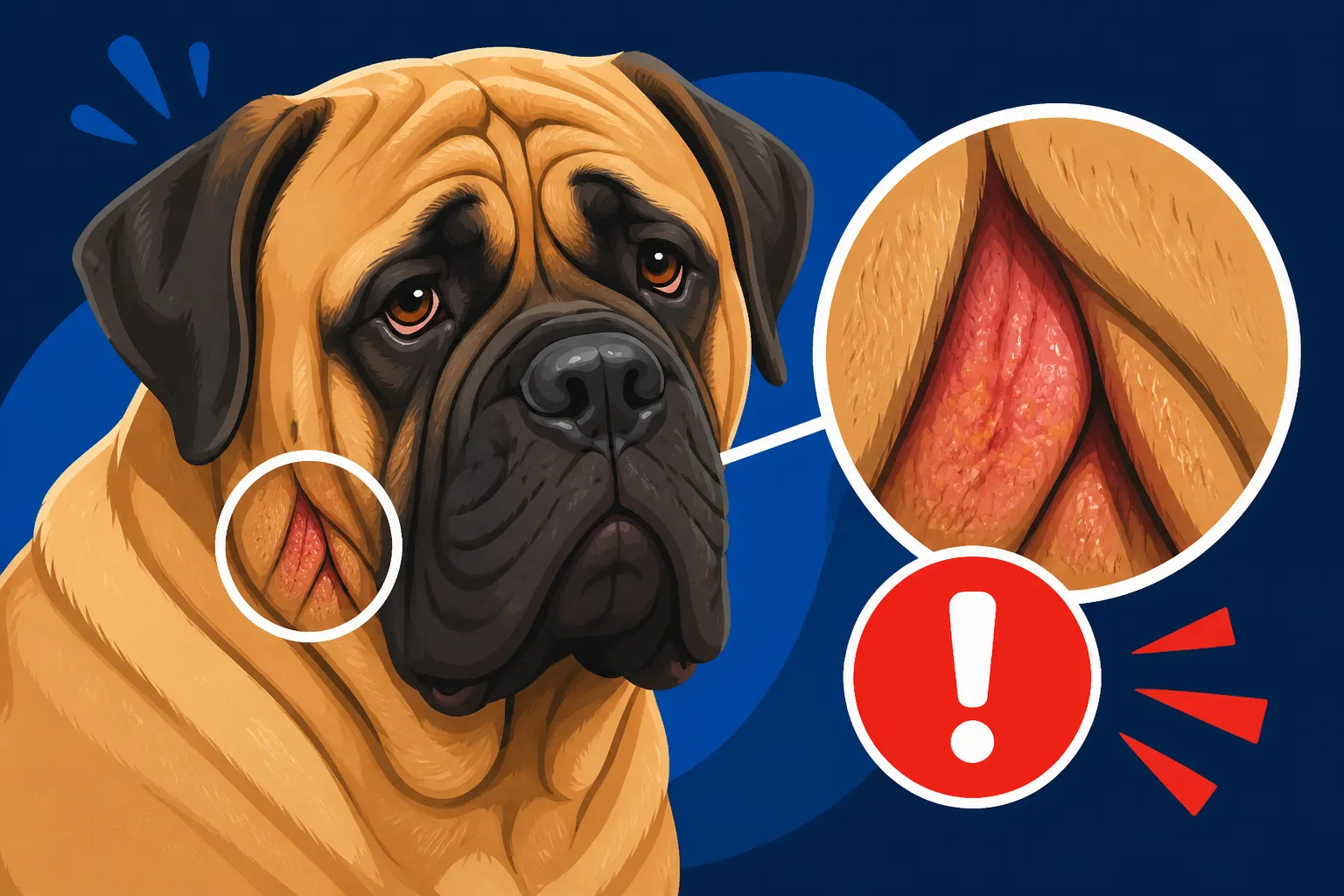
One of the most immediate and common signs of a skin fold infection is noticeable redness and inflammation. Healthy skin in a Mastiff's folds should typically be a pale pink, much like the inside of their ear or their belly. However, when an infection sets in, the skin will often become angry and irritated, appearing bright red, sometimes even a deep crimson or purple. This redness is usually accompanied by some degree of swelling as the body's immune system reacts to the invading microbes. You might notice the skin looking puffy or thickened around the edges of the fold. It's crucial to gently separate the folds, especially the deep ones around the nose or lips, to get a good look. What might appear as just a slight flush on the surface could be a raging inferno of inflammation deeper within the crease.
Sometimes, this redness can be quite subtle initially, perhaps just a slight pinker hue than usual. But as the infection progresses, it becomes undeniable, making the area look raw and sore. It’s like a sunburn, but much more insidious because it's hidden. If you run your fingers carefully along the skin (always with clean hands, of course), you might also feel that the inflamed skin is warmer to the touch than the surrounding healthy skin. This heat is another classic sign of inflammation, indicating increased blood flow to fight off the infection. Don’t dismiss a little bit of redness; in a Mastiff’s folds, it can escalate quickly.
Discharge and Crust Formation
Another very clear indicator of an active skin fold infection is the presence of discharge. This discharge can vary in appearance depending on the type and severity of the infection. In early stages, it might be a clear, watery exudate, almost like sweat, but often with a slightly sticky consistency. As bacteria or yeast proliferate, this discharge can become cloudy, yellowish, or even greenish, indicating pus. Sometimes, it might even have a reddish or brownish tint if there’s blood involved due to severe irritation or ulceration of the skin. Whether a Mastiff's Fold Smells Yeasty often goes hand in hand with this kind of discharge.
This discharge doesn't just stay liquid; as it dries, it forms crusts. These crusts can be flaky and dry, or thick and adherent, often matting the fur together within the fold. If you gently try to separate the folds, you might find that the fur is stuck together, and peeling it apart reveals a wet, gooey mess underneath. These crusts can be quite itchy and uncomfortable for your Mastiff. The presence of any persistent discharge, especially if it's discolored or smells unpleasant (which we'll get to next!), is a definite red flag that warrants closer inspection and likely veterinary intervention. Cleaning regularly helps, and How Often a Mastiff's Folds Need Cleaning is an important routine to establish.
Hair Loss and Skin Changes
Beyond redness and discharge, chronic or more severe fold infections can lead to noticeable changes in your Mastiff's fur and skin texture. You might start to see areas of thinning hair or even complete hair loss (alopecia) within or around the affected fold. This is often due to the persistent inflammation damaging the hair follicles, or from the dog constantly rubbing and scratching the area due to intense itchiness. The skin itself might undergo changes, becoming thickened (a process called lichenification) and taking on a leathery texture. This thickened skin can also darken in color, appearing hyperpigmented, often a grayish or blackish hue, which is a common response to chronic irritation.
In some cases, the skin can also become quite greasy or oily to the touch, another sign of an imbalanced skin environment where yeast might be playing a significant role. These skin changes, particularly thickening and darkening, often suggest that the infection has been present for a while, perhaps going unnoticed in the deep creases. They are signs of a more established problem rather than a brand-new irritation. Regular checks, especially Whether a Mastiff's Nose Wrinkle Needs Daily Attention, can help catch these changes before they become severe.
Olfactory and Behavioral Clues to a Hidden Problem
Sometimes, the first sign you notice isn't visual at all. Your nose, or your Mastiff’s altered behavior, can often be the earliest indicators that a hidden issue is brewing deep within their wrinkles. Trust your instincts – if something seems off, it probably is.
Unpleasant Odors Coming from the Folds
This is often one of the strongest and most unmistakable signs of a skin fold infection, even before you see any redness or discharge. A healthy Mastiff’s skin should have a relatively neutral, albeit "doggy," scent. However, an infected fold will emit a distinct, often strong, and very unpleasant odor. If the infection is primarily yeast-based, the smell is frequently described as sweet, yeasty, or even like stale bread or cheese. It’s a very particular aroma that, once you’ve smelled it, you won’t forget.
Bacterial infections, on the other hand, tend to produce a much fouler, pungent smell – think of a sickly-sweet, putrid, or even rotten odor. Sometimes, it can be a combination of both. You might notice this smell most strongly when your Mastiff shakes their head, or when you are close to them. Don’t ignore a new or worsening odor coming from any of your Mastiff’s folds. It’s a direct signal that something is seriously wrong and that a thriving colony of microorganisms has taken root. A strong, persistent smell is a clear call to investigate further and prepare for a vet visit.
Changes in Your Mastiff's Demeanor and Comfort
Your Mastiff's behavior can tell you a lot about their comfort level, especially when a skin fold infection is causing them distress. Dogs are experts at hiding pain, but even the stoic Mastiff will show subtle (or not-so-subtle) signs of irritation. You might notice your dog rubbing their face excessively on furniture, carpets, or even your leg, especially if the infection is in their facial folds. They might paw at their muzzle or neck, shake their head frequently, or scratch more often than usual. Some Mastiffs will become noticeably sensitive if you try to touch the affected area, flinching, pulling away, or even growling, which is very out of character for such a gentle breed.
Beyond localized irritation, a more severe or painful infection can lead to broader behavioral changes. Your usually jovial Mastiff might seem more irritable, withdrawn, or lethargic. They might have a decreased appetite if the pain or discomfort is significant, or if the infection is particularly smelly, putting them off their food. You might even notice them being less enthusiastic about walks or play. These changes indicate that they are not just dealing with a minor itch but are genuinely uncomfortable. Paying attention to these subtle shifts in personality and physical habits can give you a critical early warning.
When to Suspect Something More Serious
While many skin fold infections start as a superficial irritation, they have the potential to escalate. Recognizing the signs of a deeper, more entrenched problem is vital for your Mastiff's well-being and can prevent more extensive and complicated treatments down the line.
Deep Pyoderma and Hot Spots
Sometimes, a seemingly simple surface infection can delve much deeper into the layers of the skin, leading to more severe conditions like deep pyoderma or acute moist dermatitis, commonly known as hot spots. Deep pyoderma is a serious bacterial infection that affects the hair follicles and surrounding tissues. You might notice pus-filled blisters or nodules, ulcers, and crusts that are firmly adhered to the skin. The area will likely be very painful, swollen, and warm to the touch. These infections often develop when the initial surface infection goes untreated or when the dog persistently scratches, chews, or licks the area, driving bacteria deeper into the skin.
Hot spots, on the other hand, are rapidly developing, red, moist, and often oozing lesions that appear suddenly. While they can occur anywhere, they are particularly troublesome in moist skin folds where conditions are ripe for their formation. They are intensely itchy, and your Mastiff will likely obsessively lick and chew at the area, preventing it from drying out and worsening the problem rapidly. Both deep pyoderma and hot spots are extremely uncomfortable for your Mastiff and require prompt veterinary attention. They won't resolve with just a simple wipe-down. Whether a Mastiff Gets Hot Spots is a question many owners of wrinkly breeds eventually face.
Systemic Signs and General Malaise
While most skin fold infections are localized, in severe cases, the infection can spread or lead to systemic signs that affect your Mastiff's entire body. This means the infection is no longer just a skin deep issue. Watch for signs like fever, which you might detect if your dog's nose is unusually warm and dry, or if they seem generally unwell and lethargic. You might also be able to feel swollen lymph nodes, especially in the neck or under the jaw, which feel like firm, tender lumps. These are part of the immune system's response to a widespread infection.
If your Mastiff is displaying widespread skin irritation that extends beyond the immediate folds, or if they seem unusually tired, have a decreased appetite, or are otherwise acting 'off,' it's a strong indication that the infection might be more serious than a simple localized issue. This could mean the bacteria have entered the bloodstream or are causing a significant inflammatory response throughout the body. Any combination of these systemic signs alongside a visible or smelly skin fold issue warrants an immediate call to your veterinarian. Early intervention is key to preventing complications. Sometimes, Whether a Mastiff's Fold Infection Needs Antibiotics becomes a necessity to combat these more serious cases.
What to Do If You Suspect an Infection
Finding an infected skin fold on your Mastiff can be alarming, but knowing the appropriate steps to take can make all the difference in their recovery and comfort. While home care has its place, professional veterinary guidance is almost always necessary for true infections.
Initial Steps for Cleaning and First Aid at Home
If you suspect an infection, the very first step is to gently and thoroughly clean the affected area. This can be tricky with a big, sensitive Mastiff, so approach it calmly and with plenty of treats. Use a mild, antiseptic solution recommended for pets, such as a diluted chlorhexidine solution or pet-specific medicated wipes. You can often find excellent quality medicated wipes and cleaning solutions on online platforms like Chewy or Amazon, making them easily accessible. What to Clean a Mastiff's Wrinkles With is a critical piece of knowledge for any Mastiff owner.
Carefully part the folds and wipe away any discharge, crusts, and debris. Be gentle, as the skin underneath can be quite raw and sore. After cleaning, it is absolutely paramount to thoroughly dry the area. Moisture is the enemy here! You can use a soft, clean cloth or even a hairdryer on a cool, low setting, keeping it at a safe distance. Remember, this initial cleaning is for first aid and comfort; it is not a substitute for professional veterinary care, especially if the infection is already established, smelly, or causing your Mastiff discomfort. This step helps to temporarily reduce the bacterial load and make your Mastiff more comfortable while you wait for your vet appointment. Whether a Mastiff's Folds Need Drying After Cleaning cannot be stressed enough – residual moisture will only perpetuate the problem.
The Importance of a Veterinary Diagnosis and Treatment
While home cleaning can provide temporary relief, it’s incredibly important to understand that a true skin fold infection requires a professional veterinary diagnosis. Your vet will be able to perform a thorough examination, often taking samples (like a skin cytology or culture) to identify whether the culprit is primarily bacterial, yeast, or a combination of both. This diagnostic step is crucial because treating a yeast infection with antibiotics alone, or vice-versa, will be ineffective and can even worsen the problem by disrupting the natural skin flora further.
Based on their findings, your veterinarian will prescribe the most appropriate treatment. This could involve specific topical creams, ointments, or medicated shampoos, or oral antibiotics or antifungals for more severe or widespread infections. They might also recommend an Elizabethan collar to prevent your Mastiff from further irritating the area while it heals. Attempting to self-diagnose and treat an infection without knowing the specific pathogen can prolong your Mastiff's suffering and lead to chronic or recurrent issues. Trust your vet's expertise; they have the tools and knowledge to get to the root of the problem.
Long-Term Management and Prevention
Once an infection is cleared, the goal shifts to preventing recurrence, which is a common challenge for Mastiff owners due to their unique anatomy. Regular, diligent cleaning of all skin folds is essential. Establish a routine, perhaps daily or every other day, depending on your Mastiff's specific needs and the depth of their folds. Always ensure the folds are completely dry after cleaning, drinking, or bathing. How Often a Mastiff's Folds Need Cleaning really becomes a lifestyle.
Beyond direct fold care, consider your Mastiff's overall health. Maintaining a healthy weight is crucial, as excess skin can create even deeper, more problematic folds. A high-quality diet, potentially exploring options like fresh food plans from services like Ollie, can contribute to overall skin health and a stronger immune system, helping your Mastiff's body better resist infections. Addressing any underlying allergies or other health conditions that might predispose your Mastiff to skin issues is also key. Your vet can help you devise a comprehensive long-term management plan that might include specific supplements or ongoing preventive treatments like Whether a Medicated Wipe Suits a Mastiff's Wrinkles used a few times a week. Consistent effort in these areas will go a long way in keeping those magnificent Mastiff folds healthy and infection-free.
Comparison of Healthy Folds vs. Infected Folds
Here's a quick reference table to help you distinguish between healthy skin folds and those showing signs of infection:
| Characteristic | Healthy Skin Fold | Infected Skin Fold |
|---|---|---|
| Appearance | Pink, clean, dry, minimal hair | Red, inflamed, swollen, hair loss, crusty, moist |
| Odor | Neutral or faint "doggy" smell | Foul, yeasty (like bread/cheese), sickly sweet, pungent |
| Discharge | None | Clear, yellow, green, brown, bloody |
| Texture | Smooth, pliable, soft | Greasy, thickened, leathery, raw, painful to touch |
| Dog's Behavior | No noticeable discomfort, tolerant of handling | Rubbing, pawing, head shaking, irritable, sensitive to touch |
Disclaimer
This article is for general informational purposes only and does not constitute professional advice. Laws, prices and regulations vary by location and change over time. Consult a qualified professional for guidance on your specific situation.