Scent Work as a Mastiff’s Low Impact Sport
It's no secret that living with a Mastiff means navigating a unique set of challenges, especially when it comes to keeping them active and engaged without overdoing it. Many owners find themselves frustrated trying to provide enough mental and physical stimulation for their giant companions, only to be met with concerns about their joints or their dog's sheer reluctance to move quickly. This guide is here to shed light on scent work, a fantastic, low-impact sport that truly harnesses your Mastiff's natural abilities and keeps their big brains busy without putting undue stress on their impressive, but delicate, bodies.
Why Scent Work Is Perfect for a Mastiff
Let's be honest, our Mastiffs aren't built for marathons or agility courses. Their massive size and tendency towards joint issues mean we have to be incredibly mindful of their physical limitations. But that doesn't mean they don't need an outlet for their energy and intelligence! Scent work, often called 'nose work,' taps into their most powerful sense and provides a deeply satisfying activity that respects their physical needs.
Gentle on Those Giant Joints
The biggest worry for any Mastiff owner is typically their dog's joints. Conditions like hip and elbow dysplasia are unfortunately common, and high-impact activities, running, or strenuous jumping can exacerbate these issues or even hasten their onset. You'll often hear advice about avoiding hard exercise, especially when they are puppies, because of concerns like Why a Mastiff Puppy Must Not Be Exercised Hard or the general wisdom that too much strain leads to problems like Arthritis in a Mastiff at Four.
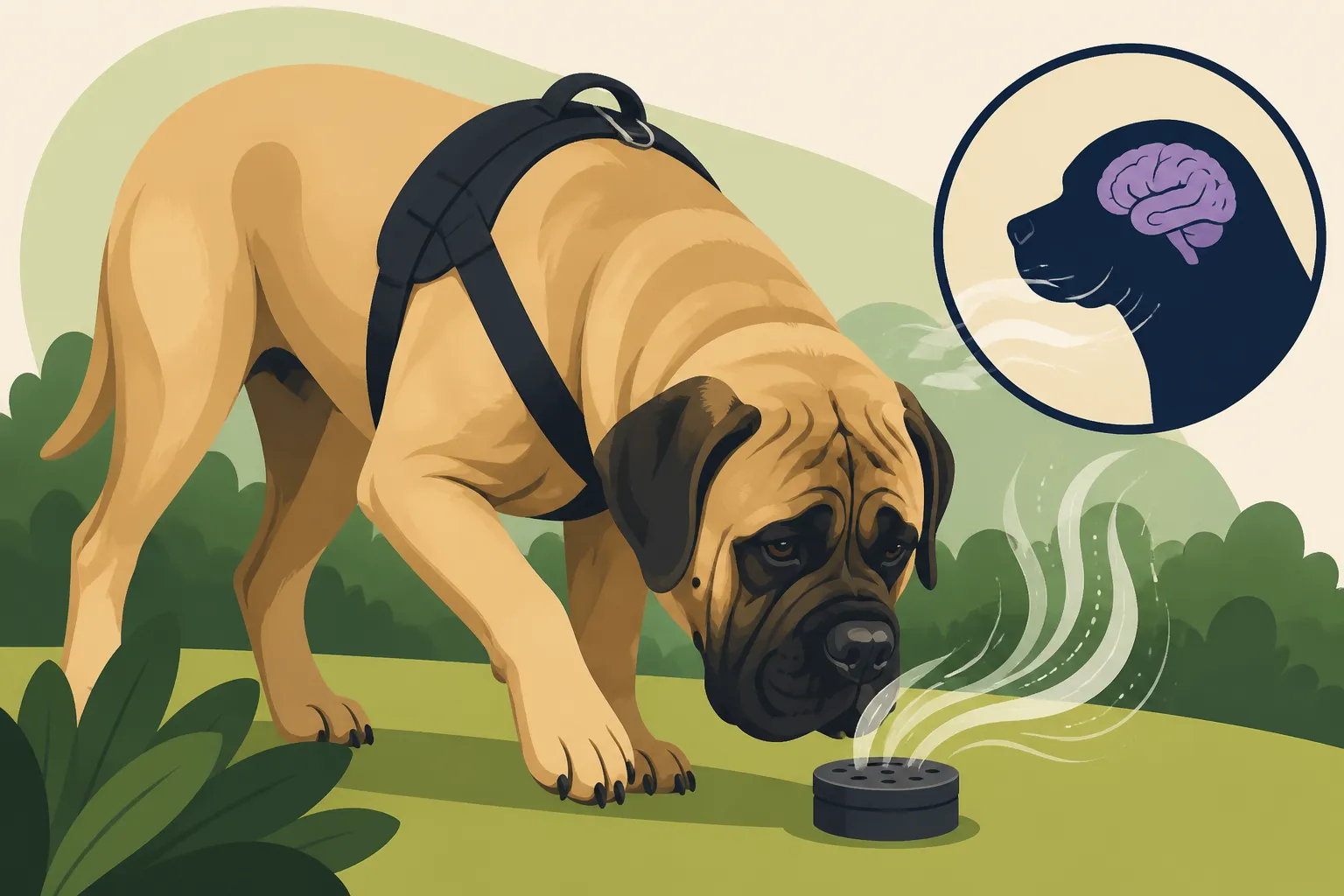
Scent work, by contrast, is incredibly gentle. It primarily involves walking, sniffing, and perhaps a bit of careful climbing over low obstacles if you introduce them, all at the dog's own pace. There's no forced running, no sudden stops, no jarring impacts. Your Mastiff can methodically search an area, using their nose to track a specific scent, moving as slowly and deliberately as they please. This makes it an ideal sport for Mastiffs of all ages, from growing puppies whose joints are still forming to older seniors who might be experiencing stiffness. It allows them to participate fully and feel productive without the risk of injury or discomfort. Think of it as a treasure hunt where their nose is the map, and their brain is the real engine doing the work.
Mental Engagement Without the Marathon
Just because a Mastiff isn't always keen on physical exertion doesn't mean they lack intelligence. Far from it! These dogs have keen minds and a deep desire to please their people. The problem is often finding an activity that truly engages their intellect without demanding too much from their bodies. This is where scent work shines. It's an intense mental workout that can tire a dog out more effectively than a long walk, especially for a breed known for needing Why one hour a day is enough for a Mastiff.
When your Mastiff is searching for a hidden scent, they are actively problem-solving. They're processing information from their environment, discriminating between odors, following trails, and communicating their findings. This requires focus, concentration, and sustained mental effort. For a Mastiff, who might be prone to that delightful The Stubbornness That Is Actually a Mastiff Thinking pause before complying, scent work offers a chance to engage on their own terms, making decisions based on their incredible olfactory abilities. It prevents boredom, which can sometimes lead to destructive behaviors, and provides a profound sense of accomplishment for your dog. They get to be the expert, leading the way with their powerful nose.
Building Confidence and Focus
Some Mastiffs can be a bit reserved or even shy around new people or situations, despite their imposing size. Others might struggle with focus, easily distracted by the myriad sights and sounds of the world. Scent work can be a powerful tool for building confidence and improving concentration in these gentle giants.
Because the activity is so intrinsically rewarding—finding the hidden treat or toy is a huge win—Mastiffs naturally gain self-assurance with each successful search. They learn to trust their own instincts and capabilities. This newfound confidence often spills over into other areas of their lives, making them more resilient and adaptable. For a Mastiff that struggles to maintain attention, the intense focus required for scent work can also be incredibly beneficial. It teaches them to tune out distractions and concentrate on the task at hand, which can be a valuable skill that translates to better behavior during walks or in busy environments. It also creates a wonderful bonding experience between you and your dog, as you work together as a team, with you trusting their nose to guide you.
Getting Started with Scent Work for Your Mastiff
The beauty of scent work is how accessible it is. You don't need fancy equipment or a special training facility. You can start right in your living room, making it perfect for those days when the weather isn't cooperating or when you want a quick mental exercise session for your Mastiff.
The Basics: What You Need
You'll be delighted to know that getting started with scent work requires very little. Forget about expensive gadgets; the most important "equipment" is your dog's nose and some high-value treats.
Here’s a simple list to get you started:
- High-Value Treats: These are crucial. Think small, soft, super-tasty treats that your Mastiff loves. Cooked chicken, cheese, hot dogs, or liver treats work wonderfully. The higher the value, the more motivated your Mastiff will be to search.
- Small Containers or Boxes: Empty cardboard boxes (cereal boxes, shoe boxes), plastic containers, even clean old socks work perfectly. You'll use these to hide the treats. You can find a huge variety of affordable options on Amazon that can be repurposed, or simply use items you already have around the house.
- A "Target Odor" (Optional, for advanced stages): Initially, you'll use food. As your Mastiff progresses, you might introduce specific essential oils (like birch, anise, or clove, diluted and stored safely) that are used in competitive nose work. But for beginners, stick to food.
- A Leash: Sometimes, especially when starting outdoors or in new environments, a leash can help guide your Mastiff and keep them focused, especially if they are prone to getting distracted.
- A Quiet Space: Begin in a distraction-free environment to help your Mastiff understand the game.
Introducing the Scent Game
Starting with your Mastiff is all about making it a positive, fun experience. Keep initial sessions short and highly successful.
-
The "Find It" Game (Level 1: Easy Peasy):
- Let your Mastiff see you hide a very high-value treat under one of several overturned cups or small boxes placed close together on the floor.
- Give them a clear cue like "Find it!" and encourage them to sniff and investigate.
- As soon as they nudge or paw at the correct cup, lift it, and let them have the treat immediately. Lots of praise!
- Repeat this a few times, always making it easy so they succeed. The goal here is to connect the "Find it!" cue with the act of sniffing and getting a reward.
-
Gradually Increase Difficulty (Level 2: A Little Challenge):
- Once your Mastiff understands the basic concept, start hiding the treat without them watching, but still in plain sight (e.g., under a cup in the corner of the room).
- Place 2-3 empty cups/boxes around the room, and one with a treat.
- Give your "Find it!" cue. Let them use their nose to locate the treat.
- You might need to point vaguely in the direction of the hide at first, but try to let their nose do the work. Remember, patience is key with a Mastiff, who might need a moment to process.
- Always end on a high note, even if it means an extra easy hide at the very end.
Progressive Training: From Easy Finds to Complex Challenges
As your Mastiff becomes a scent-seeking pro, you can slowly increase the complexity to keep them engaged.
- More Hides, More Locations: Instead of one treat, hide several in different spots. Vary the height—maybe on a low shelf (if safe), behind a plant pot, or under a blanket. Always consider your Mastiff's size and reach; you don't want them straining.
- Blind Hides: This is where the real fun begins! Your Mastiff shouldn't see you hide the treats. Have them wait in another room, or tethered, while you set up the search.
- Varying Environments: Once they're confident indoors, take the game outside to a fenced yard. Hide treats under bushes, behind trees, or even in the grass. The outdoor environment introduces new smells and distractions, making it a greater challenge.
- Introducing a Specific Odor: If you're interested in formal nose work, this is when you'd introduce a target essential oil. You'd pair this new scent with high-value treats, gradually phasing out the food so they're searching for the odor itself. Resources like BAXTER & Bella's online training programs often have excellent modules on introducing specific odors and progressing through the stages of nose work, which can be invaluable for structured learning.
- Adding Distractions: As your Mastiff gains experience, you can add mild distractions to the search area—perhaps a toy they don't usually play with, or a person sitting quietly nearby. This helps them learn to focus on the target scent despite other stimuli. Remember The Sensitivity Nobody Expects in a Two Hundred Pound Mastiff; introduce distractions gently.
Common Challenges and Solutions for Mastiffs in Scent Work
Even with a naturally gifted sniffer like a Mastiff, you might encounter a few quirks during scent work. Their unique physiology and personality mean we sometimes have to adapt our approach.
The "I'm Too Big to Fit" Dilemma
Let's face it, a Mastiff is not a Terrier when it comes to squeezing into tight spaces! Their sheer size can present challenges when it comes to traditional hide locations in scent work. What works for a smaller dog might be impossible or even unsafe for a two-hundred-pound Mastiff.
Solution:
- Think Big, Not Small: Instead of small boxes, use larger laundry baskets, storage bins, or even a child's play tunnel. Create "hides" with larger pieces of furniture they can easily navigate around, or place scent vessels under chairs with plenty of room for them to sniff comfortably without getting stuck.
- Vary Heights Safely: Use low, sturdy tables, benches, or even cinder blocks (covered for safety) to place hides at different elevations, ensuring your Mastiff can reach them with their nose without having to jump or stretch precariously. Never ask them to jump or strain their neck. Remember, their weight puts a lot of pressure on their joints, and even small movements incorrectly executed can cause harm.
- Outdoor Adaptations: Outside, embrace the natural environment. Hide scents behind large rocks, under sturdy bushes, inside hollow logs (if safe and clear of splinters), or in areas where they can easily move and sniff without constriction. Instead of tucking a scent tin into a tiny crevice, place it on top of a low wall or inside a sturdy plant pot.
The "Lazy Mastiff" Tendency
We adore our Mastiffs for their calm, sometimes almost horizontal, nature. However, this inherent relaxed demeanor can sometimes manifest as a lack of initial enthusiasm for a game that requires them to do the work. You might find your Mastiff sniffing around half-heartedly or giving up quickly if the hide isn't immediately obvious. It's not true laziness, but often a matter of motivation and understanding.
Solution:
- Amplify the Reward: This is paramount. If your Mastiff isn't showing excitement, your treats aren't high-value enough. Experiment with different foods until you find something they absolutely go wild for. Think stinky, moist, and delicious. Freeze-dried meat, real meat scraps, or tiny bits of hot dog can work wonders.
- Keep It Short and Sweet: Long, drawn-out sessions will quickly lead to disinterest. Aim for 5-10 minute sessions, a couple of times a day, especially when starting out. End the game before your Mastiff gets bored or frustrated. Always leave them wanting more.
- Build Success Upon Success: In the beginning, make every hide incredibly easy to find. Your Mastiff needs to feel like a champion. Constant success builds their drive and reinforces the idea that searching is rewarding. Gradually, and I mean gradually, increase the difficulty.
- Enthusiastic Encouragement: Your energy is contagious! Use a bright, cheerful voice, lots of praise, and celebratory gestures when they find a hide. Even a subtle tail wag from your Mastiff deserves a mini-party.
Managing Excitement and Frustration
While Mastiffs are generally calm, even they can get overly excited or, conversely, frustrated if a search is too difficult. An over-excited Mastiff might paw frantically at everything or try to chew the containers. A frustrated Mastiff might just lie down and sigh dramatically, giving up entirely.
Solution for Over-Excitement:
- Slow Down the Pace: If your Mastiff is too boisterous, take a break. Walk away for a minute, then re-approach calmly.
- Reinforce Calmness: Reward calm sniffing and investigative behavior, rather than frantic pawing. If they are getting too physical, remove the hide and try again. They'll learn that gentle nose work gets the reward.
- Use a Harness and Leash: In some cases, using a non-restrictive harness and a light leash can help you guide your Mastiff and gently redirect overly enthusiastic movements without harsh corrections. This is also helpful for Whether a Mastiff Should Wear a Harness or a Collar during regular walks, offering better control.
Solution for Frustration:
- Make It Easier: If your Mastiff gives up, the hide is too hard. Immediately make the next hide incredibly simple—maybe even letting them see you place it. End with success.
- Break Down the Task: If they're struggling, go back a step. Instead of finding a hidden treat, practice finding a visible treat in a container. Rebuild their confidence.
- Watch Their Body Language: Learn to read your Mastiff. Are they becoming disengaged? Are their ears drooping? Are they pacing or looking away? These are signs of frustration. Intervene before they completely shut down.
Integrating Scent Work into Your Mastiff's Routine
Scent work isn't just a sporadic activity; it can be a wonderful, regular part of your Mastiff's life, enriching their days and strengthening your bond. The key is consistency and flexibility.
Short, Frequent Sessions Are Key
For a Mastiff, quality almost always trumps quantity, especially when it comes to activities that engage their brains and bodies. Instead of one long, exhausting session, aim for several shorter, focused scent work sessions throughout the day or week.
Think about it: a Mastiff's attention span might not be as long as, say, a Border Collie's. Plus, their immense size means even moderate physical activity, like prolonged searching, can be tiring. A 10-15 minute session in the morning, another in the afternoon, and maybe a quick "find it" game before bed can be far more beneficial than a single 45-minute slog. This frequent engagement keeps their mind sharp, prevents boredom, and reinforces the positive association with the game. It’s also much easier to fit into a busy schedule than trying to carve out a massive block of time. Remember that Why a Mastiff Only Needs One Hour a Day of total activity includes mental stimulation.
Making It a Family Affair
Scent work is a fantastic activity that the whole family can get involved in, making it an excellent way for everyone to bond with your Mastiff. For a breed that bonds deeply with its human pack, having multiple family members participate can be incredibly enriching.
Children, under adult supervision, can learn to hide treats (making sure they're not too challenging for the dog, of course) and give the "find it" cue. This teaches them responsible pet interaction, patience, and how to read canine body language. It's also a great way for older family members who might not be able to take the Mastiff on long walks to still be actively involved in their daily care and mental stimulation. Just ensure that everyone uses consistent cues and rewards, so your Mastiff isn't confused. This cooperative effort reinforces your Mastiff's place in the family and provides varied interactions, which is especially important for such a The Sensitivity Nobody Expects in a Two Hundred Pound Mastiff.
Beyond the Home: Taking Scent Work on the Go
While starting in a quiet home environment is crucial, scent work doesn't have to be confined to your living room or backyard. With a bit of planning, you can easily take this low-impact sport with you, enriching outings and providing mental engagement in new places.
Imagine a trip to a quiet park or even a friend's house. You can hide treats in novel locations—behind a tree, under a park bench, or even in a discarded log. This introduces new smells and textures, making the search even more stimulating. Always choose safe, contained areas free from excessive distractions or hazards. If you're going on a road trip, a small "scent kit" with treats and a few containers can provide much-needed mental breaks during stops, giving your Mastiff something productive to do before getting back in the car. It's a fantastic way to turn a mundane outing into an exciting adventure for their nose, and a great way to provide enrichment for A Mastiff That Stood Over Sir Piers Legh at Agincourt in a modern context.
Here's a quick comparison of scent work versus other common Mastiff activities:
| Activity | Physical Exertion | Mental Stimulation | Suitability for Mastiffs | Pros | Cons |
|---|---|---|---|---|---|
| Scent Work | Low | High | Excellent | Gentle on joints, builds confidence, mentally tiring | Requires owner engagement, can be messy with treats |
| Long Walks | Moderate | Moderate | Moderate (can be too much) | Good for basic exercise, outdoor enrichment | Can stress joints, difficult in hot weather |
| Agility | High | High | Poor | Builds coordination, very engaging | High risk of injury, unsuitable for heavy breeds |
| Tug-of-War | Moderate | Low | Moderate | Good for bonding, outlet for prey drive | Can lead to over-excitement, strain on neck/jaw |
| Fetch | Moderate to High | Low | Poor | Good for energy release | Repetitive impact on joints, easily overheats |
Scent work really stands out as a top choice for these magnificent dogs. It aligns perfectly with their physical limitations while challenging their incredible intelligence.
Disclaimer
This article is for general informational purposes only and does not constitute professional advice. Laws, prices and regulations vary by location and change over time. Consult a qualified professional for guidance on your specific situation.