Why a Mastiff Puts Itself Between You and a Stranger
It can be quite startling when your enormous, seemingly docile Mastiff suddenly decides to place their impressive bulk directly between you and an approaching stranger, be it a delivery driver, a visiting friend, or even just someone passing by on the sidewalk. This behavior, often misinterpreted as aggression or stubbornness, is actually a deep-seated instinct. This guide will help you understand why your Mastiff feels the need to act as your personal, furry bodyguard and how you can gently manage this protective impulse for a harmonious household.
The Ancestral Call: Why Mastiffs Guard
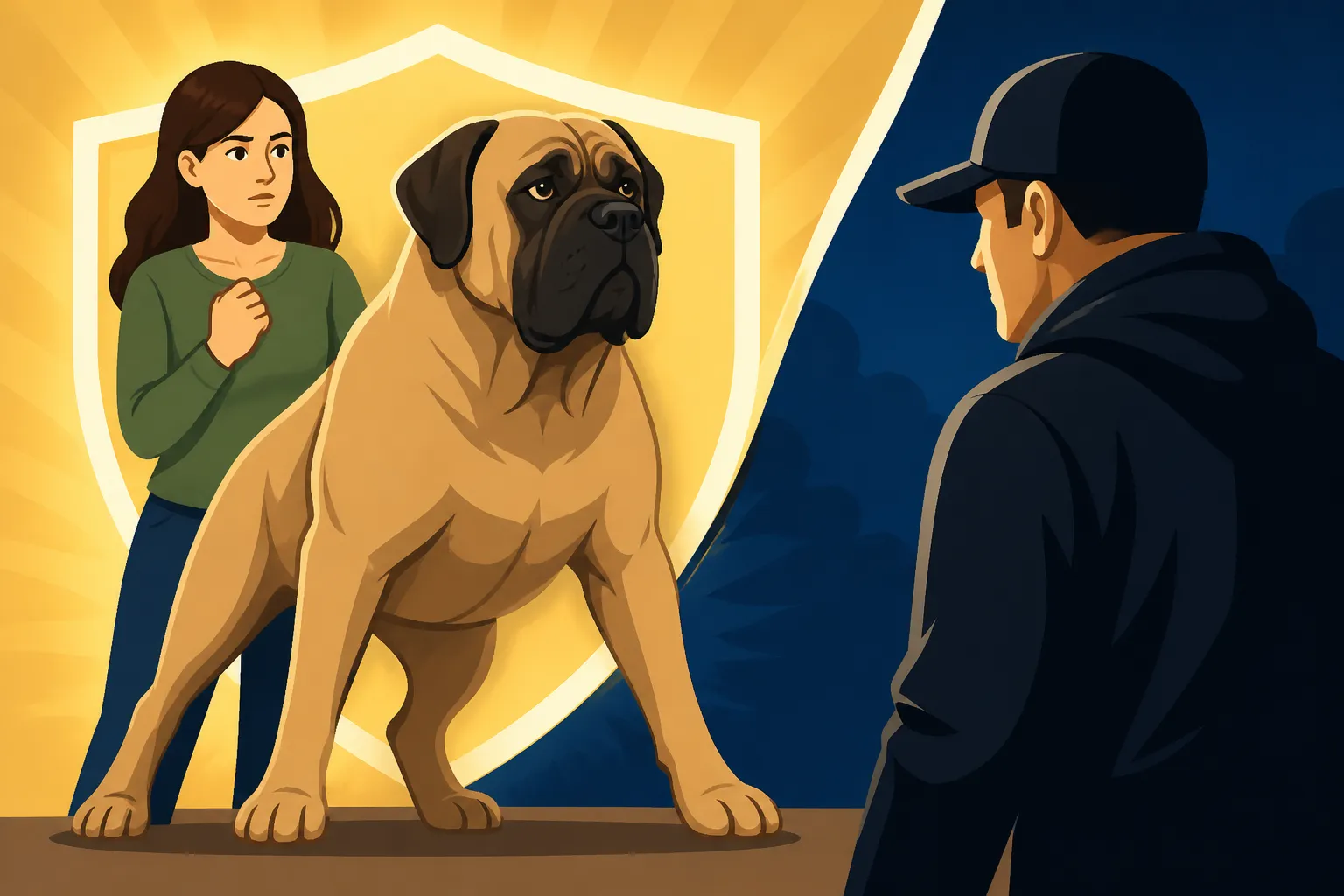
Mastiffs, by their very nature, are guardians. It’s not a trait they learn in a puppy class; it's woven into the very fabric of their being, passed down through generations. They were bred for centuries to protect estates, families, and livestock, making them inherently watchful and territorial. When your Mastiff places itself between you and someone new, it's not necessarily a sign of aggression, but rather an ancient instinct kicking in, a quiet declaration that they are on duty.
A Legacy of Vigilance
Imagine a time when these magnificent dogs patrolled vast lands, their presence alone enough to deter intruders. Their ancestors, the mighty Molossers, stood guard for civilizations. You can trace this lineage back through history, where Mastiff-type dogs were lauded for their courage and protective instincts. From the Roman arenas to the estates of medieval England, their job was always clear: stand sentinel. It’s no wonder then that your modern Mastiff, even when lounging on your living room rug, feels that undeniable pull to protect its pack leader – you. This deep-rooted history means they often don't need to be taught to guard; it simply is what they do. Historically, Mastiffs like those kept at Lyme Hall Kept Mastiffs Longer Than Any Kennel on Earth were renowned for their protective yet noble nature.
They aren't just big dogs; they are living testaments to a working past. While they may not be fending off wolves or marauders in your suburban home, that internal programming remains active. This is why even the most laid-back Mastiff might suddenly become intensely focused when a new person enters their perceived territory. They're assessing, observing, and silently making a judgment call based on millennia of selective breeding for vigilance.
Instinct Versus Taught Aggression
It’s crucial to understand that a Mastiff's protective stance is fundamentally different from taught aggression. A well-bred, well-socialized Mastiff rarely leaps to aggression without provocation. Instead, their default is often to observe, to place themselves strategically, and to send clear signals of their watchful presence. They're trying to figure out if this new person is a friend or a threat, and they want to ensure you are safe while they do it.
This inherent sense of responsibility means they might block your path, stand in front of you, or even lean against you as a form of "physical buffering" when a stranger approaches. They're not being rude or disobedient; they're fulfilling what they perceive as their primary duty. This behavior is usually accompanied by very specific body language that discerning owners learn to read. It's a subtle dance between instinct and learned trust, a big dog making an even bigger statement about who belongs and who doesn't, at least until cleared by their human.
Decoding the "Human Shield" Maneuver
When your Mastiff steps between you and a stranger, it's a profound statement of their protective nature. But what exactly are they trying to communicate? Is it a warning? A query? Or simply a massive, furry firewall? Understanding the nuances of their body language is key to interpreting their intentions and managing the situation appropriately.
The Subtle Signs of a Watchful Mastiff
A Mastiff's protective posture is often far more subtle than an aggressive display. They might stiffen slightly, their gaze fixed on the approaching person, but without the intense, hard stare of a truly threatened dog. You might notice them subtly shifting their weight, perhaps even leaning back against your legs as they position themselves. Sometimes, a very low, almost imperceptible rumble might emanate from their chest – a deep, resonant warning that says, "I see you, and I am here." Their tail might be held low, possibly wagging slowly, not in excitement, but in a measured, assessing way.
They are using their size and presence to create a physical barrier. It's their way of saying, "Hold on, human, let me check this out first." They might look back at you for reassurance or direction, seeking confirmation that you also acknowledge the approaching individual. They want to know your take on the situation, but they're ready to step up if you seem unsure. It's a demonstration of their profound bond with you and their commitment to your safety. When a stranger arrives, you'll often see these subtle cues as your Mastiff evaluates the situation, as described in How a Mastiff Judges a Stranger at the Door.
Not Always Aggression: Assessing Intentions
It’s vital to distinguish this inherent watchfulness from actual aggression. True aggression usually involves more overt signs: raised hackles, a rigid stance, a direct, challenging stare, a snarl, or even lunging. The Mastiff's typical "human shield" posture is generally about assessment and deterrence. They are evaluating the stranger, judging their intentions, and using their imposing physical presence to encourage caution. They aren't looking for a fight; they're hoping their sheer size will be enough to make any ill-intentioned person think twice.
This is where the Mastiff’s reputation as a "gentle giant" truly comes into play. They possess immense power, but they rarely wield it carelessly. Their goal is usually to observe and prevent, not to attack. They want to ensure the newcomer is cleared by their trusted human before fully accepting them into their space. This is part of the deep sensitivity often found in these large breeds, as explored in The Sensitivity Nobody Expects in a Two Hundred Pound Mastiff. They need to feel secure in their environment and in your judgment.
Here's a quick table to help differentiate between a Mastiff's protective stance and truly aggressive behavior:
| Behavior Trait | Instinctive Protection (Typically Benign) | Concerning Aggression (Needs Intervention) |
|---|---|---|
| Body Posture | Stiffens, positions body between you and stranger, leans against owner. | Forward lean, lowered head, rigid tail held high or tucked, hackles raised. |
| Vocalization | Low, rumbling growl; deep, measured barks if concern increases. | Snarl, sustained aggressive growl, rapid, sharp barks, snapping. |
| Eye Contact | Observes stranger intently; often looks back at owner for guidance. | Hard, unblinking stare directly at the stranger, dilated pupils. |
| Movement | Slow, deliberate shift to create a barrier, may block path. | Sudden lunge, rapid movements, attempts to nip or bite. |
| Interaction | Stays close to owner; allows owner to interact once assessed. | Actively prevents owner from interacting; attempts to control stranger's movement. |
| Response to "No" | May reluctantly move or pause, still watching stranger. | Ignores commands, intensifies guarding, becomes fixated. |
Guiding the Gentle Giant: Training and Management
Living with a Mastiff means understanding and respecting their deeply ingrained protective instincts. While you want them to be vigilant, you also need to ensure their behavior is always appropriate and never crosses into unwarranted aggression or fear-based reactions. The key lies in consistent training, extensive socialization, and clear communication.
Early Socialization Is Key
The foundation of a well-adjusted Mastiff, especially one with strong protective drives, is early and ongoing socialization. This isn't just about exposing them to other dogs; it's about introducing them to a wide variety of people, sights, sounds, and environments in a positive, controlled manner. A puppy that meets many different kinds of people—tall, short, hat-wearing, loud, quiet—during its critical development period learns that most strangers are not a threat. Remember, Mastiff puppies get big fast, so don't delay!
Think of it this way: the more positive experiences your Mastiff has with strangers when they are young, the larger their mental "safe zone" becomes. If you're looking for guidance on how to structure this, online training platforms like BAXTER & Bella offer comprehensive puppy programs that can help you navigate these crucial early months from the comfort of your home, before your Mastiff outweighs you. These programs often walk you through step-by-step how to introduce new experiences and people, helping your Mastiff build confidence rather than suspicion. This early work is incredibly important, as detailed in articles like Socializing a Mastiff Puppy Before It Gets Heavy and How Many People a Mastiff Puppy Should Meet.
Teaching a "Place" or "Stay" Command
For situations where your Mastiff's protective instincts kick in, having strong "place" or "stay" commands is invaluable. These commands teach your dog to go to a designated spot (like their bed or a mat) and remain there calmly until released, even when visitors arrive. This gives your Mastiff a job to do and a way to channel their watchful energy productively, rather than feeling they need to intervene directly.
Start practicing these commands in quiet environments and gradually introduce distractions. Use high-value treats and praise to make "place" a rewarding experience. When a visitor comes, ask your Mastiff to go to their place. This allows them to observe from a distance, feel included, but not feel the pressure to physically intercede. You can find durable training mats and a wide array of high-value training treats on Amazon that can stand up to the size and enthusiasm of a Mastiff. This teaches them to respect boundaries and trust that you have the situation handled.
Understanding Thresholds and Boundaries
Mastiffs are often acutely aware of thresholds – doorways, property lines, gates. These represent boundaries, and crossing them often triggers their protective instincts. Teaching your Mastiff to wait patiently at doorways and not rush to greet (or block) guests at the front door is crucial. This is about establishing that you control the entry and exit points, not them.
Practice having them sit or lie down a few feet away from the door before you open it. Reward them for waiting calmly while a guest enters, rather than allowing them to crowd the doorway. This proactive training helps prevent them from feeling like they need to put themselves between you and the incoming person. You are teaching them that you are the one who decides who comes and goes, alleviating their perceived need to take on that role. You can learn more about this specific training in Whether a Mastiff Learns to Wait at a Threshold.
Common Misinterpretations and Owner Responsibilities
The sheer size of a Mastiff means that any protective behavior, even if benign, can be intimidating to others. It’s your responsibility as an owner to understand their signals, avoid inadvertently encouraging unwanted guarding, and seek professional help when necessary.
Avoiding Accidental Reinforcement
Sometimes, we inadvertently reinforce the very behaviors we want to curb. When your Mastiff steps in front of you protectively, a natural reaction might be to soothe them, pet them, or even tell them "it's okay" in a gentle voice. While your intention is to calm them, your Mastiff might interpret this as praise for their protective action. They think, "Ah, my human likes it when I block the stranger! Good job, me!"
Instead of coddling the behavior, try to calmly redirect them. If they step in front, gently guide them back to your side or ask for a "sit" or "stay." Reward them for calmly disengaging from the "human shield" posture. Similarly, allowing them to bark excessively at every passerby or visitor might make them believe this is their job. It's important to set clear boundaries and ensure that you are the one in charge of assessing and reacting to external stimuli, not your Mastiff. Remember, Why Harsh Correction Ruins a Mastiff, so a calm, consistent redirection is always better than harsh punishment.
When to Seek Professional Help
While a Mastiff’s protective instincts are natural, there’s a line between watchful guarding and actual aggression or fear-based reactions that are dangerous. If your Mastiff's protective behavior escalates to snarling, lunging, biting, or an inability to be redirected, it’s a red flag. Similarly, if they exhibit extreme fear around strangers despite good socialization, professional intervention is critical.
A certified professional dog trainer or a veterinary behaviorist can assess the situation, identify the root cause of the behavior, and develop a tailored training plan. These experts have the knowledge and experience to safely work with giant breeds and can help you re-establish control and confidence. Sometimes, what appears to be protection might actually stem from insecurity or anxiety, and a professional can help unravel those complex emotions. Don't hesitate to reach out if you feel overwhelmed; their expertise can make all the difference in ensuring your Mastiff remains the gentle, benevolent giant they're meant to be. Programs from resources like BAXTER & Bella can be a great starting point, but for advanced behavioral issues, one-on-one professional guidance is often the best path. You want a harmonious home, and your Mastiff wants to please you, but sometimes they just need a bit of extra help understanding the modern world. Positive reinforcement is almost always the most effective approach for these sensitive dogs, as discussed in Whether Positive Training Alone Works on a Mastiff.
Disclaimer
This article is for general informational purposes only and does not constitute professional advice. Laws, prices and regulations vary by location and change over time. Consult a qualified professional for guidance on your specific situation.