What Actually Motivates a Mastiff
If you've ever tried to coax your Mastiff into doing something they're not quite convinced about, you know the unique frustration. It's not outright defiance, not exactly a lack of understanding, but a profound, unshakeable "no, thank you" that leaves you wondering what on earth could possibly sway this magnificent, immovable beast. This guide is all about peeling back the layers of the Mastiff psyche to discover what truly lights a fire under them, moving past common misconceptions and into actionable strategies for effective, joyful training.
Understanding the Mastiff Mindset: Not Your Average Motivator
When it comes to motivation, a Mastiff isn't your typical golden retriever, eagerly bouncing for a thrown ball, or a border collie, living to herd. These are dogs bred for guardianship, for deliberation, and for a calm presence. Their brains aren't wired for high-speed obedience drills or endless repetitions. If you approach training with the expectation of boundless enthusiasm for every command, you're setting both yourself and your Mastiff up for disappointment. Instead, it's crucial to understand their inherent nature and leverage it.
Mastiff Stubbornness vs. Deliberation
What often looks like stubbornness in a Mastiff is frequently just deep thought. They aren't quick to react; they observe, they process, and then they decide if your request is worth their effort or makes logical sense in their world. This can be infuriating when you're on a tight schedule or trying to move them along, but it’s a hallmark of their thoughtful temperament. They aren't trying to be difficult; they're simply being themselves. Instead of seeing it as a challenge to your authority, consider it their unique way of engaging with the world around them.
For instance, if you ask your Mastiff to "come" and they just stand there, tilting their head, it's not always defiance. They might be assessing the environment, wondering if coming to you means the end of a particularly interesting smell, or if there's a perceived threat they need to monitor. They are processing a vast amount of information, and their size and guardian instincts mean they don't rush into things lightly. Understanding this inherent deliberateness, which we also discuss in The Stubbornness That Is Actually a Mastiff Thinking, allows you to adjust your expectations and approach training with more patience.
Their Innate Desire for Comfort and Security
At their core, Mastiffs are comfort-loving creatures who thrive on security and routine. A warm, soft bed, a quiet corner, and the reassuring presence of their family are often higher motivators than external rewards might be for other breeds. This desire for comfort and a predictable environment can be a powerful, albeit subtle, training tool. They want to be part of the family unit, and they want harmony. Using this to your advantage means framing training as a way to maintain that comfort and enhance their secure place within the household, rather than as a demand or imposition.
Think about how much a Mastiff loves to lounge. If you can make training feel like a gentle invitation to participate in something pleasant, rather than a chore, you'll see more willingness. This ties into their sensitive nature; they respond far better to calm, consistent guidance than to harsh tones or physical corrections. Understanding The Sensitivity Nobody Expects in a Two Hundred Pound Mastiff is key to unlocking their cooperation. Their enormous size means that any perceived threat or unpleasantness is amplified, making them retreat rather than engage.
The Power of Positive Reinforcement: What Truly Works
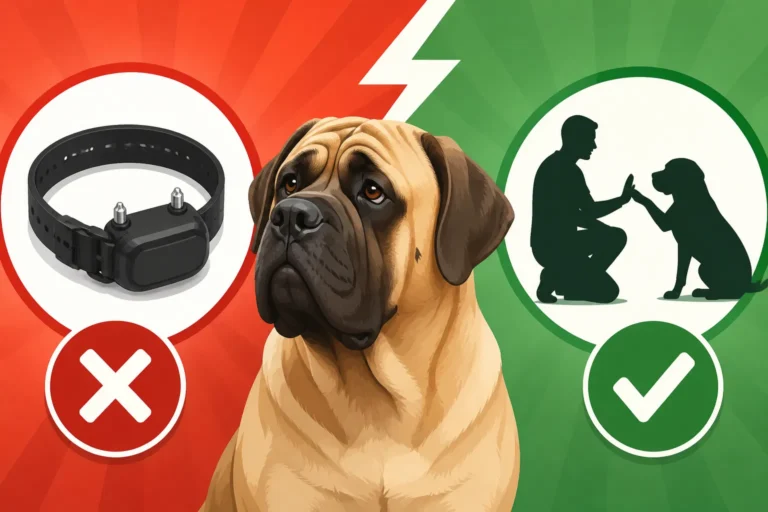
For a breed as physically imposing yet emotionally sensitive as the Mastiff, positive reinforcement isn't just a suggestion; it's practically the only viable path to success. Force and intimidation simply don't work and can actually damage your relationship and make your Mastiff withdraw. Instead, focus on building trust and making every interaction a positive experience.
Building Trust Through Gentle Consistency
A Mastiff needs to trust you implicitly before they'll truly commit to any task. This trust is built through gentle, consistent communication, predictable routines, and always being fair. If you're inconsistent with your commands or your reactions, a Mastiff will quickly learn that your requests are arbitrary and might choose to ignore them. Consistency means everyone in the household uses the same cues, the same hand signals, and the same reward system. This clarity helps your Mastiff understand what's expected of them, which fosters their sense of security.
When you ask your Mastiff to do something, be prepared to follow through gently and reward generously. For example, if you want them to lie down, gently guide them with a lure and reward the moment their elbows hit the ground. Don't repeat the command endlessly; say it once, guide, and reward. This reinforces the idea that your cues are meaningful and lead to good things. Over time, they associate your voice and presence with positive outcomes, deepening their bond with you.
Why Harsh Correction Ruins a Mastiff
Mastiffs are incredibly sensitive dogs, despite their tough exterior. A harsh word, a loud shout, or a physical correction can deeply upset them and erode the trust you're working so hard to build. Rather than motivating them, such tactics will make them shut down, become fearful, or simply refuse to engage. You might get a temporary compliance born of fear, but it comes at the cost of their willingness and your relationship. This is explored further in Why Harsh Correction Ruins a Mastiff. They carry emotional burdens, and negative experiences stick with them.
Imagine trying to train a child who is only ever shouted at or physically reprimanded. They might eventually do what you ask, but they won't do it with enthusiasm or a joyful spirit. The same applies to a Mastiff. Their sheer size means that any confrontation is not only terrifying for them but potentially dangerous for you. A Mastiff isn't a dog that can be physically forced into submission. Instead, they respond to respect, kindness, and clear communication. If a training session isn't going well, it's far better to end it on a neutral note and try again later than to escalate with frustration.
Beyond Basic Treats: High-Value Rewards for a Mastiff
While praise and affection go a long way, most Mastiffs still need tangible rewards, especially when learning something new or in distracting environments. However, not all treats are created equal in the eyes of a Mastiff. You need to pull out the big guns—the high-value stuff—to truly capture their attention and make them think your request is worthwhile.
The Treat Hierarchy: From Kibble to Roast Beef
For a Mastiff, kibble as a reward is generally only effective if they're particularly hungry and there are absolutely no distractions. It's often too low-value to motivate them when there's an interesting smell, a new person, or another dog around. You need a treat hierarchy, starting with their regular food at the bottom and moving up to irresistible delicacies for more challenging tasks.
Here’s a general treat hierarchy to consider:
- Low-Value: Regular kibble, plain biscuits. Useful for everyday "check-ins" or very easy, already-known commands in a low-distraction environment.
- Mid-Value: Store-bought training treats, pieces of dried liver, or semi-moist chewy treats. Good for practicing known commands in slightly distracting areas, or for reinforcing new behaviors in a quiet space. You can find a wide variety of these on Amazon, often in bulk sizes suitable for a Mastiff's appetite.
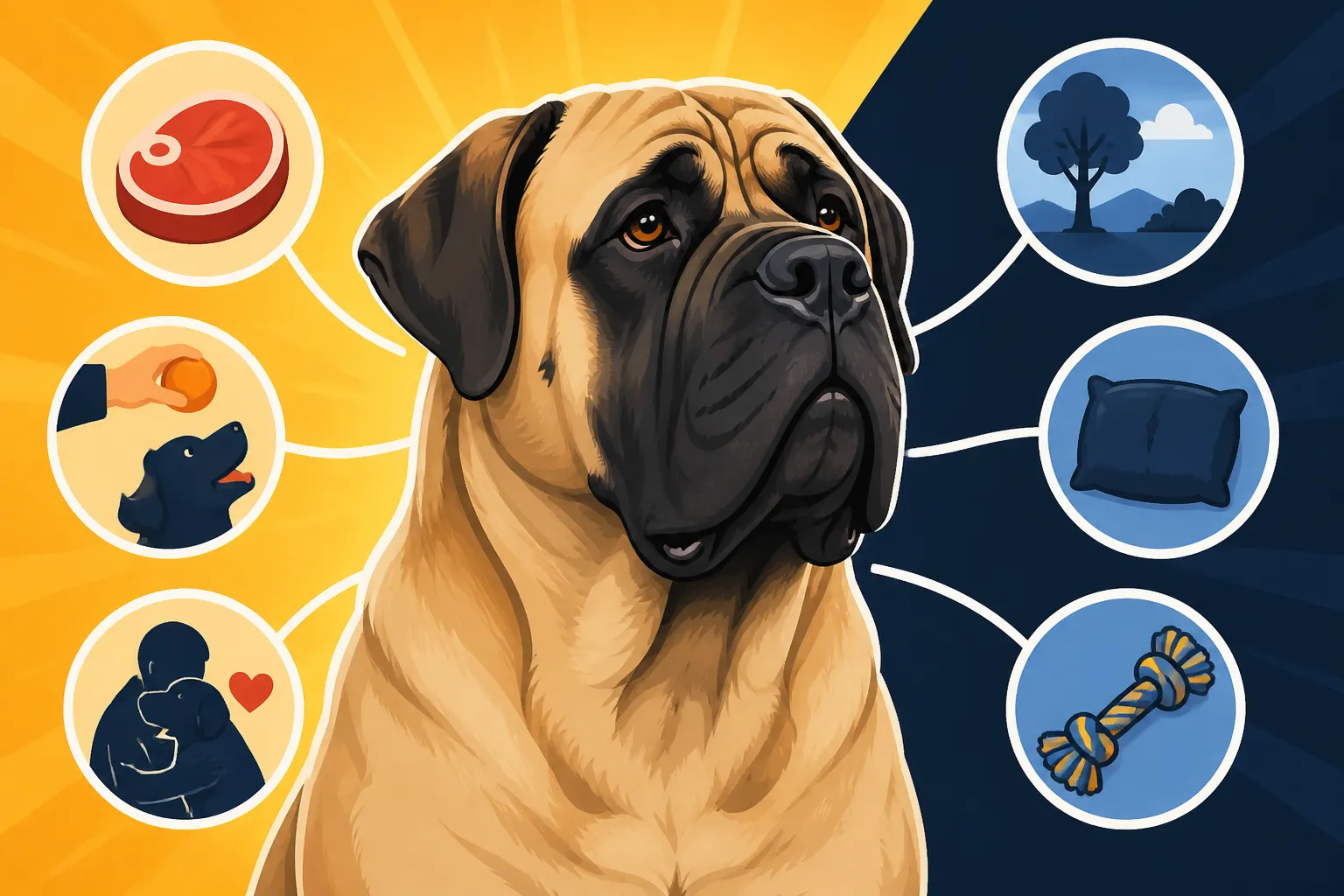
- High-Value: Cooked chicken, cheese, hot dogs, roast beef, or special soft treats. These are your gold standard, reserved for introducing new, difficult commands, working in highly distracting environments, or for recall in an emergency. These are the "jackpots" that tell your Mastiff they've done something truly exceptional.
Experiment to find what your Mastiff considers top-tier. Some go absolutely wild for a sliver of cheese, while others might prefer a bit of cooked, unseasoned chicken. Always cut treats into small, pea-sized pieces to avoid overfeeding and keep them wanting more.
Non-Food Motivators: When a Treat Isn't Enough
While food is often king, some Mastiffs can also be motivated by non-food rewards, especially for specific tasks. These can include:
- Praise and Affection: Genuine, happy praise ("Good boy!") coupled with a favorite scratch or a gentle rub can be very reinforcing. However, for a Mastiff, this usually works best in conjunction with a treat, not as a standalone reward for new learning. They may work for praise alone for simple, well-established behaviors, but not for stretching their comfort zone. Whether a Mastiff Works for Praise delves into this further.
- Favorite Toys: A specific squeaky toy, a durable tug toy, or a puzzle toy might be a great reward for some Mastiffs. If your Mastiff loves to play, a short game of tug or fetch (gentle, given their joints) could be a fantastic motivator after a successful training session. Just ensure the toy itself isn't a distraction during the actual training.
- Environmental Rewards: Access to a favorite spot, permission to go outside, or even the chance to greet a specific person (if they're friendly and calm) can be used as rewards. For example, if your Mastiff is waiting politely at the door, the reward is getting to go out. This leverages their natural desires.
- Training with "Real Life Rewards": This method involves using things your Mastiff wants anyway as their reward for good behavior. Want to go for a walk? Sit politely at the door. Want to eat dinner? Lie down patiently. This is incredibly powerful because it connects the behavior directly to the desired outcome.
The key is to understand your individual Mastiff. What do they truly value? What gets their ears perked up and their tail giving that slow, deliberate thud? What actually motivates a Mastiff is highly individual, but it often circles back to what brings them pleasure or a sense of peace.
Making Training a Game: Engagement and Enrichment
Mastiffs aren't typically driven by a need to perform complex tricks or engage in high-octane activities. Their motivation comes from connection, comfort, and sometimes, a little intrigue. To keep them engaged, training needs to be framed as something enjoyable, not a chore. Short, positive sessions infused with fun and mental stimulation are far more effective than long, repetitive drills.
Short Sessions, Big Wins
One of the biggest mistakes owners make is trying to push their Mastiff through long training sessions. A Mastiff's attention span, especially for repetitive tasks, is not particularly long. They are thinkers, not automatons. Aim for very short, frequent training sessions – perhaps 5-10 minutes, two or three times a day. This ensures you end each session on a high note, leaving them wanting more, rather than dreading the next one. This strategy aligns perfectly with Whether Short Sessions Suit a Mastiff.
Within these short sessions, focus on getting a few successful repetitions of a behavior, then stop. Always finish before your Mastiff gets bored or frustrated. This approach also prevents physical strain on their growing joints if they are still young. For example, practice "sit" three times, reward heavily, and then give them a cheerful "all done!" and let them relax. This positive association builds enthusiasm for future sessions.
Scent Work and Puzzle Toys: Mental Stimulation
Mastiffs might not be natural agility stars, but their minds are keen, and they love to use their noses. Scent work is a fantastic, low-impact activity that taps into their natural instincts and provides immense mental enrichment. Hiding treats around the house or yard and encouraging them to "find it" can be incredibly motivating and tiring for them in a good way. It builds their confidence and gives them a "job" that suits their deliberate nature.
Puzzle toys are another excellent tool for mental stimulation. These toys require your Mastiff to figure out how to get a treat, engaging their problem-solving skills. Look for durable, Mastiff-proof options. Placing their regular meal in a puzzle feeder instead of a bowl can slow down their eating, aid digestion, and provide mental exercise. This can be a great way to motivate them at mealtime. You can find a wide range of these beneficial puzzle toys and sniff mats on Amazon.
The Role of Relationship and Trust in Motivation
Ultimately, the strongest motivator for a Mastiff isn't just a treat or a toy; it's the deep bond and trust they share with their human. They are loyal, devoted companions who thrive on being part of your life. When they see you as a benevolent, trustworthy leader, they are far more inclined to cooperate and even anticipate your wishes.
The Mastiff's Innate Desire to Please (Their Way)
While they might not show it with bouncing enthusiasm, Mastiffs do have a desire to please their family. It's just a more subtle, measured "desire to please" than you might find in some other breeds. They want harmony, and they want to feel useful in their role as guardians and companions. When they understand what you want, and they feel safe and secure in performing it, they will often comply with a quiet grace.
This means your body language, tone of voice, and overall demeanor are hugely important. A calm, confident, and patient presence will encourage cooperation far more than anxiety or frustration. They are keen observers of human emotion. If you're stressed, they'll pick up on it, and it might make them hesitant. Approaching training with a calm, positive attitude reinforces their trust in you as their leader.
How a Professional Trainer Can Help Harness Their Potential
Sometimes, despite your best efforts, you might feel stuck. A Mastiff's size and unique temperament can be challenging, especially for a first-time giant breed owner. This is where a professional, positive-reinforcement trainer can be invaluable. They can help you understand your individual Mastiff's quirks, identify the highest-value motivators, and refine your communication. A good trainer won't try to "break" your Mastiff but will teach you how to motivate and guide them effectively.
Look for trainers who specialize in positive methods and have experience with giant breeds. Group classes can be good for socialization if your Mastiff is comfortable, but private sessions might be more beneficial for tackling specific motivational challenges in a focused environment. Online training resources, such as those from BAXTER & Bella, can also provide structured, positive reinforcement programs that you can follow at your own pace, often with access to certified trainers for personalized advice. These programs often teach owners how to leverage a Mastiff's intelligence and desire for connection, rather than relying on force.
When Motivation Stalls: Troubleshooting Common Issues
Even with the best intentions and highest-value treats, there will be days when your Mastiff seems to hit a wall. Their motivation might stall, or they might simply refuse to engage. Don't panic; this is a normal part of training any dog, especially a Mastiff. The key is to understand why they might be disengaging and adjust your approach accordingly.
Ruling Out Discomfort or Pain
Before assuming your Mastiff is just being stubborn, always rule out physical discomfort or pain. Given their propensity for joint issues like hip and elbow dysplasia, or even just general aches and pains as they age, what looks like lack of motivation could actually be them trying to tell you something hurts. A dog that suddenly refuses to lie down or climb stairs might be experiencing pain.
Observe your Mastiff closely: Are they limping? Are they stiff? Do they vocalize when touched in a certain spot? A quick vet check can rule out underlying medical conditions. An older Mastiff might simply be feeling the effects of Arthritis in a Mastiff at Four and need more time to move or a softer surface to lie on. Never punish a dog for what might be a physical issue. Their immense size means that joint pain can be very debilitating and affect their willingness to move or perform certain actions.
Environmental Distractions and Overwhelm
Mastiffs are observant, and they can easily become overwhelmed or distracted by their environment. What seems like a minor distraction to you—a distant siren, a squirrel in the yard, a new smell—can completely derail a Mastiff's focus. If your Mastiff isn't responding, consider the environment. Is it too noisy? Too many new people? Too many smells?
When motivation stalls, try moving to a quieter, less stimulating area. Start with training in a calm, familiar room in your home, then gradually introduce distractions as your Mastiff gains confidence and proficiency. Remember, what motivates them in a serene environment might not be enough to compete with a bustling park. This goes back to their deliberative nature; they often prioritize environmental assessment over your requests if they perceive anything unusual.
The "I Don't Wanna" and the "Why Bother?"
Sometimes, your Mastiff might genuinely just be having an "I don't wanna" day. They are not machines; they have their own moods and preferences. Pushing through this resistance rarely works and can create negative associations. If your Mastiff is disengaged, bored, or just not feeling it, sometimes the best thing to do is call it a day.
Also consider if your reward is still high-value enough. If you've been using the same mid-value treats for weeks, they might have lost their luster. Rotate your rewards, introduce new high-value items, or incorporate more play if that motivates them. Don't underestimate the "why bother?" factor. If the reward isn't compelling enough for the effort, a Mastiff will simply opt out. They weigh the cost-benefit analysis.
Comparison of Mastiff Motivators
To summarize, here's a quick look at common motivators and their general effectiveness for Mastiffs:
| Motivator Type | Description | Mastiff Effectiveness (General) | Best Use Cases |
|---|---|---|---|
| High-Value Food | Cooked meats, cheese, hot dogs | Very High. Often the most reliable for new or challenging behaviors. | Initial learning, high-distraction environments, recall training. |
| Mid-Value Food | Store-bought training treats, dried liver | Moderate. Good for practice and reinforcing known behaviors. | Everyday commands in familiar settings, maintaining learned skills. |
| Low-Value Food | Kibble, plain biscuits | Low. Only effective if very hungry or for very simple, known behaviors. | Reinforcing simple "freebies," feeding meals in puzzle toys. |
| Praise & Affection | Verbal praise, gentle scratches, cuddles | Moderate to High (when genuine and paired with other rewards). Alone, often insufficient. | Building bond, reinforcing positive behavior after a task, combined with food rewards. |
| Favorite Toys | Durable squeaky toys, tug toys, puzzle toys | Moderate. Depends on individual Mastiff's play drive. | Short play breaks during training, mental enrichment, specific retrieve tasks. |
| Environmental Rewards | Access to desired areas, walks, greetings | High. Powerful when linked directly to a desired behavior. | Teaching manners at doors, waiting for meals, polite greetings. |
| Mental Stimulation | Scent work, puzzle games, short new challenges | High. Prevents boredom, builds confidence, tires them out constructively. | Daily enrichment, low-impact activity, channeling their natural curiosity. |
| Harsh Correction | Shouting, physical punishment, intimidation | Extremely Low/Negative. Damages trust, causes shutdown, can create fear or aggression. | Never recommended for a Mastiff due to their sensitivity and potential for adverse reactions. |
What actually motivates a Mastiff is a patient, understanding owner who provides clear guidance, consistent positive reinforcement, and a deep appreciation for their unique, thoughtful nature. It's less about force and more about finding that sweet spot where their desire for comfort, connection, and a good treat aligns with your training goals.
Disclaimer
This article is for general informational purposes only and does not constitute professional advice. Laws, prices and regulations vary by location and change over time. Consult a qualified professional for guidance on your specific situation.