Why Stairs Are Worse for a Mastiff Than Any Breed
As a Mastiff owner, you know the feeling of having a gentle giant lumbering through your home, a creature of immense love and impressive bulk. But what happens when that beloved companion faces a flight of stairs? Many of us live in multi-story homes, and it’s natural to expect our dogs to navigate them, but for a Mastiff, stairs aren't just inconvenient; they're a significant and often silent threat to their long-term health and well-being. This guide will walk you through exactly why stairs pose such a unique danger to Mastiffs, from their vulnerable growth stages to their senior years, and offer practical strategies to keep your beloved big dog safe and sound.
The Immense Strain of Ascent and Descent
The sheer size and rapid growth rate of a Mastiff mean their bodies are under constant stress, even during everyday activities. Stairs amplify this stress dramatically, putting undue pressure on their developing and aging joints in ways that smaller or even other large breeds simply don't experience to the same degree.
Gravity's Relentless Pull
Imagine carrying an extra 100-200 pounds on your back every time you go up or down a flight of stairs. That's essentially the magnified effect gravity has on a Mastiff. A typical adult male Mastiff can weigh upwards of 200 pounds, with some reaching closer to 230 pounds or more. Each time they lift a leg to climb a step, or brace themselves to descend, that entire colossal weight is momentarily borne by fewer limbs, often transferring immense force through their elbows, hips, and knees.
During descent, the impact is particularly jarring. They effectively "fall" down each step, catching themselves with their joints. This isn't a gentle motion for such a heavy animal. The force of this impact, concentrated on small areas of cartilage and bone, is far greater than what a smaller dog experiences. A Labrador, for example, weighing 60-80 pounds, exerts far less force, and its skeletal structure is often more agile and compact, built for more dynamic movement. The Mastiff, with its profound depth of chest and often heavier front end, is simply not engineered for repeated stair work.
Impact on Developing Joints
The period when a Mastiff is growing from a cute, clumsy puppy to a towering adult is the most critical and vulnerable time for their joints. These pups gain an incredible amount of weight in a short period. For instance, a Mastiff puppy can put on several pounds a week, rapidly expanding its frame. This rapid growth means their growth plates—the soft, cartilaginous areas at the ends of long bones where new bone is formed—are open and particularly susceptible to damage.
Repeated jarring from stairs can cause microtrauma to these delicate growth plates. It can also contribute to improper joint formation, leading to severe orthopedic issues later in life. Conditions like hip dysplasia and elbow dysplasia, which are already prevalent in giant breeds, can be exacerbated by the constant, abnormal stresses placed on immature joints by navigating stairs. A puppy's joints are like wet cement; you want them to set smoothly and correctly without cracks or divots. Excessive stair climbing is like walking all over that wet cement. This is why many breeders and veterinarians strongly advise that a Mastiff puppy must not be exercised hard, especially in ways that involve repetitive impact or jumping, which includes stairs. Ensuring proper skeletal development during this crucial phase is paramount for their comfort and mobility throughout their short lifespan.
The Mechanics of the Mastiff Body
Beyond their sheer weight, the specific conformation of a Mastiff's body makes stairs uniquely challenging. They possess a deep chest, powerful hindquarters, and often a broad, heavy head. This build, while majestic, is not designed for agility or quick changes in elevation.
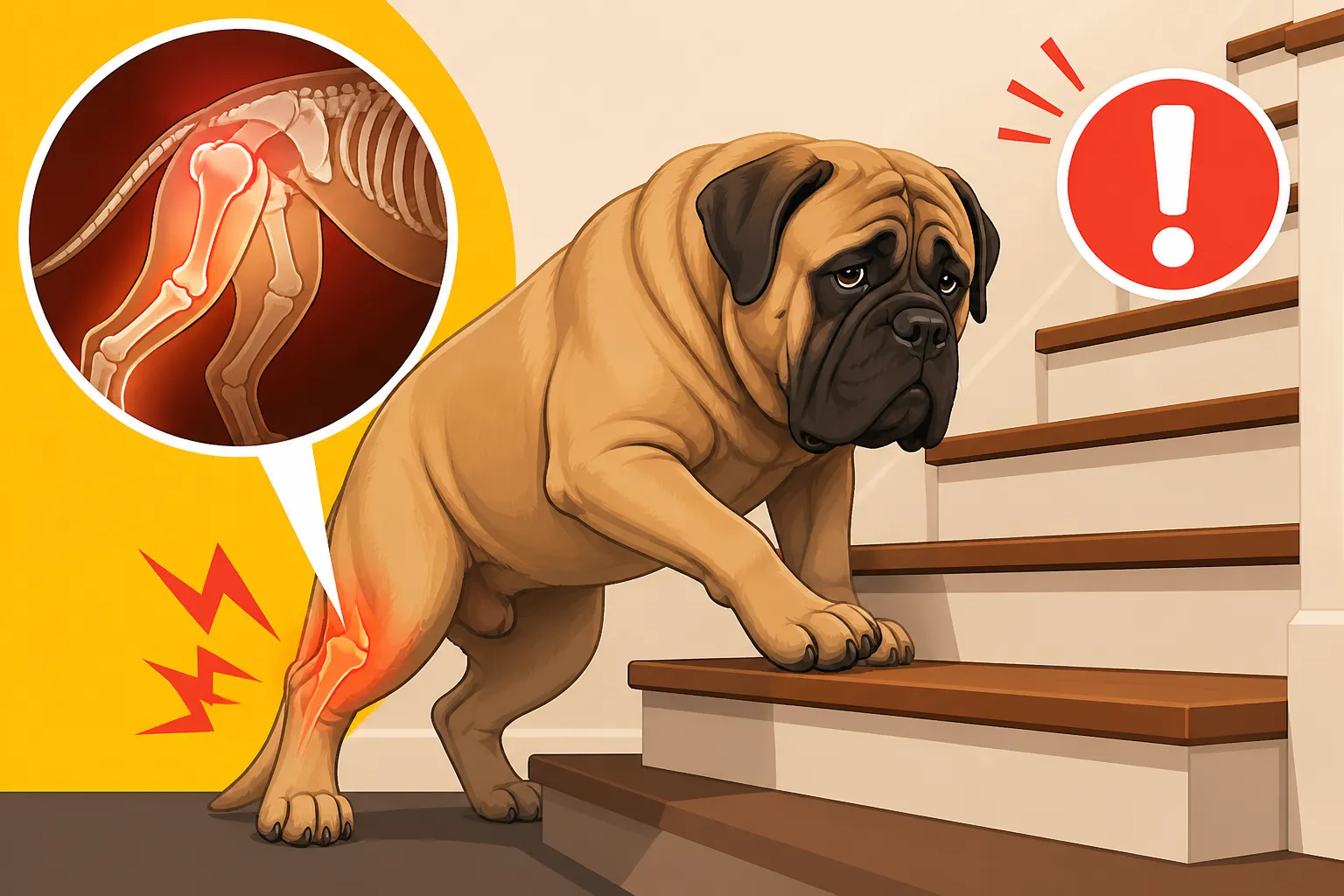
When ascending, a Mastiff often has to hunch its back, stretching its hind legs awkwardly to reach the next step while its heavy front end pulls it forward. This puts tremendous strain on their lumbar spine and hips. When descending, their long bodies and substantial front-end weight can make them front-heavy, causing them to pitch forward and rely heavily on their elbow and shoulder joints to absorb the shock. Their often-straight rear angulation, typical for the breed, can also make it harder for them to use their hindquarters effectively as shock absorbers, forcing more strain onto their forelimbs. This awkward, unbalanced movement isn't just uncomfortable; it sets the stage for chronic pain and debilitating conditions.
Long-Term Consequences Beyond Puppyhood
The dangers of stairs don't magically disappear once your Mastiff reaches adulthood. In fact, for mature and senior Mastiffs, the cumulative effect of stair use can be even more severe, accelerating degeneration and increasing the risk of acute injury.
Exacerbating Existing Conditions
For adult Mastiffs, stairs can significantly worsen any pre-existing joint issues, even those that haven't shown obvious clinical signs yet. Many Mastiffs develop arthritis in their hips, elbows, or spine as early as four years old. A dog already dealing with the stiffness and pain of arthritis will find each step a painful ordeal, further inflaming joints and accelerating cartilage breakdown.
Consider a Mastiff with undiagnosed, mild hip dysplasia. Every time they clamber up or down stairs, the grinding and uneven pressure on their hip joints intensify, leading to faster progression of the disease. The same applies to elbow dysplasia. If your Mastiff has been certified by OFA with less than optimal scores, stairs are almost guaranteed to contribute to their eventual discomfort. Even conditions like degenerative myelopathy in a Mastiff, which impacts nerve function and coordination in the hind limbs, can be made much worse. A dog losing strength and proprioception in its hindquarters cannot safely navigate stairs, turning a simple task into a dangerous fall risk. These chronic impacts can also lead to issues like torn cruciate ligaments, a devastating injury requiring extensive surgery and recovery, especially challenging for a dog of this size.
Risk of Acute Injury
Beyond the slow, insidious damage, stairs present an immediate risk of acute injury for a Mastiff. Their size, combined with potentially slippery surfaces or narrow treads, makes slips and falls dangerously common. A Mastiff losing its footing on stairs isn't like a terrier taking a tumble; it's a massive, uncontrolled cascade of weight that can lead to severe consequences.
Imagine your Mastiff, perhaps a little tired or distracted, misjudging a step on the way down. The resulting fall could lead to broken bones, dislocated joints, severe sprains, or even head trauma. The force involved when a 200+ pound animal falls is immense. These types of injuries can be catastrophic, not just for the dog's well-being but also for your wallet. Veterinary care for a major orthopedic injury in a giant breed is often specialized and expensive. This is where having robust pet insurance, like a plan from Healthy Paws, can be an absolute lifeline, helping to cover the often staggering costs associated with treating such severe injuries. Without such coverage, these situations can quickly become financially overwhelming.
The Cumulative Wear and Tear
Think of stairs as sandpaper on your Mastiff's joints. Each pass, each step, wears down the protective cartilage a little more. Over months and years, this cumulative wear and tear leads to premature joint degradation. What might be a minor ache in a young adult Mastiff can become debilitating pain in their senior years, significantly impacting their quality of life.
This constant stress leads to bone spurs, thickening of joint capsules, and reduced range of motion. It means that by the time your Mastiff is five or six, which is considered senior for the breed, they might be experiencing significant discomfort and difficulty with basic mobility, all accelerated by years of stair use. This can manifest as difficulty getting up, a reluctance to move, or a general slowing down that is often mistaken for just "getting old" rather than a symptom of chronic pain caused by years of unnecessary joint strain. It shortens their comfortable, active years and increases their reliance on pain medication and supportive care much earlier than necessary.
Practical Strategies for Navigating a Multi-Level Home
Living in a multi-level home with a Mastiff doesn't mean you're doomed to a life of joint issues. With a bit of planning, modification, and patience, you can effectively manage their environment and protect their precious joints.
Avoiding Stairs Entirely
The simplest and most effective solution is to limit your Mastiff's access to stairs as much as possible, especially during their critical growth phases. This often means designating a specific living area on a single floor for your dog.
- Baby Gates: Heavy-duty, pressure-mounted baby gates or even screw-mounted gates are essential for blocking off staircases. You'll need gates that are tall enough and sturdy enough to withstand a Mastiff's weight and determination. Install them at both the top and bottom of all staircases.
- Single-Floor Living: If your home layout allows, try to centralize your Mastiff's food, water, sleeping area, and primary living space on the ground floor. This minimizes their need to go upstairs at all.
- Designated Areas: Create comfortable, safe zones on the ground floor where your Mastiff can relax and feel secure. This might mean setting up their bed in the living room or a large kitchen area. Remember that even moving between rooms on hard floors can be tricky for a Mastiff; consider using runners through the house to provide better traction.
The Art of Assistance
Sometimes, completely avoiding stairs isn't feasible, especially for occasional trips upstairs or during emergencies. In these situations, you'll need to learn how to safely assist your Mastiff.
- Support Harnesses: Invest in a sturdy, full-body support harness designed for large or giant breeds. Brands like Ruffwear or Help 'Em Up Harness are often recommended. These harnesses have handles over the hips and shoulders, allowing you to lift and stabilize your Mastiff as they navigate steps. This is particularly useful for an older Mastiff that cannot get up easily or one recovering from an injury.
- Controlled Ascent/Descent: Always go slowly. For descent, go ahead of your Mastiff, holding the harness handles, guiding them one step at a time. For ascent, follow behind, providing support and leverage. Verbal cues and praise can help calm them and encourage cooperation.
- Team Lifting: For very heavy or uncooperative Mastiffs, or those with significant mobility issues, it might take two people to safely navigate stairs. One person can support the front, the other the rear, using harnesses or a large towel slung under their belly. Never attempt to lift a struggling Mastiff alone if you are not physically capable, as this can lead to injury for both of you.
Ramps and Alternatives
For permanent solutions to multi-level access, especially for older Mastiffs, ramps can be a game-changer.
- Indoor Ramps: Custom-built or heavy-duty modular ramps can be installed over staircases. These need to be wide enough, have a gentle incline, and feature a non-slip surface. The longer the ramp, the less steep the incline, which is always better for a Mastiff.
- Outdoor Ramps: If your Mastiff needs to get from a raised deck to the yard, or into a vehicle, a portable or fixed ramp can prevent dangerous jumps and strain. Look for ramps rated for at least 250-300 pounds.
- Elevators/Lifts: While a significant investment, for dedicated owners in multi-story homes with very old or disabled Mastiffs, a residential elevator or stair lift (modified for a dog) can provide dignified and safe access to all levels.
Supporting Joint Health
Beyond environmental modifications, proactive health management is crucial for protecting your Mastiff's joints throughout their life.
- Optimal Nutrition: Feed a high-quality, large-breed appropriate diet, especially during puppyhood, to ensure slow, steady growth without promoting excess weight gain. Pay attention to the protein and calcium levels in puppy food, as too much can be detrimental to giant breed development.
- Weight Management: Keeping your Mastiff lean is perhaps the single most important factor in preventing and managing joint issues. Every extra pound your Mastiff carries translates to increased stress on their joints. You should be able to feel their ribs easily without seeing them prominently. This is why a Mastiff is dosed by lean weight and not scale weight for many medications, as their sheer mass can obscure true health indicators.
- Joint Supplements: Many veterinarians recommend starting joint supplements for a Mastiff early in life, sometimes as young as one year old. Ingredients like glucosamine, chondroitin, and MSM can help support cartilage health and reduce inflammation. Fish oil is another excellent addition for its anti-inflammatory properties.
- Regular, Moderate Exercise: While intense exercise and stairs are out, regular, gentle exercise like controlled walks on soft surfaces (grass, dirt trails) is vital for maintaining muscle tone, joint flexibility, and a healthy weight.
| Feature | Mastiff Puppy & Adolescent | Adult Mastiff | Senior Mastiff |
|---|---|---|---|
| Joint Status | Growth plates open, cartilage forming | Fully formed, but susceptible to wear | Degenerative changes, arthritis |
| Stair Impact | High risk of microtrauma, improper development | Accelerates wear, exacerbates existing conditions | Severe pain, acute injury risk, rapid decline |
| Recovery from Injury | Generally better, but can set up lifelong issues | Moderate, but challenging due to weight | Poor, often leads to euthanasia |
| Recommended Action | Strict avoidance, carry if possible | Strong discouragement, assistance if unavoidable | Absolute avoidance, ramp or lift solutions |
When Professional Help Becomes Essential
Even with the best preventative measures, Mastiffs are prone to joint issues due to their genetics and size. Knowing when to seek professional help is vital for maintaining their quality of life.
Recognizing Signs of Discomfort
Mastiffs are stoic creatures, and they might not always vocalize their pain. You need to be observant of subtle changes in their behavior or movement, particularly if they've been exposed to stairs.
- Reluctance or Hesitation: A Mastiff who previously navigated stairs easily might suddenly slow down, hesitate at the top or bottom, or refuse to use them altogether.
- Stiffness or Lameness: You might notice them favoring a limb, a slight limp, or stiffness, especially after resting. Pay attention to the shifting lameness of a growing Mastiff, as this can be an early indicator of orthopedic issues.
- Difficulty Rising: Struggling to stand up from a lying position, or taking longer to get going in the morning, are classic signs of joint pain.
- Changes in Gait: A wobbling gait, particularly in the hindquarters, or an unwillingness to place full weight on a limb.
- Behavioral Changes: Increased irritability, less interest in play, or even a snap when touched in a certain area could indicate pain.
- Panting or Trembling: These can be signs of pain or anxiety related to movement.
Consulting Your Veterinarian
If you notice any of these signs, don't wait. Early intervention is key. Your veterinarian can perform a thorough examination, including orthopedic evaluations, x-rays, and potentially other diagnostics like MRI if needed.
Discuss your Mastiff's history with stairs and any concerns you have. Your vet can provide a diagnosis and recommend a treatment plan, which might include pain management medications, anti-inflammatory drugs, or joint protective agents. They can also advise on appropriate exercise levels and dietary adjustments. Remember, proactive veterinary care, supported by pet insurance providers like Healthy Paws, can make a huge difference in managing chronic conditions and ensuring your Mastiff receives the best possible care without undue financial stress.
Physical Therapy and Mobility Aids
For Mastiffs with established joint disease or those recovering from injury, physical therapy and mobility aids can significantly improve their comfort and function.
- Physical Therapy: Canine physical therapy often includes exercises to build muscle, improve range of motion, and reduce pain. Hydrotherapy (underwater treadmill or swimming) is particularly beneficial as it allows for exercise with minimal impact on joints.
- Acupuncture and Laser Therapy: These complementary therapies can help manage pain and inflammation in chronic conditions like arthritis.
- Custom Braces or Orthotics: For specific joint instabilities, a custom brace can provide support and comfort.
- Wheelchairs or Carts: For Mastiffs with severe hind limb weakness or paralysis, such as those with advanced degenerative myelopathy, a custom-fitted cart can give them back their mobility and independence, allowing them to enjoy walks and quality time with their family. Learning to lift an old Mastiff that cannot get up is a skill every owner of a senior giant breed needs, and sometimes a cart makes all the difference.
Taking stairs out of the equation for your Mastiff isn't just about avoiding a fall; it's about safeguarding their skeletal health, preventing chronic pain, and allowing them to live their best, most comfortable life with you for as long as possible. Their immense size is part of their charm, but it also comes with unique responsibilities for us as their caregivers.
Disclaimer
The information provided in this article is for general informational purposes only and is not a substitute for professional veterinary advice. Always consult with a qualified veterinarian for any health concerns or before making any decisions related to your Mastiff's care.