Whether Mastiffs Sailed on the Mayflower
The familiar story says an English Mastiff and a spaniel crossed the Atlantic aboard the Mayflower, but the historical record is less tidy than that sentence suggests. This guide separates the long-repeated tradition from what can actually be established, explains what “Mastiff” meant in the seventeenth century, and shows why the story does not prove today’s breed descends directly from one shipboard dog.
Did Mastiffs sail on the Mayflower
The popular story and the limits of the evidence
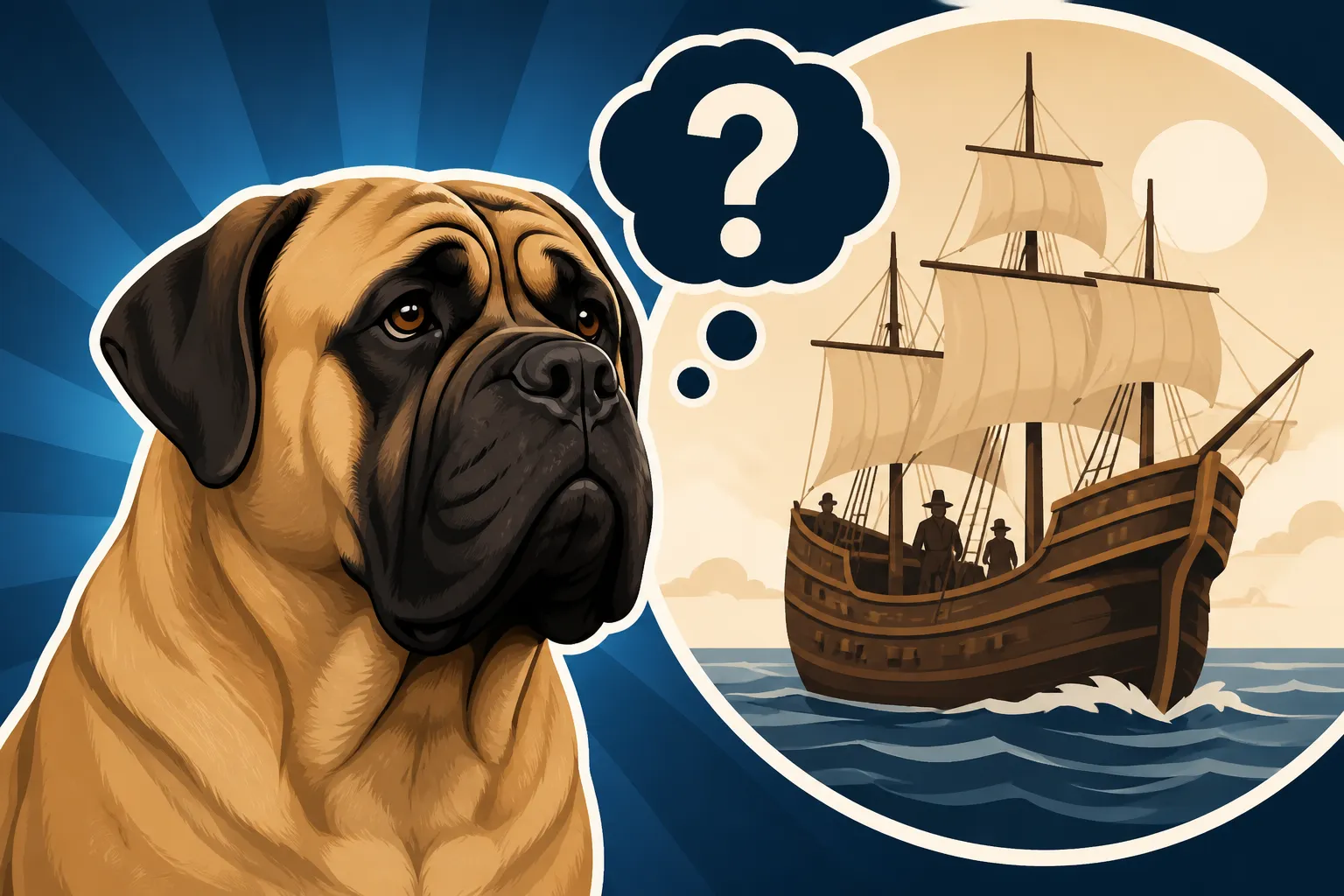
The most commonly repeated account says that a Mastiff and a spaniel were aboard the Mayflower when it sailed to Plymouth in 1620. It is an appealing image: a large, imposing dog stepping ashore alongside the Pilgrims, then becoming part of the early history of the colony. But the story should be treated as a tradition, not as a fully documented passenger record.
The Mayflower passenger lists focus on people. They do not give us a reliable, complete roster of every animal aboard, nor do they provide a named dog with a documented owner and a traceable life after landing. So while accounts of dogs traveling with the settlers are part of the ship’s familiar history, it is difficult to establish the identity of a particular animal or confirm its breed in the modern sense.
A useful distinction is that a dog being present in the early Plymouth settlement is not the same as having proof that a specific dog sailed on the Mayflower. Early colonial writing describes dogs, including large Mastiff-type dogs, but such references do not automatically identify the animal as a ship passenger. The distinction matters because popular retellings often turn a plausible story into a certainty.
What early accounts can and cannot tell us
Writers from the early Plymouth colony did refer to dogs. William Bradford’s history, for example, includes references to dogs in the settlement. Those mentions help establish that dogs were part of colonial life, but they do not provide the kind of detail a modern reader might expect: a registered breed, a named dog, a complete travel record, or a family tree linking that animal to today’s Mastiffs.
Even a contemporary writer’s use of the word “Mastiff” needs care. It may describe a large, powerful type of dog rather than a standardized breed with the appearance and pedigree rules used by modern kennel organizations. The word can be historically informative without meaning precisely what “Mastiff” means to a present-day breeder or owner.
That is why a careful answer is: a Mastiff-type dog may have sailed on the Mayflower, and tradition commonly says one did, but the exact animal and its modern breed identity are not conclusively established by a passenger roster. This is not a reason to dismiss the story. It is a reason to keep the story’s uncertainty visible.
What “Mastiff” meant in the seventeenth century
A type of dog, not today’s standardized breed
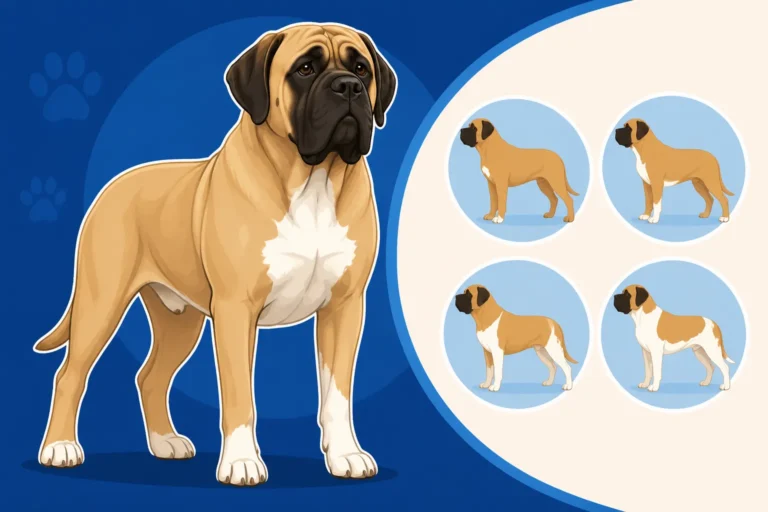
In 1620, the English Mastiff had not yet been shaped by the modern system of breed standards, closed studbooks, and formal registration. People used dog names in ways that could refer to a recognizable kind of animal, a working role, or a broad family of dogs. A large guardian dog described as a Mastiff would not necessarily match the exact measurements, coat, head, or temperament expected of a modern English Mastiff.
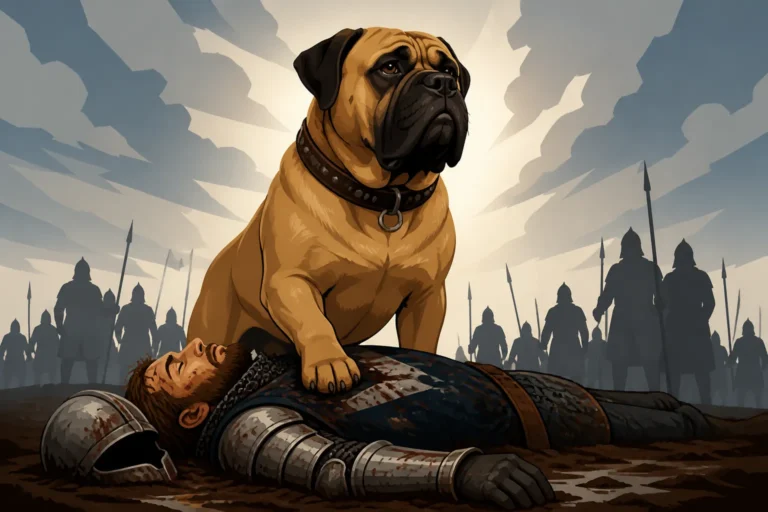
Dogs were valued for what they could do. A substantial dog might guard a home or livestock, deter unwanted visitors, or accompany people during travel. Those practical jobs shaped which animals were kept and bred. The historical story therefore points toward a useful, powerful dog type—not necessarily a direct snapshot of the contemporary breed.
This is one reason the Mayflower account can be both meaningful and easy to overstate. A dog recognized as a Mastiff by people of its time could have looked different from the dog most readers picture today. For a broader look at the breed’s background, see Where the Mastiff Came From Before Britain and How the Mastiff Was Bred Away From Fighting.
Why modern breed labels can mislead
Modern breed names make it tempting to imagine a neat, unbroken line from one celebrated dog to every Mastiff alive today. In reality, breeds change over time. Their appearance, accepted purpose, and rules for identifying them can shift as people select for particular traits and formalize standards.
The modern Mastiff is therefore not simply an unchanged version of a dog that might have crossed the Atlantic centuries ago. Historical dogs may have contributed, directly or indirectly, to later populations, but the Mayflower story alone cannot demonstrate ancestry. A shipboard dog could not be connected to modern pedigrees without records showing its offspring and descendants across generations.
The word itself also needs context. The American Kennel Club officially calls the breed the Mastiff, while “English Mastiff” is often used conversationally to distinguish it from other breeds with Mastiff in their names. For how naming and recognition vary, see What the AKC Officially Calls the Mastiff and Whether the Mastiff Is Recognized the Same Way Worldwide.
| Question | What the evidence supports | What remains uncertain |
|---|---|---|
| Were dogs part of early Plymouth life? | Historical accounts describe dogs in the settlement. | Whether every dog mentioned arrived on the Mayflower. |
| Does tradition say a Mastiff sailed? | Yes. The familiar account often pairs a Mastiff with a spaniel. | The identity, owner, and exact breed of a specific shipboard dog. |
| Was it the same breed as today’s Mastiff? | It may have been a large dog described as a Mastiff or Mastiff-type. | Whether it matched the modern standardized breed. |
| Does the story prove modern Mastiffs descend from that dog? | No. | Any direct lineage would require records that connect generations. |
How the Mayflower story became part of Mastiff history
A memorable detail that travels well
The story has all the ingredients of a durable historical anecdote: a famous voyage, a new settlement, and a large dog imagined beside the people who made the journey. It is easy to picture and easy to repeat. Over time, that vivid image can sound more certain than the surviving evidence warrants.
Stories about old breeds often work this way. A genuine historical detail—such as dogs being present in the colony—gets retold in a more specific form. A later version may name the type of dog, then another may present that type as an unquestionably documented passenger. Each step makes the story smoother, but not necessarily better supported.
The Mayflower tradition also fits what people already associate with Mastiffs: size, strength, and a calm but imposing presence. Those traits make the dog seem like a natural companion for a difficult Atlantic crossing and a rough early settlement. Yet a plausible role is not proof that a particular dog was aboard. The breed’s long working history is worth exploring separately in Whether Mastiffs Were Used as War Dogs.
How to repeat the story responsibly
If you are writing about the breed, telling the story to children, or discussing it with another Mastiff owner, a small wording change makes a big difference. Say that tradition holds a Mastiff or Mastiff-type dog sailed on the Mayflower, rather than presenting the animal as a confirmed, individually documented passenger.
It also helps to distinguish three claims that are often blended together: dogs lived in early Plymouth; a Mastiff-type dog may have traveled with the settlers; and a modern English Mastiff descends from that particular dog. The first is supported by early references to dogs in the colony. The second is a familiar historical tradition. The third is not established by the Mayflower story itself.
That careful wording does not make the anecdote less interesting. It gives readers a clearer picture of how breed history is reconstructed, especially when the records are incomplete and the meaning of breed names has changed. For another example of how the modern breed differs from earlier populations, see How the Modern Mastiff Differs From the Prewar Type.
What the story means to Mastiff owners today
Appreciate the heritage without treating it as a pedigree
The Mayflower story can be a charming part of Mastiff heritage, but it should not be used as proof that an individual dog has a particular historic lineage. A puppy’s ancestry is established through its pedigree and the records behind it, not through a general story about dogs that may have been on an early colonial voyage.
This distinction is useful when evaluating claims about a breed’s past. Ask whether the claim is supported by contemporary writing, later tradition, or modern interpretation. Those categories can all be valuable, but they are not interchangeable. A tradition can preserve an old belief; it cannot, by itself, provide the missing generations of a family tree.
If you are curious about how Mastiff owners describe the realities of living with the breed, What Mastiff Owners Wish They Had Known offers a different perspective: less about a famous voyage and more about sharing a home with a very large dog. The history is part of the appeal, but everyday needs are shaped by the dog in front of you.
Keep historical curiosity separate from modern care
A seventeenth-century dog and a modern Mastiff would not have had the same food, veterinary care, or household setup. Today’s owners have practical decisions to make about nutrition, bedding, cleaning supplies, and equipment that fits a giant breed. Those are modern care questions, not evidence about what the Mayflower dog looked like or how it lived.
For routine supplies, owners may browse retailers such as Chewy for food, washable bedding, or cleaning products, while choosing items that suit their own dog and checking with a veterinarian when a health concern is involved. Chewy can help with present-day shopping; it cannot verify a historical claim or establish a dog’s ancestry. Keeping those questions separate avoids confusing a convenient modern resource with a source of breed history.
The story’s best use is as a starting point for curiosity. It invites a closer look at how people and dogs traveled, worked, and lived together, while reminding us that the historical record has gaps. A Mastiff-type dog may have crossed the Atlantic with the Pilgrims, but the strongest version of the story is also the most careful: tradition says yes; definitive identification remains uncertain. When you turn from that history to caring for a Mastiff today, Chewy may be one place to look for everyday supplies, but your dog’s specific needs are best guided by its veterinarian and the people who know it well.
Disclaimer
This article is for general informational purposes only and does not constitute professional advice. Laws, prices and regulations vary by location and change over time. Consult a qualified professional for guidance on your specific situation.