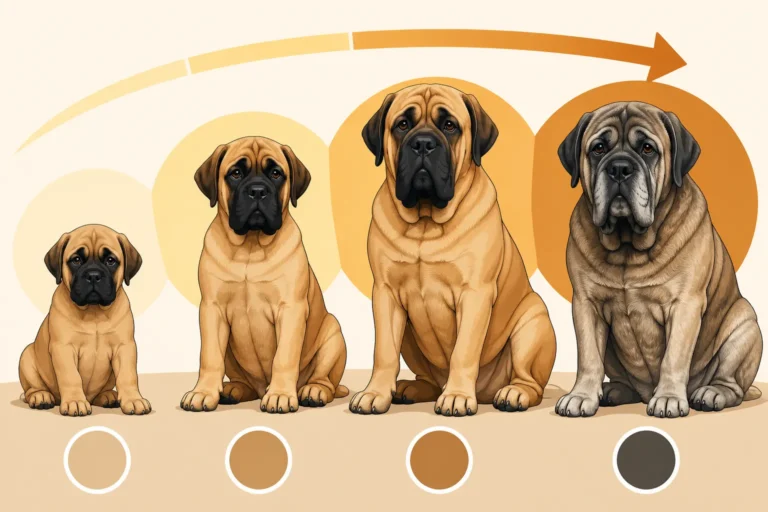
How a Cane Corso Moves Against a Mastiff
A Cane Corso and a Mastiff can both look imposing, but they usually move in noticeably different ways. The Corso tends to appear more athletic and quick-footed, while the Mastiff’s heavier build often gives it a slower, more measured stride. This guide explains what those differences look like, what affects them, and how to tell ordinary breed variation from a movement problem.
How their movement tends to differ
The Cane Corso’s athletic, purposeful gait
A healthy Cane Corso often looks ready to change direction or accelerate. The breed is muscular and substantial, but its outline is generally more athletic than a Mastiff’s. In everyday life, that can show up as a brisk trot across the yard, quick turns when following a person, or a more energetic response when heading out for a walk.
That doesn’t mean every Corso is constantly active or that every Mastiff is slow. Age, fitness, temperament, training, and individual structure all matter. A relaxed Corso may stroll calmly, while a fit Mastiff may move with more spring than people expect. Still, when you watch two sound adult dogs walking side by side, the Corso may appear lighter on its feet and quicker to change pace.
The difference is easiest to see during transitions. A Corso may turn, pause, and set off again with little visible effort. A larger Mastiff may take a moment to gather itself, especially after lying down or after a long rest. That pause alone isn’t a problem. It becomes more concerning when the dog seems painful, repeatedly struggles to rise, or avoids movements it used to manage comfortably.
The Mastiff’s deliberate, weight-bearing movement
A Mastiff carries considerably more mass, so its movement often looks more deliberate. Its stride may be long and steady, but the dog isn’t necessarily built for repeated bursts of speed or sharp, athletic turns. The effort of moving a large body is part of the picture; a dog’s size and body condition can affect how freely it walks. For context, see What a Mastiff Actually Weighs.
A Mastiff may also take wider turns than a Corso, particularly in a tight hallway or around furniture. On a walk, it might settle into an even pace rather than repeatedly surging ahead and changing direction. That can look like laziness, but many Mastiffs simply prefer a lower-key rhythm. Their movement should still be comfortable and coordinated, not stiff or labored.
Weight is not the only explanation for a slow gait. A dog carrying excess body fat may tire sooner and place more stress on its joints. A dog that has lost muscle, is recovering from an injury, or has an underlying health issue may also move cautiously. It’s more useful to assess your own dog’s usual movement than to assume that any slowness is “just a Mastiff thing.”
A practical comparison at a glance
| Movement feature | Cane Corso tendency | Mastiff tendency |
|---|---|---|
| General impression | More athletic and ready to change pace | More measured, with greater mass to move |
| Turning | Often appears quicker and more agile | May take wider, more deliberate turns |
| Walking pace | Can sustain a brisker-looking pace when fit | Often comfortable at a steady, moderate pace |
| Getting up | May rise and move off promptly | May take longer, especially when large or older |
| Movement on slippery floors | Can still slip, especially when moving quickly | Large body weight can make a slip more consequential |
| Best comparison | Look at the individual dog’s normal movement | Look at the individual dog’s normal movement |
These are broad tendencies, not a scorecard for judging either breed. A healthy, comfortable dog should move in a coordinated way that suits its build.
What changes the way each dog moves
Build, condition, and age
Breed is only one part of the explanation. Within either breed, dogs differ in height, proportions, muscle, and body condition. A lean, well-conditioned Mastiff may move more comfortably than an overweight dog of the same breed. A Corso that is out of condition may appear less agile than a healthy Mastiff. Comparing a young adult Corso with an older Mastiff also tells you more about age and health than breed alone.
Puppies are a separate case. Their bodies are still developing, and rapid growth can make coordination look a little awkward. Avoid trying to build a puppy’s athleticism through forced running, long hikes, or repetitive high-impact games. For more on safe activity during growth, see Why a Mastiff Puppy Must Not Be Exercised Hard.
Older dogs may take longer to rise or show less enthusiasm for a long walk. Some slowing can accompany age, but new or worsening stiffness deserves attention rather than an automatic explanation of “getting old.” A change from the dog’s own usual pattern is often more useful than a comparison with a younger dog of another breed. The guide The Age a Mastiff Starts to Slow explores that distinction further.
Surface, space, and everyday obstacles
The floor under a dog’s feet can change its movement dramatically. Hardwood, polished tile, and other slick surfaces make it harder to push off and stop securely. A Mastiff’s size can make a slip look especially dramatic, while a quick-moving Corso may be more likely to skid during a sudden turn. Either dog can strain itself if it repeatedly scrambles for traction.
Make the paths your dog uses most predictable. Put secure runners where it gets up, turns, or approaches food and water. Keep nails trimmed and paw hair from obscuring the pads if your veterinarian or groomer recommends it. See Why a Mastiff Slips on Hardwood for more practical traction considerations.
Measure before buying floor coverings or equipment. A runner that bunches up can become a trip hazard, and a mat that slides under a turning dog doesn’t solve the problem. If you’re comparing options at a pet retailer such as Chewy, check dimensions, backing, and whether the item can be secured on your particular floor. The important thing is a stable surface, not a specific brand.
Space matters, too. A narrow doorway or cluttered entry can force a large dog into awkward turns. Give both breeds enough room to turn without bumping into furniture, and avoid encouraging sudden pivots on slippery flooring. A Corso may negotiate a tight space more quickly, but that doesn’t mean it is immune to falls or joint strain.
Exercise and pace
A Corso’s more athletic appearance can tempt people to assume it needs strenuous exercise every day. A Mastiff’s heavier build can lead owners to make the opposite mistake and keep it inactive. Neither assumption is a good substitute for an age-appropriate plan that takes the individual dog’s fitness and health into account.
For an adult dog in good health, regular walks and varied, controlled activity can help maintain fitness. Increase duration gradually rather than suddenly turning a short walk into a demanding outing. Watch for lagging, repeated stopping, unusual panting, or a change in gait, and give the dog a chance to rest. For breed-specific walking considerations, read Whether a Mastiff Can Hike.
A harness can make it easier to guide a large dog without relying on a collar alone, but fit and training matter. It should not rub, restrict shoulder movement, or encourage you to pull the dog through a movement it is resisting. If comparing sizes or styles at Chewy or another retailer, measure the dog and check how the harness sits while it walks—not just whether the straps close around its chest.
When a movement difference may signal a problem
Signs that deserve a closer look
A breed’s typical movement is not a reason to ignore discomfort. Pay attention if your dog develops a limp, repeatedly favors one leg, has difficulty standing, or seems reluctant to walk on a surface it previously handled. Other clues include a shortened stride, stiffness that persists after resting, stumbling, or a change in how the dog places its feet.
Notice whether the change came on suddenly or gradually. A sudden inability to bear weight, severe pain, collapse, or rapidly worsening weakness calls for prompt veterinary attention. For a less dramatic but persistent change, arrange an examination and describe what you have noticed: when it happens, which leg seems affected, and whether it improves or worsens with activity.
A brief video can be helpful if the movement looks normal by the time you reach the clinic. Film the dog walking from the front, side, and rear on a safe, non-slip surface. Don’t make it run, climb stairs, or repeat a movement that appears painful just to capture footage.
Coordination problems are different from a slow gait
A slow, steady walk is not the same as poor coordination. If a dog is knuckling over its paws, dragging its toes, crossing its legs unexpectedly, wobbling, or struggling to place its feet, contact a veterinarian. These signs can have many causes, and an online breed comparison cannot identify which one is responsible.
Neck or back discomfort, joint problems, injuries, and neurological conditions can all affect movement. In Mastiffs, it’s especially important not to dismiss a worsening hind-end problem as ordinary heaviness or stubbornness. Whether a Mastiff Gets Wobbler Syndrome explains one condition owners may ask about, but only a veterinary assessment can determine whether it fits an individual dog’s symptoms.
Don’t test a dog’s balance by making it walk on stairs or slippery floors. Keep the route clear, use traction, and provide help only in a way you can manage safely. If your dog is too heavy for you to support without risking a fall, ask your veterinary team for handling advice rather than attempting a lift alone.
Choosing the right expectations for your dog
Compare the individual, not just the breed
The fairest comparison is between dogs of similar age, fitness, and health moving on the same safe surface. Watch how each starts walking, turns, and settles into a pace. Does the dog move evenly? Does it appear comfortable getting up? Can it stop without skidding or seeming unsteady? Those observations are more useful than deciding that one breed is “better” at movement.
Temperament also affects what you see. A Corso that is alert to its surroundings may move briskly because it is engaged, while a Mastiff who has just woken from a nap may take its time. A dog may also hesitate because it is uncertain, distracted, or uncomfortable—not simply because of its body type.
For more breed-level context, The Mastiff Against a Cane Corso compares their broader differences, while Whether a Mastiff Is Calmer Than a Cane Corso looks at temperament rather than gait. Keeping those questions separate helps avoid mistaking personality for physical ability.
Make the home support comfortable movement
Small household changes can make a meaningful difference for a large dog. Keep walking routes clear, place non-slip runners in high-traffic areas, and give the dog a bed that is easy to step onto. If stairs are difficult, avoid treating repeated stair climbing as exercise and discuss alternatives with your veterinarian.
Chewy may be one place to compare beds, floor runners, or other everyday supplies, but check that a product suits your dog’s size and your home layout. A bed that slides across the floor or a mat that curls at the edge may create a new hazard. Try one change at a time and watch whether your dog moves more confidently.
Most importantly, let your dog set a comfortable pace. A Corso may look more athletic and a Mastiff more deliberate, but both should be able to move without obvious pain or loss of coordination. When a familiar gait changes, trust what you’re seeing and ask a veterinarian rather than relying on breed stereotypes.
Disclaimer
This article is for general informational purposes only and does not constitute professional advice. Laws, prices and regulations vary by location and change over time. Consult a qualified professional for guidance on your specific situation.