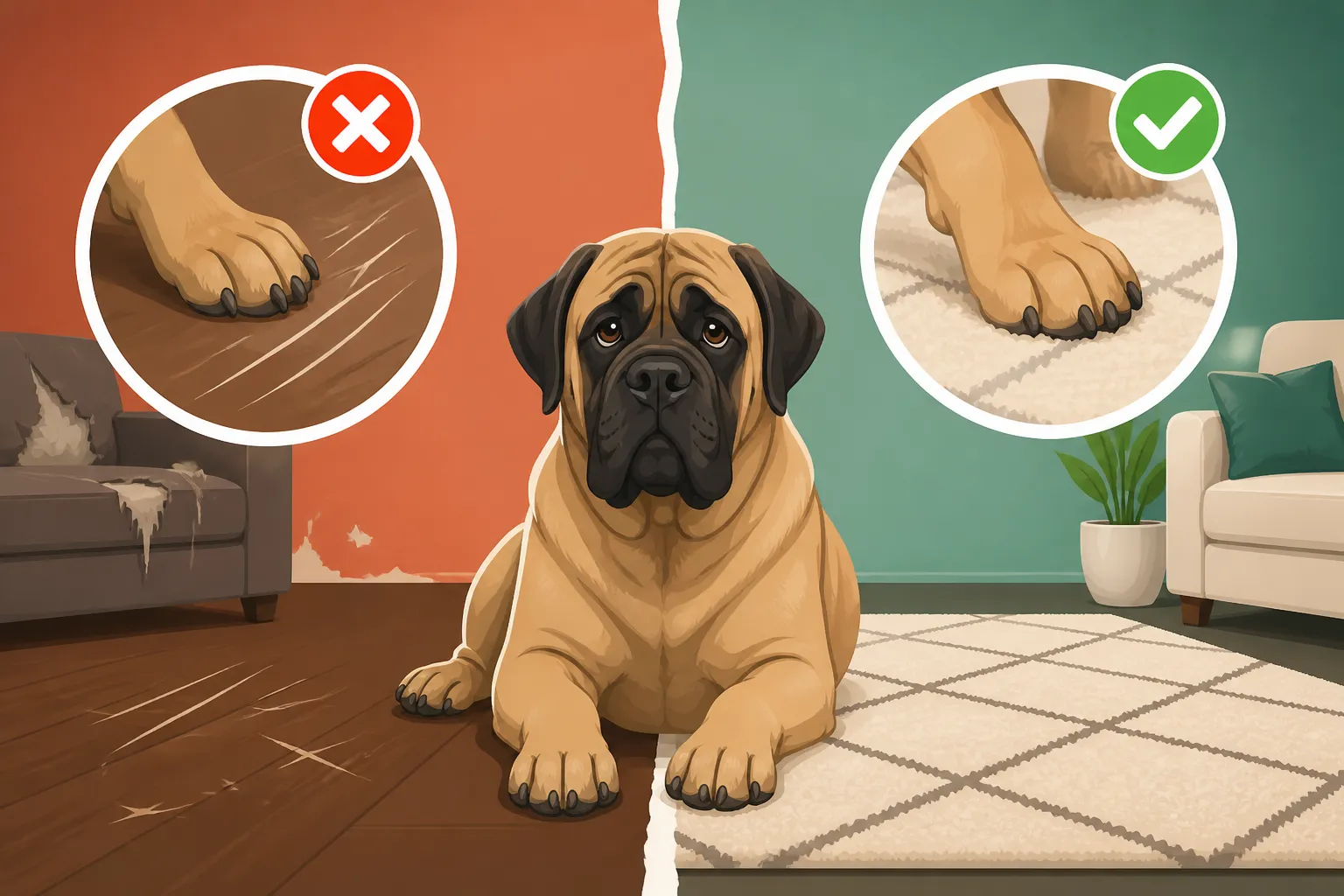
Whether Rugs Are Enough for a Mastiff
Oh, the age-old dilemma of beautiful floors versus happy, healthy Mastiff joints! It's a real struggle for so many of us who share our homes with these magnificent giants. You want your house to look nice, but you also constantly worry about your big lug slipping and sliding, especially as they get older or if you have a bouncy puppy. This guide is all about whether those lovely area rugs you've picked out are truly enough to keep your Mastiff safe and sound, or if you need to think a little bigger about your flooring strategy.
The Problem with Bare Floors for a Mastiff's Joints
Let's be honest, those gleaming hardwood or slick tile floors might look fantastic to us, but for a Mastiff, they can be a minefield. Their sheer size and weight, combined with the way their joints are structured, make hard, slippery surfaces a significant hazard. It’s not just about an occasional comical slip; it's about cumulative stress and potential for serious injury.
Why Traction Matters So Much for Giants
Imagine trying to walk on ice with smooth-soled shoes – that's often how a Mastiff feels on bare floors. Their tremendous body mass means that every time they try to get up, change direction, or even just stand still, their paws need significant grip to counteract gravity and their own momentum. When there’s no traction, their legs splay out, muscles strain, and joints twist in unnatural ways. This isn't just uncomfortable; it’s genuinely damaging.
For Mastiff puppies, this lack of traction can be particularly devastating. Their bones and joints are still developing rapidly, and repetitive slipping can lead to micro-traumas or abnormal growth patterns that contribute to serious conditions like hip and elbow dysplasia later in life. We pour so much love and effort into ensuring our puppies grow properly, but often overlook the constant impact of their home environment. A mature Mastiff, on the other hand, might struggle even more to recover from a bad slip, especially if they already have underlying joint issues. It's truly a constant balancing act to keep them stable. Why a Mastiff Puppy Must Not Be Exercised Hard is just one piece of the puzzle; proper home environment is another.
The Long-Term Impact on Hips and Elbows
When a Mastiff lives on bare, slippery floors, their body is constantly working overtime to maintain balance. This means their muscles are perpetually tense, and their joints are subjected to stresses they weren't designed for. Each time they slip, even a little, there's a jolt that travels up their legs and into their hips and elbows. Over months and years, these repeated impacts and unnatural movements can accelerate the degeneration of cartilage, inflame soft tissues, and exacerbate conditions like arthritis.
Many Mastiffs are predisposed to joint issues like hip and elbow dysplasia, so providing excellent traction is not just a nicety; it’s a critical part of preventative care. Think about it: a dog that needs to push off a slick surface to stand up or lie down is putting immense pressure on their hips and shoulders. This constant struggle against gravity on an unforgiving surface can turn minor genetic weaknesses into debilitating problems much faster than if they had consistent, firm footing. It's a sad reality that What Bare Floors Do to a Growing Mastiff can have lifelong consequences.
When Rugs Are a Good Solution (and When They Fall Short)
So, you've got rugs. That's a great start, and certainly better than nothing! Rugs can absolutely provide much-needed islands of traction in a sea of slick flooring. However, it’s not just about having any rug; it’s about having the right rugs in the right places, and understanding their limitations.
The Benefits of Strategic Rug Placement
Placing rugs strategically can make a significant difference in your Mastiff's daily comfort and safety. Think about the high-traffic zones in your home where your dog spends the most time or navigates tricky turns. Long runners in hallways, especially where your Mastiff tends to pick up speed, are invaluable. Large area rugs in main living areas create safe zones for lounging, playing, and getting up without a struggle. Don't forget smaller rugs right next to their bed or food and water bowls, giving them a solid grip when they rise or lean down to eat.
When choosing rugs, opt for ones with non-slip backings. Many rugs sold these days already come with a rubberized or silicone backing, which is fantastic. If yours don't, invest in good quality rug pads that grip both the rug and the floor. This prevents the rug itself from becoming a slip-and-slide hazard. The texture of the rug matters too; a plush, dense pile offers more grip than a thin, flat weave. You might find a good selection of durable, non-slip rugs on sites like Chewy or Amazon, allowing you to read reviews from other pet owners about their effectiveness. These thoughtful placements reduce the overall stress on their joints, making everyday movements much easier, especially for an older dog struggling with Arthritis in a Mastiff at Four.
The Limitations and Potential Hazards of Rugs
While rugs are helpful, they aren't a perfect, universal solution. One major limitation is simply coverage. Unless your entire home is wall-to-wall rugs, there will still be exposed stretches of hard flooring. Mastiffs, with their deliberate movements, might take a few steps on a slick patch to get to the next rug, or they might miss a rug entirely if they're moving quickly or playing. Even with the best intentions, it's hard to cover every single square inch.
Another hazard is the rug itself. If a rug doesn't have a proper non-slip backing, or if that backing wears out, the rug can bunch up, slide, or become a tripping hazard for both your Mastiff and your human family members. A thick, squishy rug might feel luxurious, but if it doesn't offer firm footing, your Mastiff's paws could sink in, causing them to lose balance rather than gain it. It’s a fine line between soft comfort and stable support, and with a two-hundred-pound dog, stability always wins. Ensuring your rugs are well-secured and lie flat is paramount to preventing rather than causing accidents.
Beyond Rugs: A Holistic Approach to Mastiff Flooring
Rugs are a good starting point, but for a Mastiff, especially one with known joint issues or a rapidly growing puppy, a more comprehensive strategy is often needed. Thinking holistically about your home's flooring can make all the difference in their quality of life.
Exploring Other Flooring Options
If you’re building, renovating, or just have the flexibility, considering alternative flooring materials can be a game-changer. Wall-to-wall carpeting is often the ideal choice for Mastiff owners, as it provides consistent, excellent traction throughout the home. Opt for a low-pile, durable carpet that's easy to clean. If carpeting isn't feasible, cork flooring offers a softer, more forgiving surface than hardwood or tile, with natural anti-slip properties. Luxury vinyl plank (LVP) can also be a good option if chosen carefully, as some varieties have a slightly textured surface that provides more grip.
For specific problem areas, durable rubber mats, often found in gyms or industrial settings, can be incredibly effective, especially in feeding areas or near outdoor access points. They are easy to clean, offer superior grip, and cushion joints. While they might not be the most aesthetically pleasing, their benefits for your Mastiff can outweigh visual preferences. When considering What Flooring Suits a Mastiff, prioritize safety and comfort above all else.
Crucial Accessories for Traction and Comfort
Beyond the flooring itself, there are several accessories that can significantly improve your Mastiff's traction and overall comfort.
Paw Grips and Wax: For dogs that struggle on smooth surfaces, special paw grips or waxes can provide an extra layer of temporary traction. Paw grips are adhesive pads applied directly to the bottom of the paw, while paw wax creates a sticky, non-slip barrier. These can be particularly useful for older dogs who have lost some natural grip due to age or nerve issues. Brands available on sites like Amazon offer a range of these products.
Orthopedic Beds: No matter what your flooring, an excellent orthopedic bed is non-negotiable for a Mastiff. These beds provide crucial support for their heavy joints, distributing their weight evenly and preventing pressure sores, especially on their elbows and hips. Look for dense, high-quality foam that doesn't flatten under their weight. Even with the best flooring, a comfortable, supportive place to rest is vital. How Thick a Bed a Mastiff Needs is a topic we discuss often, because their size demands serious support.
Ramps and Stairs Assistance: For elevated surfaces like beds, sofas, or getting into a car, consider ramps. Even a young Mastiff shouldn't be repeatedly jumping down from high places, as it puts immense strain on their joints. As they age, ramps become essential. Similarly, if you have stairs in your home, ensure they are carpeted or have non-slip treads, and consider training your Mastiff to use a ramp if navigating them becomes difficult. Why Stairs Are Worse for a Mastiff Than Any Breed is a truth every Mastiff owner should remember.
Here’s a quick comparison of common flooring types and their suitability for a Mastiff:
| Flooring Type | Traction for Mastiffs | Joint Impact | Maintenance (General) | Cost (General) | Notes |
|---|---|---|---|---|---|
| Hardwood/Laminate | Very Poor (Slippery) | High stress, can exacerbate hip/elbow issues, poor cushioning | Moderate (prone to scratches from nails) | Medium-High | Requires significant rug coverage or other solutions; consider protecting with clear coats/finishes. |
| Tile/Stone | Very Poor (Slippery and Cold) | High stress, cold can worsen arthritis, poor cushioning | Low (easy to clean, very durable) | Medium-High | Even worse than hardwood for cold joints; absolutely needs rugs or mats. |
| Area Rugs (with backing) | Good (where present) | Good cushioning and grip in covered areas, moderate overall | Varies by rug material, can collect hair and dirt | Low-Medium | Best with non-slip backing; needs careful placement and coverage; inspect regularly for bunching. |
| Wall-to-Wall Carpet | Excellent (Consistent grip) | Excellent cushioning, reduces joint impact | Moderate (requires regular vacuuming, stains can be an issue) | Medium | Ideal for Mastiffs; choose low-pile and durable for easier cleaning and less wear from heavy paws. |
| Cork Flooring | Good (Natural texture) | Good cushioning, warmer than tile | Moderate (can be prone to dents and scratches) | Medium-High | Eco-friendly, naturally antimicrobial, softer underfoot; a great compromise for some. |
| Luxury Vinyl Plank | Varies (Look for textured or embossed varieties) | Moderate cushioning, better than true hardwood | Low (very durable, waterproof, easy to clean) | Medium | Can mimic wood or stone; choose options with good texture for better grip. |
| Rubber Mats | Excellent (High grip) | Excellent cushioning | Low (easy to wipe clean, very durable) | Low-Medium | Best for high-traffic or utility areas; less aesthetic for main living spaces. |
Ultimately, providing a safe and comfortable environment for your Mastiff means paying attention to their every step. While rugs are a valuable part of the solution, they are rarely the only solution. A combination of thoughtful flooring choices, strategic rug placement, and supportive accessories will ensure your gentle giant can move with confidence and comfort throughout their lives. This comprehensive approach is part of Caring for a Mastiff Past Five and truly extends their healthy years with you.
Disclaimer
This article is for general informational purposes only and does not constitute professional advice. Laws, prices and regulations vary by location and change over time. Consult a qualified professional for guidance on your specific situation.