What a Mastiff Does When Someone Knocks
Mastiff door reactions stem from historical guarding instincts, territorial awareness, and two hundred pounds of presence.

Mastiff door reactions stem from historical guarding instincts, territorial awareness, and two hundred pounds of presence.

Mastiff protective behaviors toward children include physical positioning, deep vocalizations, and calm assessments of perceived dangers.

Mastiff guard dog behavior involves calm territorial vigilance and gentle family protection rather than unprovoked aggression.

Mastiff guarding behavior stems from natural instincts and silent vigilance, operating as a deterrent without needing training.

Mastiff blocking behavior stems from ancient guarding instincts to assess strangers and protect owners from perceived threats.

Threshold training helps large Mastiffs learn impulse control, safety, and patience at doorways through consistent habits.

Lifting an adult Mastiff is dangerous due to massive size, requiring owners to use practical tools and mobility strategies.
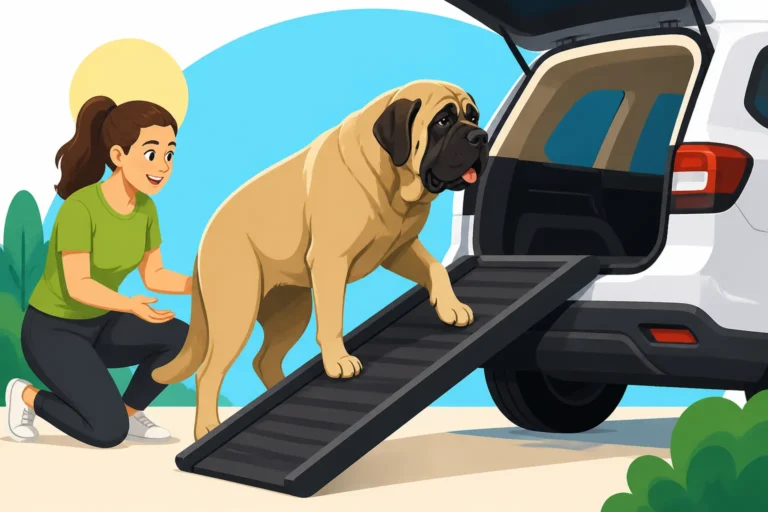
Mastiff ramp training protects fragile joints, prevents heavy lifting injuries, and maintains senior dog mobility safely.
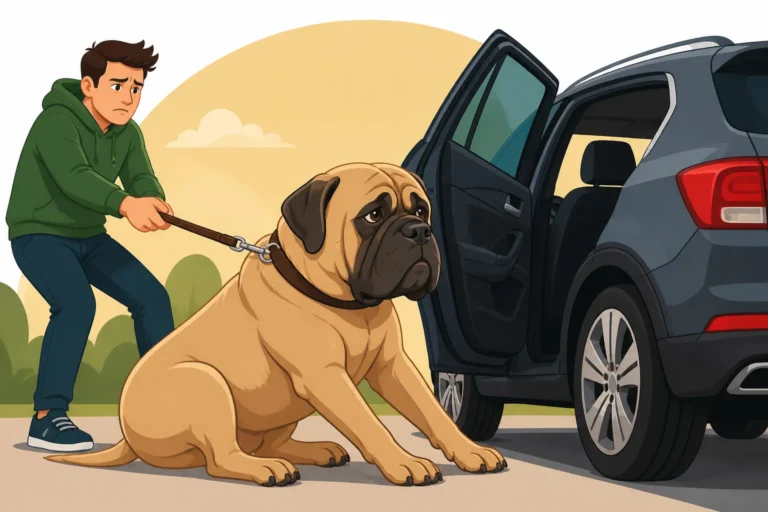
Mastiff car resistance often stems from vehicle fear, joint pain, or improper socialization, requiring owners to understand the root cause.

Mastiff doorway hesitation stems from fear, joint pain, or learned habits, requiring veterinary checks and empathetic training methods.