Whether a High Deductible Suits a Mastiff Owner
Bringing a Mastiff into your life is an incredible joy, but let's be real: it's also a significant financial commitment, especially when it comes to their health. Many of us grapple with the maze of pet insurance options, wondering how to balance coverage with affordability. This guide will dive deep into the specific question of whether a high deductible pet insurance plan is truly a smart choice for you and your beloved giant breed, exploring the realities of vet bills for these magnificent dogs and how different deductible strategies might play out in your wallet.
Understanding the Pet Insurance Deductible Landscape for Giant Breeds
When you're looking at pet insurance, the term "deductible" is going to pop up first and foremost. It’s a core component of how these plans work, and for Mastiff owners, understanding it thoroughly isn't just a good idea, it's essential for managing the potentially astronomical costs that can come with owning such a large and sometimes fragile breed.
What Exactly is a Deductible in Pet Insurance?
Think of a deductible as the amount of money you need to pay out of pocket for your Mastiff's eligible veterinary expenses before your insurance company starts to kick in their share. It's your initial contribution to the cost of care for a covered incident or during a specific policy period.
There are generally two main types of deductibles you'll encounter:
- Annual Deductible: This is the most common type. You pay this amount once per policy year, no matter how many claims you make. Once you've met it, your insurance starts reimbursing you for eligible expenses for the rest of that year. Many plans, including popular options like those from Healthy Paws, operate on an annual deductible model. This can be great if your Mastiff has multiple issues in one year, as you only pay that initial amount once.
- Per-Condition (or Per-Incident) Deductible: Less common these days, but still out there. With this model, you'd pay a deductible each time your Mastiff is diagnosed with a new condition or for each separate accident. If your Mastiff broke a leg, you'd pay a deductible. If a month later they developed an ear infection (unrelated to the leg), you'd pay another deductible. This model can quickly become very expensive if your Mastiff experiences several different health issues in a year.
The amount of the deductible itself can vary widely, from as low as $100 to upwards of $1,000 or even $2,500. The higher your chosen deductible, generally the lower your monthly premium will be. This trade-off is precisely what we're going to explore for Mastiff owners.
Why Mastiffs Present Unique Financial Considerations
Let's be blunt: Mastiffs are expensive dogs to own, especially when it comes to their health. Their sheer size dictates higher doses of medication, more expensive procedures, and specialized equipment at the vet's office. It's a truth that many a Mastiff owner has learned the hard way.
Consider something as routine as anesthesia. A smaller dog might need a relatively small amount, but a two-hundred-pound Mastiff requires a substantial dose, longer monitoring, and often specialized protocols, which means a higher bill. Similarly, diagnostic imaging like X-rays or ultrasounds often requires larger plates or more comprehensive scans to get a clear picture of their massive bodies. Even something like What a Mastiff's Weight Does to Every Line on the Vet Invoice illustrates this perfectly.
Beyond the scaling up of standard costs, Mastiffs are also predisposed to certain health conditions that can be incredibly costly to treat. Hip and elbow dysplasia are unfortunately common, often requiring extensive diagnostics, pain management, and potentially surgery. Bloat, a sudden and life-threatening condition, demands immediate emergency surgery that can easily run into thousands of dollars. Bloat in the Deepest Chest of Any Breed: the Mastiff is a must-read for any owner. These are not minor ailments; they are major medical events that can bankrupt an unprepared owner. This is why understanding the full scope of The Mastiff's Short Life Buys the Biggest Bills is crucial when planning for their care.
The Core Trade-Off: High Deductible vs. Low Deductible
When choosing a pet insurance plan, you're constantly weighing two major factors: the cost of your monthly premium and the amount you'll pay out of pocket if your Mastiff needs veterinary care.
- Low Deductible: This means you pay a higher monthly premium. In return, if your Mastiff needs care, you pay a smaller amount upfront before your insurance starts to reimburse you. This can offer greater peace of mind, knowing that if an emergency strikes, your immediate out-of-pocket expense is manageable. It's particularly appealing if you anticipate frequent vet visits or want to minimize large lump-sum payments during emergencies.
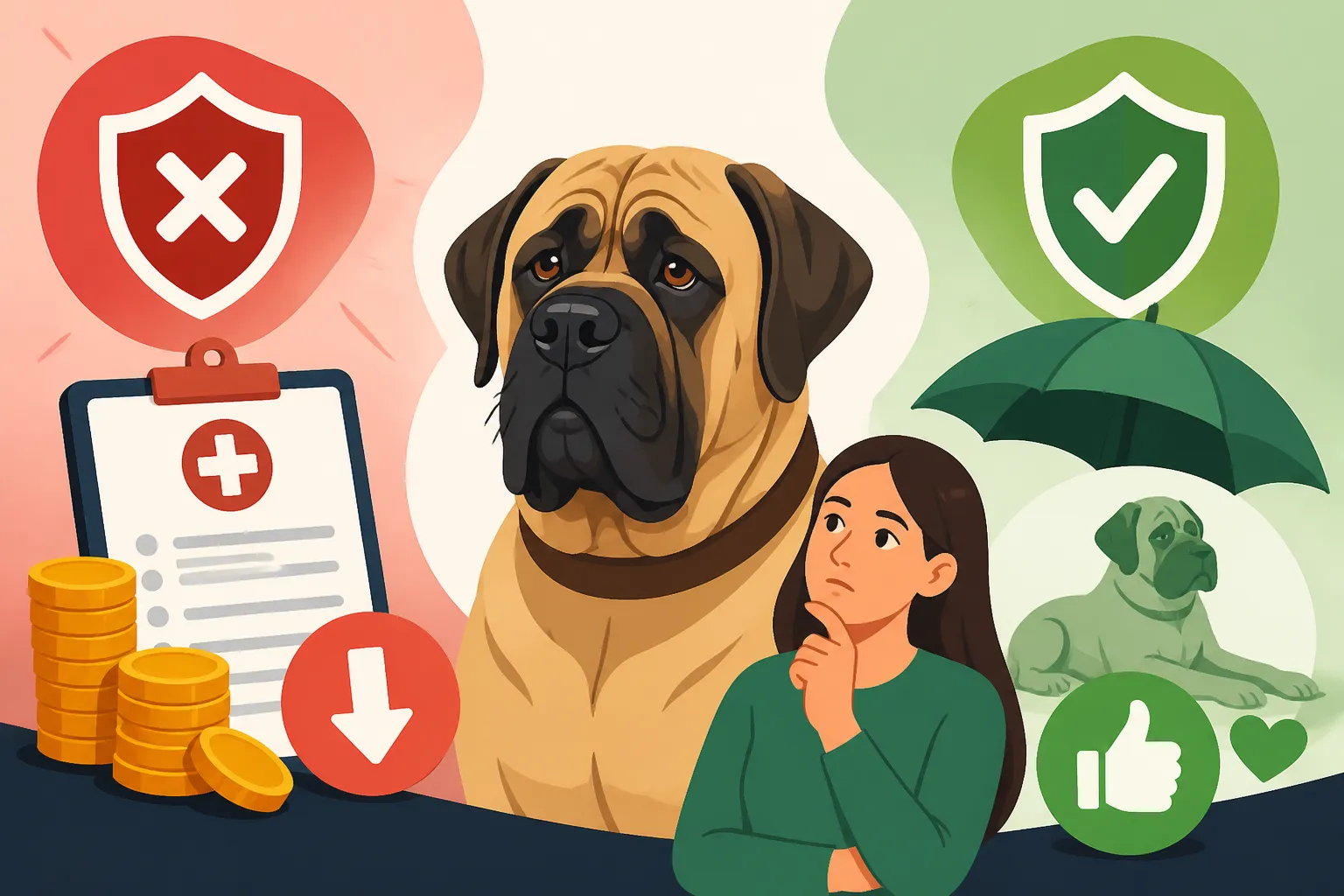
- High Deductible: This means you pay a lower monthly premium. This is attractive because it keeps your regular expenses down. However, should your Mastiff need medical attention, you'll be responsible for a larger sum before your policy benefits kick in. This choice often hinges on your personal financial situation and your comfort level with potentially large, unexpected veterinary bills. It’s a gamble, in a way, that your Mastiff will remain relatively healthy, or that you have sufficient savings to cover that high deductible when needed.
For a Mastiff owner, this trade-off is particularly stark. Their potential for massive vet bills means that even a low deductible can feel like a lot, but a high deductible could mean facing a multi-thousand-dollar bill before insurance even starts to help. It's about finding the balance that works for your budget and your peace of mind.
The Appeal of a High Deductible for Mastiff Owners
Choosing a high deductible isn't about wishing your Mastiff doesn't get sick; it's often a strategic financial decision, especially for those who are trying to manage the general expenses of a giant breed. There are definite upsides that make this option attractive to many.
Lower Monthly Premiums
Let's face it: every dollar counts. The sheer cost of living with a Mastiff — from What Feeding a Two Hundred Pound Mastiff Costs a Month to specialized beds from Chewy, or even premium food like Ollie — can make those monthly insurance premiums feel like another heavy burden. A high deductible plan offers an immediate financial reprieve by significantly lowering your regular payments.
Imagine shaving $30, $50, or even more off your monthly pet insurance bill. Over a year, that adds up to hundreds of dollars. This can be a huge relief for families operating on a tight budget or those who are already dedicating a substantial portion of their income to their Mastiff's care, such as joint supplements or specialized training. This reduced monthly outlay can make pet insurance feel more accessible, allowing owners to still have some form of coverage without feeling completely overwhelmed by the recurring cost. It frees up cash that might be put towards routine preventative care that insurance often doesn't cover anyway, like annual check-ups or vaccinations.
Covering Catastrophic Costs
One of the primary reasons Mastiff owners consider a high deductible is the focus on covering major, unexpected, and truly catastrophic health events. While we all hope our dogs remain healthy, the reality is that accidents and serious illnesses can strike at any time, and for a Mastiff, these often come with price tags that make your jaw drop.
Think about a sudden onset of bloat, a broken leg requiring intricate surgery, or a cancer diagnosis leading to chemotherapy. These aren't minor issues; they're medical emergencies that can easily cost thousands upon thousands of dollars. A high deductible plan, even with its larger upfront cost, ensures that you aren't left to shoulder the entire burden of a $10,000+ veterinary bill yourself. You pay your $500, $1,000, or $2,500 deductible, and then your insurance policy (with its 80% or 90% reimbursement rate) steps in to cover the vast majority of the remaining bill. This means you’re protected from financial ruin in the face of truly life-altering veterinary expenses. It's peace of mind for the worst-case scenario, without the burden of a sky-high monthly payment.
When a High Deductible Makes Sense
A high deductible isn't for everyone, but it can be a smart choice for certain Mastiff owners and specific circumstances.
First, it often makes sense for owners of healthy, young Mastiffs. Puppies, while prone to accidents, usually have fewer chronic conditions that rack up small, frequent vet visits. If your puppy is generally robust and clear of known health issues, a high deductible can cover those "what if" scenarios like a sudden injury while keeping monthly costs down during their formative years. However, remember that Why a Mastiff Puppy Must Not Be Exercised Hard is vital for their joint health and preventing future issues.
Secondly, if you have a robust emergency savings fund specifically dedicated to your Mastiff's health, a high deductible might be a good fit. If you've diligently saved several thousand dollars for unexpected vet bills, you can comfortably cover that deductible out of your savings, allowing the insurance to handle the rest. This strategy treats insurance more like a safety net for truly catastrophic events rather than coverage for every sniffle. This kind of financial planning is incredibly important because The Full Cost of Eight Years With a Mastiff is substantial. This approach combines the lower monthly premiums with the security of readily available cash.
Finally, a high deductible might be suitable if you're prepared to self-insure for smaller, more routine issues. If you're confident you can cover the occasional ear infection, minor cuts, or gastrointestinal upset without insurance, then a high deductible lets you use the policy strictly for those larger, budget-busting events that Mastiffs can unfortunately experience.
The Downsides and Risks of Choosing a High Deductible
While a high deductible can save you money on monthly premiums, it’s crucial to understand the potential pitfalls. For Mastiff owners, these risks can feel magnified because every vet visit, even for minor issues, tends to cost more simply due to their size.
The Out-of-Pocket Shock When a Claim Arises
This is often the biggest hurdle for owners with high deductible plans. When your Mastiff suddenly needs urgent care – perhaps they swallowed something they shouldn't have, or they wake up limping badly – you're looking at a significant out-of-pocket expense before your insurance even begins to help.
Let's imagine your Mastiff needs an emergency visit and diagnostics for a sudden, severe stomach upset. That initial vet bill for exams, X-rays, and medications could easily be hundreds, or even over a thousand, dollars. If your deductible is $1,000, you'll be paying that entire amount yourself. If the total bill is $1,200, you'll pay $1,000, and your insurance will reimburse a percentage of the remaining $200. This can be a huge shock, especially if it happens unexpectedly and you haven't budgeted for such an immediate outlay. It can also create a difficult situation where you might hesitate to seek early veterinary care for less severe symptoms, hoping they'll resolve on their own, only for the condition to worsen and become more expensive to treat down the line. This immediate financial hit can be a significant source of stress during an already worrying time.
Accumulating Smaller Bills
One common scenario that a high deductible plan doesn't handle well is the accumulation of multiple smaller vet bills. While these individual costs might not seem catastrophic on their own, they can quickly add up to or exceed your deductible, and you'll still be paying 100% of them.
Consider a year where your Mastiff has a few separate, non-major issues: maybe an allergic reaction requiring a vet visit and medication, followed by a persistent ear infection a few months later, and then a minor lameness that needs a check-up and some anti-inflammatories. Each of these visits might cost a few hundred dollars. If your deductible is $1,000, and you incur $300 for the allergy, $250 for the ear infection, and $400 for the lameness, you've now spent $950 out of pocket. You're still $50 short of meeting your deductible, meaning the insurance company hasn't paid a dime. You've essentially self-insured for almost $1,000, which might negate the savings you made on the lower monthly premiums. This is especially relevant given that Mastiffs are prone to issues like Ear Infections in a Mastiff and various skin conditions. It's a tricky balance, as these smaller, common issues are often precisely what people want insurance to help with, but a high deductible pushes that burden back onto the owner.
What Happens if Your Mastiff Has Chronic Issues
The true test of any pet insurance plan, and particularly where high deductibles can fall short, is when a Mastiff develops a chronic condition. Many conditions that plague Mastiffs, such as Arthritis in a Mastiff at Four or hypothyroidism, require ongoing medication, regular vet visits, and potentially diagnostics for years.
If your plan has an annual deductible (which most do, like those offered by Healthy Paws), you'll have to meet that deductible every single year before your insurance starts to contribute to the cost of your Mastiff's chronic care. So, if your Mastiff is diagnosed with arthritis at age four and requires daily medication, quarterly check-ups, and annual X-rays, you’ll be paying your $1,000 or $2,000 deductible each year out of pocket before receiving any reimbursement. This effectively adds a significant baseline cost to your Mastiff's annual care, year after year, for the duration of their life with the condition. This can quickly erode the perceived savings from lower monthly premiums, and some owners might find themselves wishing for a lower deductible in such circumstances, even with a higher monthly premium. This is a critical consideration given that Caring for a Mastiff Past Five often involves managing age-related health issues.
Strategies for Mastiff Owners Navigating Deductibles
Deciding on the right deductible for your Mastiff's pet insurance is a deeply personal financial decision. It requires a realistic look at your budget, your dog's health, and your comfort level with risk. Thankfully, there are several strategies Mastiff owners can employ to make an informed choice and manage costs effectively.
Building a Robust Emergency Fund
One of the most powerful tools in a Mastiff owner's financial arsenal, whether you have pet insurance or not, is a dedicated emergency fund. For a giant breed prone to expensive medical issues, this isn't just a good idea – it's practically non-negotiable.
An emergency fund specifically for your Mastiff can act as your "self-insurance" for smaller bills or as the source for your high deductible payment if a major issue arises. Aim to save at least $3,000 to $5,000, if not more, for a Mastiff. This amount could cover most high deductibles and even some moderate emergencies entirely. If you have a high deductible plan, this fund ensures you're prepared to meet that upfront cost without stress. If you opt for a lower deductible, it provides a buffer for anything not covered or for unexpected routine costs. You could set up a separate savings account and automatically transfer a small amount each payday, just as you would for your own emergency savings. This disciplined approach means you're building a safety net that complements any insurance policy you choose. Remember, The Mastiff's Short Life Buys the Biggest Bills, so preparing for these costs is paramount.
Comparing Plans and Providers
Not all pet insurance plans are created equal, especially when it comes to covering a giant breed like a Mastiff. It's essential to shop around and compare options thoroughly before committing. Look beyond just the deductible amount; consider reimbursement percentages, annual payout limits, and what conditions are covered or excluded.
When comparing, pay close attention to:
- Deductible Options: Do they offer a range of deductibles? What are the corresponding monthly premiums?
- Reimbursement Rate: After the deductible is met, what percentage of the bill does the insurer cover (e.g., 70%, 80%, 90%)? A higher reimbursement rate means less out-of-pocket for you.
- Annual Payout Limits: Some policies have a cap on how much they'll pay out in a year or over the lifetime of the pet. For a Mastiff, who can incur massive bills, unlimited plans are often preferable.
- Breed-Specific Exclusions/Waiting Periods: While less common for common breed issues, always check for any specific exclusions for Mastiffs. Also, understand waiting periods for conditions like hip dysplasia.
Companies like Healthy Paws are known for their comprehensive coverage and unlimited annual payouts, which can be a huge benefit for a Mastiff. However, it's always wise to get quotes from several reputable providers to see what best fits your budget and needs. Don't be afraid to delve into the fine print.
Considering Your Mastiff's Individual Health Profile
Your Mastiff's age and current health status should heavily influence your deductible decision. A young, healthy Mastiff puppy might be a good candidate for a higher deductible, as the likelihood of immediate, expensive chronic conditions is lower (though accidents are always a risk!). This allows you to benefit from lower premiums while still having coverage for major emergencies.
However, if you've adopted an older Mastiff, or one with a known pre-existing condition (which most policies won't cover, but it's important to be aware of how other issues might arise), a different approach might be needed. If your Mastiff is starting to show signs of common age-related issues like Arthritis in a Mastiff at Four, a lower deductible might offer more immediate financial relief for ongoing care. If you know your Mastiff comes from lines prone to certain genetic issues, even if they're clear now, you might lean towards a plan that minimizes your yearly out-of-pocket for potentially chronic care in the future. Regular check-ups and open communication with your veterinarian about your Mastiff's specific risks can help guide this decision. This ties into the broader discussion of The CHIC Four Plus the DNA Stack Behind a Mastiff's Price and understanding genetic predispositions.
The Role of Wellness Plans and Preventative Care
It's important to remember that pet insurance, especially plans with high deductibles, are generally designed for accidents and illnesses, not routine wellness care. This means your high deductible won't apply to things like annual exams, vaccinations, heartworm medication, or flea and tick preventatives.
However, many pet insurance providers (or third-party companies) offer optional "wellness plans" as an add-on or a separate subscription. These plans, often for an additional monthly fee, help cover the costs of preventative care. While they don't count towards your deductible, they can be a smart investment for Mastiff owners. Given that Mastiffs are in the top weight bands for almost all preventatives, these costs add up quickly. Using a wellness plan to budget for routine visits and medications can free up your emergency fund and high deductible insurance for the truly unexpected medical emergencies. Think of it as a holistic approach: a high deductible plan for major surprises, an emergency fund for flexibility, and a wellness plan (or self-funded budget) for routine, preventative health. Products like specialized foods from Chewy or Ollie can also contribute to overall health and potentially reduce vet visits in the long run, though they're not covered by insurance.
Ultimately, the choice of a high deductible for your Mastiff is a balancing act. It can offer significant savings on monthly premiums, but it requires diligent financial planning and a clear understanding of your responsibilities when unexpected vet bills arise.
Disclaimer
This article is for general informational purposes only and does not constitute professional advice. Laws, prices and regulations vary by location and change over time. Consult a qualified professional for guidance on your specific situation.