What Insuring a Mastiff for Its Six to Ten Years Costs
Bringing a Mastiff into your life is an incredible joy, but it's also a significant financial commitment that many new owners underestimate. One of the biggest stressors, beyond the daily expenses, is the dread of an unexpected vet bill. With their colossal size and a predisposition to certain health issues, medical care for these gentle giants can escalate rapidly, making the question of pet insurance not just a luxury, but often a necessity. This guide will walk you through the nuances of insuring a Mastiff for their entire, albeit often shorter, lifespan, helping you understand the costs, coverage, and crucial considerations to protect both your beloved companion and your wallet.
The Unique Insurance Challenge of a Mastiff's Lifespan
It's a bittersweet truth that our Mastiffs, for all their grandeur and love, often don't grace our lives for as long as smaller breeds. This reality shapes every aspect of their care, including how we approach pet insurance. You're not just insuring a dog; you're insuring a massive, rapidly aging creature prone to significant health events that can demand extensive, specialized, and therefore, expensive veterinary intervention.
The Heartbreaking Reality of a Short Life
Mastiffs typically live for six to ten years, a lifespan that feels cruelly brief when you consider the profound bond you build with them. This isn't just a number on a page; it’s a deeply felt reality for every Mastiff owner. We often feel like we're just getting into the rhythm of their golden years when we start to see the signs of aging creep in. Their bodies, designed for immense size, also carry the burden of that weight, leading to wear and tear that can manifest earlier than in smaller dogs. This shorter window means that age-related illnesses, which might appear in a smaller dog's mid-to-late teens, can strike a Mastiff as early as five or six. It's a race against time, where every healthy year is cherished, and every ailment feels magnified by the knowledge of their limited time with us. The article, Why a Mastiff Only Gets Six to Ten Years, delves deeper into this reality.
Why Those Shorter Years Often Mean Higher Bills
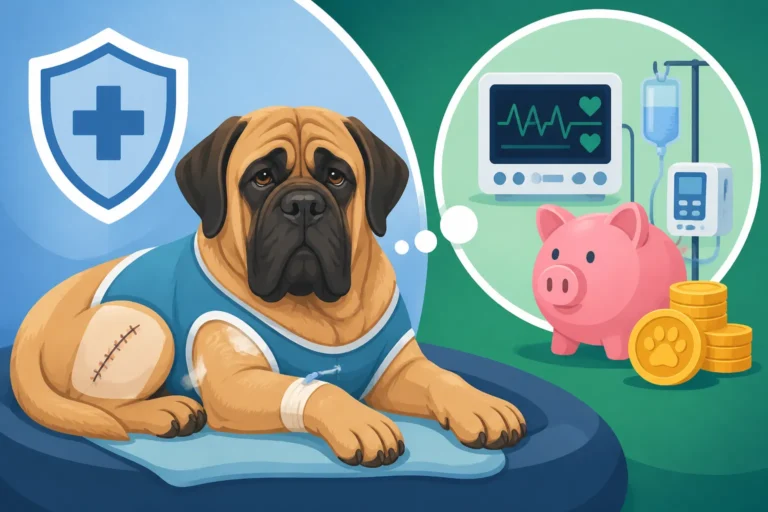
It might seem counterintuitive that a dog with a shorter lifespan could incur higher overall medical bills, but for a Mastiff, this is often the case. Their size alone dictates a higher cost for almost every aspect of veterinary care. Anesthetic dosages are larger, medications are dosed by lean body weight, and diagnostic imaging requires specialized equipment and often more sedation. What a Mastiff's Weight Does to Every Line on the Vet Invoice explains this perfectly. When a Mastiff needs surgery, the stakes are higher, the procedures are more complex, and the recovery requires more resources. Think about a surgery for bloat, a condition to which Mastiffs are particularly susceptible. The emergency care and intricate surgery to correct a twisted stomach are astronomical for any dog, but for a two-hundred-pound Mastiff, the sheer volume of drugs, staff time, and specialized equipment drives costs even higher. This front-loading of potential expenses, coupled with age-related conditions arriving earlier, means you could face multiple significant veterinary events within their relatively short lifetime.
When to Start Thinking About Insurance for Your Mastiff
The simple answer? As soon as possible. Ideally, you should be researching and selecting a pet insurance policy before you even bring your Mastiff puppy home, or at the very least, within the first few weeks. The reason for this urgency lies in the concept of "pre-existing conditions." Most insurance policies will not cover conditions that were diagnosed or showed symptoms before the policy's effective date or during its initial waiting periods. If you wait until your Mastiff starts showing signs of joint pain at two years old, that hip dysplasia diagnosis will likely be excluded from coverage for the rest of their life.
Imagine bringing home your sweet, clumsy Mastiff puppy. They seem perfectly healthy, full of puppy energy. But silently, behind the scenes, conditions like hip or elbow dysplasia could be developing. If you get insurance early, before any symptoms manifest, those conditions will likely be covered if diagnosed later. If you wait, you risk them becoming pre-existing. As a general rule, the younger and healthier your Mastiff is when you enroll, the more comprehensive and affordable your coverage will be over their lifetime. This proactive approach can literally save you tens of thousands of dollars in the long run. Consider The Month a Mastiff Owner Should Buy Insurance for more on this timing.
Decoding Pet Insurance: Types of Coverage for Your Giant Friend
Just like human health insurance, pet insurance isn't a one-size-fits-all product. There are various types of plans available, each with different levels of coverage, benefits, and, of course, price tags. Understanding these distinctions is crucial when choosing the right policy to protect your Mastiff. You don't want to find yourself with a hefty bill and a policy that doesn't cover what you thought it would.
Accident-Only Plans: A Bare-Bones Safety Net
Accident-only plans are exactly what they sound like: they cover expenses related to unexpected injuries. This could include things like a broken bone from a fall, a cut paw from stepping on something sharp, or injuries sustained in a car accident. These plans are generally the most affordable option, offering a basic safety net for sudden, unforeseen events.
While they might seem appealing due to their lower premium, especially for a large breed with potentially high premiums, they come with a significant drawback: they don't cover any illnesses. For a Mastiff, this is a huge consideration. Mastiffs are prone to several serious, costly illnesses such as bloat, various cancers, and orthopedic issues like hip and elbow dysplasia. An accident-only plan would not cover the emergency surgery for bloat or the long-term management of arthritis resulting from dysplasia. It's akin to having car insurance that only covers collisions but not engine failure. While it's better than nothing for those unexpected tumbles or scrapes, it leaves a massive gap in coverage for the most common and expensive health challenges your Mastiff is likely to face.
Accident & Illness Plans: The Most Common Choice
For most Mastiff owners, an accident and illness plan is the most sensible and widely chosen option. These plans provide coverage for both unexpected injuries and a broad range of illnesses. This is where you get coverage for those scary diagnoses like bloat, cancer, heart conditions, infections, allergies, and chronic diseases. This type of plan is designed to cover the vast majority of veterinary expenses that can arise during your Mastiff's life, from routine ear infections to life-saving emergency surgeries.
Within accident and illness plans, there can be variations. Some might have a maximum payout per incident, while others offer an annual maximum. Deductibles, reimbursement percentages, and annual limits vary widely between providers. For a Mastiff, a plan with a high annual maximum or even unlimited payout is often preferred, given the potential for incredibly high costs associated with major surgeries or long-term disease management. Providers like Healthy Paws are known for their comprehensive accident and illness coverage with unlimited annual benefits, which can be a huge relief for Mastiff owners facing unpredictable, large expenses.
Comprehensive and Wellness Add-ons: Going the Extra Mile
Beyond standard accident and illness coverage, many insurance providers offer optional add-ons or separate wellness plans. These are designed to help with the costs of routine and preventative care, which typically aren't covered by accident and illness policies. Wellness plans can cover things like annual check-ups, vaccinations, deworming, heartworm prevention, routine dental cleanings, and even spaying or neutering.
For a Mastiff, while these wellness plans don't typically cover the colossal bills of an emergency, they can certainly help offset the predictable, recurring costs of responsible pet ownership. Given the size of a Mastiff, even routine preventatives are more expensive. Think about the cost of monthly flea and tick medication, which is typically priced by weight band; a Mastiff will always be in the highest tier. While a wellness plan might not cover What an Emergency Mastiff Cesarean Runs Overnight, it can certainly help with the ongoing, everyday costs that add up over time. It's important to weigh the cost of the wellness add-on against the potential savings. Sometimes, paying for these routine items out of pocket might be more economical, but for others, the predictability of a monthly wellness premium can be a budget-friendly choice.
Factors That Heavily Influence Your Mastiff's Insurance Premiums
When you start looking for pet insurance for your Mastiff, you'll quickly notice that the premiums can vary wildly. This isn't just arbitrary; several key factors come into play, each significantly impacting how much you'll pay. Understanding these influences can help you make a more informed decision and potentially manage your costs.
The Impact of Breed and Size: Why Mastiffs Aren't Cheap to Insure
Let's be blunt: insuring a Mastiff is more expensive than insuring a Chihuahua. This isn't prejudice; it's actuarial science. Giant breeds, by their very nature, come with a higher risk profile in the eyes of insurance companies. Their sheer size means that almost any medical procedure is inherently more complex and costly. Anesthesia is given by weight, medications are larger doses, and surgeries require more extensive resources. More importantly, Mastiffs are genetically predisposed to a number of severe and expensive health conditions, such as hip and elbow dysplasia, osteosarcoma (bone cancer), and bloat. These aren't minor ailments; they are often life-threatening or require extensive, ongoing treatment.
Insurance companies assess breed-specific risks based on historical data. When they see a breed with a higher incidence of costly conditions and where the treatment for any condition is elevated due to size, the premiums reflect that increased risk. It's a pragmatic approach, not a personal slight against your magnificent companion. This reality is part of The Mastiff's Short Life Buys the Biggest Bills, and it's something every potential Mastiff owner needs to fully grasp from the outset.
Your Mastiff's Age: The Older, The Pricier
Age is another colossal factor in determining your Mastiff's insurance premium. The younger your Mastiff is when you enroll them, the lower your initial premiums will be. This makes sense: a young puppy is generally considered less likely to develop serious health issues right away compared to an older dog. However, as your Mastiff ages, their risk of developing chronic conditions, age-related illnesses, and cancers increases significantly.
This means that your premiums will gradually rise each year as your Mastiff gets older. This isn't unique to Mastiffs, but for a breed that is considered "old" at five or six years, the premium increases can start earlier and be more pronounced. You might find that by the time your Mastiff is seven or eight, their monthly premium has become substantial. This is why getting coverage early is not just about avoiding pre-existing condition exclusions, but also about locking in lower initial rates and managing the incremental increases over time. Some policies may even have limitations or higher deductibles for certain conditions once a pet reaches a certain age, so it's vital to read the fine print.
Where You Live: Geography and Vet Costs
The geographic location where you and your Mastiff reside also plays a significant role in insurance pricing. Just as human healthcare costs vary by region, so do veterinary costs. In areas with a higher cost of living, or where veterinary specialists are more prevalent and in demand, the average cost of veterinary care will be higher. Insurance companies factor these regional differences into their premium calculations.
For instance, veterinary care in a large metropolitan area like Los Angeles or New York City will typically be more expensive than in a rural town in the Midwest. This is due to factors like higher overhead for veterinary practices, more specialized equipment, and higher staff salaries. If you live in an expensive area, expect your Mastiff's insurance premiums to reflect that reality. It's not uncommon for quotes for the exact same coverage to vary by a noticeable margin simply by changing the zip code. This also means if you move, your premiums may be adjusted to reflect the veterinary costs in your new location.
Your Chosen Deductible, Reimbursement, and Annual Limit
These three policy components are directly within your control and significantly affect your premium. Think of them as the levers you can pull to adjust your monthly cost versus your out-of-pocket expenses.
- Deductible: This is the amount you pay out of pocket before your insurance coverage kicks in. A higher deductible will result in a lower monthly premium, but you'll pay more upfront if your Mastiff needs care. A lower deductible means higher monthly premiums but less out-ofpocket at the vet.
- Reimbursement Percentage: This is the percentage of eligible vet bills that the insurance company will pay after your deductible is met. Common percentages range from 70% to 90%. A higher reimbursement percentage (e.g., 90%) means higher premiums but less out-of-pocket for you on covered claims.
- Annual Limit: This is the maximum amount the insurance company will pay out in a policy year. Some policies offer unlimited annual payouts, while others have limits (e.g., $5,000, $10,000, $20,000). For a Mastiff, due to the incredibly high costs of major surgeries or chronic illness management, an unlimited or very high annual limit is often recommended. A lower annual limit will mean lower premiums, but you could hit that cap quickly with a major Mastiff health event, leaving you responsible for the rest.
Choosing these values requires balancing your budget with your risk tolerance. For a Mastiff, where a single incident can cost many thousands of dollars, carefully considering these levers is paramount. For instance, a policy with a $250 deductible, 90% reimbursement, and unlimited annual payout will naturally cost more monthly than a policy with a $1,000 deductible, 70% reimbursement, and a $10,000 annual limit.
Navigating Pre-Existing Conditions and Waiting Periods
One of the most confusing and frustrating aspects of pet insurance for many new owners revolves around pre-existing conditions and waiting periods. These are crucial elements to understand, especially when insuring a Mastiff, to avoid nasty surprises when you need to file a claim.
What Counts as a Pre-Existing Condition for a Mastiff
A pre-existing condition is generally defined as any illness or injury that your Mastiff had before your insurance policy's effective date or before the end of its waiting periods, regardless of whether it was formally diagnosed or even if you were aware of it. If your Mastiff showed symptoms, or if a vet noted something in their records, even if it wasn't a confirmed diagnosis, it could be deemed pre-existing.
For Mastiffs, this is a particularly sensitive area due to their genetic predispositions. For example, if you adopt an adult Mastiff and it already has a documented history of limping, or if a vet record mentions "suspected hip pain," any future diagnosis of hip dysplasia will almost certainly be considered pre-existing. The same applies to elbow dysplasia, which affects one Mastiff in seven. Even a mild cough noted in records before coverage began could lead to future respiratory issues being excluded. It's incredibly important to review your Mastiff's complete veterinary history before applying for insurance and to be transparent with any known issues. Some providers, like Healthy Paws, have specific definitions and review processes for pre-existing conditions, so it's always best to ask for clarification directly.
Understanding Crucial Waiting Periods
In addition to pre-existing conditions, virtually all pet insurance policies have waiting periods. These are specific lengths of time from the policy's effective date during which certain conditions are not covered. Waiting periods are designed to prevent people from buying insurance only after their pet is already sick or injured.
- Accident Waiting Periods: These are typically short, often 2-14 days. If your Mastiff gets into an accident (like a fall or ingesting something toxic) after this period, it's usually covered.
- Illness Waiting Periods: These are generally longer, often 14-30 days. This means that if your Mastiff develops an illness within this period (e.g., a sudden infection or even bloat), it won't be covered, and sometimes, that specific condition may then be considered pre-existing for future claims.
- Orthopedic Waiting Periods: This is particularly critical for Mastiffs. Many policies have extended waiting periods for orthopedic conditions (like hip and elbow dysplasia, cruciate ligament tears), often ranging from 6 months to a year. This is because these conditions can be slow to manifest and very expensive to treat. Some insurers might waive these longer waiting periods if a veterinarian certifies your Mastiff is free of these conditions after a specific examination, but this is not universal.
It's absolutely essential to know these waiting periods inside and out before you need to use your policy. If your Mastiff tears a cruciate ligament a month after you enroll, but your orthopedic waiting period is six months, that claim will be denied.
The Importance of Early Enrollment
Given the complexities of pre-existing conditions and waiting periods, early enrollment for your Mastiff is not just advisable; it's practically a golden rule for maximizing your coverage and peace of mind. Enrolling a young, healthy Mastiff puppy, ideally around 8 weeks old, helps ensure that most conditions that develop later in life will be covered.
Imagine the relief of knowing that if your Mastiff is diagnosed with hip dysplasia at two years old, or needs emergency surgery for bloat at five, those conditions will be covered because symptoms didn't arise until after all waiting periods were met and no pre-existing issues were noted. Waiting even a few months can make a huge difference. A puppy showing a slight lameness could be diagnosed with elbow dysplasia, rendering that condition pre-existing if you haven't yet secured a policy. The cost of a few months of premiums for a young Mastiff is negligible compared to the thousands of dollars you might save on a single major vet bill for a condition that would otherwise be excluded. Think of it as investing in your future peace of mind and your Mastiff's long-term health.
Common Mastiff Health Issues and Their Insurance Implications
Mastiffs are generally robust dogs, but their immense size and genetics do predispose them to certain health conditions that can be incredibly costly to treat. Understanding these common ailments is key to appreciating why comprehensive pet insurance is such a valuable asset for a Mastiff owner.
Orthopedic Nightmares: Hips, Elbows, and Cruciates
Orthopedic issues are perhaps the most notorious health concern for giant breeds, and Mastiffs are no exception.
- Hip Dysplasia: This genetic condition, where the hip joint doesn't form correctly, can lead to painful arthritis and lameness. Severe cases often require expensive surgeries like Femoral Head Ostectomy (FHO) or Total Hip Replacement (THR), which can cost many thousands of dollars per hip. Why a Mastiff's Hips Fail Under Its Own Weight illustrates the severity of this issue.
- Elbow Dysplasia: Similar to hip dysplasia, this involves abnormal development of the elbow joint and can also lead to debilitating arthritis. Surgical intervention for elbow dysplasia can also run into the thousands. Elbow Dysplasia Affects One Mastiff in Seven, which is a significant statistic you should keep in mind.
- Cruciate Ligament Tears: Just like in humans, a torn ACL (anterior cruciate ligament) in a dog's knee (stifle joint) is common. For a Mastiff, the sheer force and weight they put on their joints make these tears particularly devastating and expensive to repair. Surgeries like TPLO (Tibial Plateau Leveling Osteotomy) or TTA (Tibial Tuberosity Advancement) are common and can easily cost upwards of several thousand dollars per knee. Whether Pet Insurance Covers a Mastiff's Elbows is a crucial question to ask your provider.
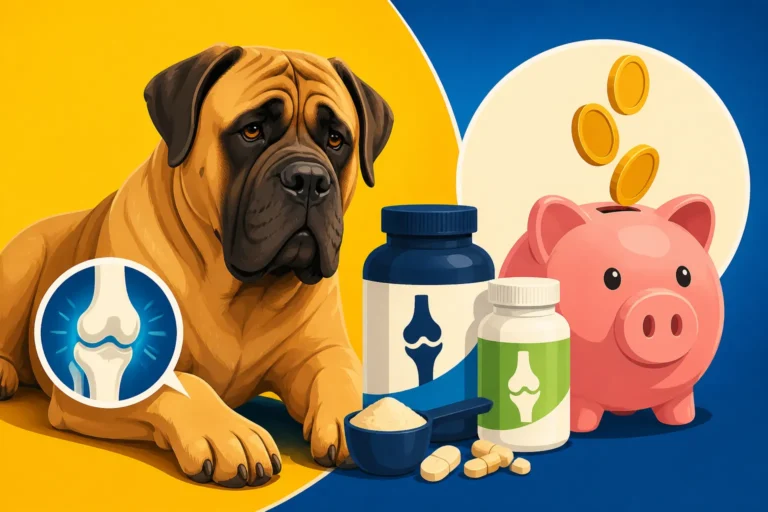
For all these conditions, insurance coverage is invaluable. Without it, you could be looking at multiple surgeries over your Mastiff's lifetime, potentially totaling tens of thousands of dollars. The long-term management of arthritis, including pain medication, joint supplements, and physical therapy, also adds up.
The Silent Killer: Bloat and Emergency Surgery
Gastric Dilatation-Volvulus (GDV), commonly known as bloat, is an acute, life-threatening condition where the stomach fills with gas and then twists upon itself. It's a terrifying emergency that strikes deep-chested breeds like the Mastiff with alarming frequency and rapidity. The article Bloat in the Deepest Chest of Any Breed: the Mastiff describes the unique vulnerability of these dogs. When bloat occurs, time is of the essence; surgery is required immediately, often within hours, to untwist the stomach and prevent organ damage and death.
This emergency surgery is highly complex and incredibly expensive. It often involves overnight critical care, extensive monitoring, and a team of veterinary professionals. The cost can easily range from several thousand to upwards of ten thousand dollars, depending on the severity and location. Without insurance, an owner might face the unthinkable choice between a massive, unplanned financial burden and losing their beloved pet. Some Mastiff owners opt for a prophylactic gastropexy, a surgical procedure that tacks the stomach to the abdominal wall to prevent twisting. While the gastropexy itself may or may not be covered by insurance (it's often considered preventative, so check your policy), the emergency surgery for actual bloat usually is. What Post Surgical Monitoring Costs on a Mastiff can be a significant part of the bill after such a critical operation.
Cancer and Cardiac Concerns in Later Years
As Mastiffs age, they become more susceptible to certain types of cancer and cardiac conditions.
- Cancers: Mastiffs, like many large and giant breeds, have a higher incidence of certain cancers, including osteosarcoma (bone cancer), lymphoma, and mast cell tumors. Cancer diagnosis and treatment can be incredibly expensive, involving biopsies, imaging (X-rays, CT scans, MRIs), chemotherapy, radiation, and surgery. The costs can easily reach into the tens of thousands of dollars for a full course of treatment. The article Which Cancers Mastiffs Get details some of these risks.
- Cardiac Issues: While not as prevalent as in some other giant breeds, Mastiffs can still develop heart conditions, particularly dilated cardiomyopathy (DCM) or other age-related heart diseases. Diagnosis often involves cardiac ultrasounds (echocardiograms), ECGs, and ongoing medication. While typically not as costly as major cancer treatments or emergency bloat surgery, chronic cardiac care can still represent a significant financial commitment over time.
For these late-onset conditions, having insurance from an early age is paramount. If you wait until your Mastiff is six and then they are diagnosed with cancer, it will be considered a pre-existing condition and likely not covered.
Eye and Skin Issues: Smaller but Still Costly
While perhaps not as life-threatening or immediately catastrophic as bloat or cancer, eye and skin conditions can still rack up considerable veterinary bills, especially for a Mastiff.
- Eye and Eyelid Conditions: Mastiffs can be prone to conditions like entropion (eyelids rolling inward) or ectropion (eyelids rolling outward), which can cause irritation, infections, and even damage to the cornea. These often require surgical correction. They can also develop "Cherry Eye," a prolapsed gland in the third eyelid. While these surgeries are generally less expensive than major orthopedic or bloat procedures, they can still cost hundreds to a couple of thousand dollars per eye. Chronic eye infections or issues can also lead to repeated vet visits, medications, and specialist consultations.
- Skin Fold Infections: The Mastiff's characteristic loose skin and deep facial folds, while endearing, can become breeding grounds for bacteria and yeast, leading to skin fold dermatitis. These infections require regular cleaning, medicated wipes, and sometimes antibiotics or antifungal medications. While individual incidents might not be ruinous, chronic or recurring infections can lead to ongoing vet visits and medication costs that add up over time. These issues, while common, can often be managed with good hygiene, but sometimes require veterinary intervention.
Even these "smaller" issues demonstrate the value of comprehensive insurance. A string of seemingly minor problems can quickly deplete an emergency fund if you're paying out of pocket for a two hundred pound dog.
Making Sense of the Numbers: What to Look for in a Policy
Choosing the right pet insurance policy for your Mastiff involves more than just looking at the monthly premium. You need to dive into the details of the policy structure to ensure it actually provides the coverage and financial relief you expect when a major issue arises.
Comparing Deductibles, Reimbursement Rates, and Annual Caps
When comparing policies, these three components are your primary points of comparison:
- Deductibles: This is the amount you pay first. Imagine your Mastiff needs a $5,000 surgery. If you have a $500 deductible, you pay the first $500. Then the reimbursement rate kicks in. Some policies offer per-incident deductibles (you pay the deductible each time your Mastiff gets sick or injured with a new condition), while others offer annual deductibles (you pay it once per policy year, regardless of how many different conditions arise). For a Mastiff, an annual deductible is often more favorable, as you could face multiple issues in a year.
- Reimbursement Rates: This is the percentage the insurer pays after the deductible. If you have a 90% reimbursement rate on that $5,000 surgery (and a $500 deductible), you pay $500 (deductible) + 10% of the remaining $4,500 ($450) = $950 out of pocket. The insurer pays $4,050. A higher reimbursement rate means less out of your pocket.
- Annual Caps (or Payout Limits): This is the maximum amount the insurance company will pay in a given year. For a Mastiff, with potential for single bills reaching $8,000-$10,000 (e.g., bloat surgery, cancer treatment, complex orthopedic surgery), an unlimited annual payout or a very high cap (e.g., $20,000+) is highly recommended. You don't want to hit your cap mid-year and be left covering subsequent bills entirely. Healthy Paws is one of the providers known for offering unlimited annual payouts, which can be a significant comfort to Mastiff owners.
A clear table can illustrate how these factors work together:
| Policy Feature | Option A (Lower Premium) | Option B (Higher Premium) | Impact for Mastiff Owner |
|---|---|---|---|
| Annual Deductible | $1,000 | $250 | Lower deductible means less out of pocket before coverage starts, ideal for multiple smaller incidents or single large ones. Higher deductible reduces premium but increases initial burden. |
| Reimbursement Rate | 70% | 90% | Higher reimbursement percentage means the insurer covers more of the bill after the deductible, significantly reducing your out-of-pocket expenses for Mastiff-sized bills. |
| Annual Limit | $10,000 | Unlimited | For a Mastiff, a major single event (e.g., bloat, cancer) can easily exceed $10,000. An unlimited plan offers the best protection against catastrophic costs. A $10,000 limit could be hit with one major surgery, leaving you exposed for the rest of the year. |
| Example Scenario: | $8,000 Bloat Surgery | $8,000 Bloat Surgery | |
| Out of Pocket | $1,000 (Deductible) | $250 (Deductible) | |
| Remaining Bill | $7,000 | $7,750 | |
| Insurer Pays | 70% of $7,000 = $4,900 | 90% of $7,750 = $6,975 | |
| Your Total Cost | $1,000 + ($7,000 – $4,900) = $3,100 | $250 + ($7,750 – $6,975) = $1,025 | This comparison clearly shows how the deductible, reimbursement rate, and annual limit chosen directly impact your final out-of-pocket costs, especially with the high vet bills a Mastiff can incur. How Much Anesthetic a Two Hundred Pound Mastiff Takes is just one example of the expenses that pile up quickly. |
Reading the Fine Print: Exclusions and Limitations
This is perhaps the most critical, yet most overlooked, step when choosing a policy. The "fine print" contains all the exclusions and limitations that could impact your coverage. Don't skim this section; read it carefully.
- Breed-Specific Exclusions: While rarer now, some older policies or specific insurers might have breed-specific exclusions or limitations for conditions common in Mastiffs (e.g., automatically excluding hip dysplasia). Always verify there are no such clauses.
- Hereditary/Congenital Conditions: Most good accident and illness policies cover hereditary and congenital conditions as long as they are not pre-existing. Given Mastiffs' predispositions to things like hip/elbow dysplasia, this coverage is non-negotiable.
- Exam Fees: Some policies cover the veterinary exam fee associated with an eligible claim, while others do not. This can be a significant difference over time.
- Rx Food/Supplements: If your Mastiff needs prescription food for a diagnosed condition (e.g., a specific diet for allergies) or certain joint supplements, check if these are covered. Most insurance typically does not cover these.
- Behavioral Issues: Some policies may exclude coverage for behavioral conditions or training.
- Elective Procedures: Cosmetic surgeries or certain preventative procedures (like prophylactic gastropexy, in some cases) may not be covered.
- Holistic/Alternative Therapies: If you're interested in acupuncture, chiropractic, or hydrotherapy for your Mastiff's arthritis, verify if these are covered and to what extent.
- Per-Condition Limits: Some policies may have a lifetime or annual limit per condition, rather than an overall annual limit. This is less desirable for Mastiffs with chronic conditions that require ongoing care.
Take the time to compare actual policy documents, not just summary sheets. Call customer service with any questions or hypothetical scenarios. You want to feel confident that the policy you choose will genuinely support you when your Mastiff needs it most.
Managing Insurance Costs and Maximizing Value for Your Mastiff
While pet insurance is a wise investment for a Mastiff, it's also a significant ongoing expense. There are ways to manage these costs and ensure you're getting the best value for your money over your Mastiff's lifetime.
Bundling and Discounts: Every Penny Counts
Many pet insurance providers offer various discounts that can help reduce your monthly premiums. It's always worth asking about them when getting a quote.
- Multi-Pet Discounts: If you have more than one pet, many companies offer a discount for insuring multiple animals under the same policy. While this article focuses on your Mastiff, if you have other furry family members, this can bring down the overall cost.
- Employer or Association Discounts: Check if your employer, alumni association, or any clubs you belong to (like the Mastiff Club of America) offer partnerships or discounts with pet insurance providers. Sometimes, these can be substantial.
- Veterinary Staff Discounts: If you work in the veterinary field, many insurers offer discounts to help veterinary professionals afford care for their own pets.
- Annual Payment Discounts: Some companies offer a small discount if you pay your premium annually rather than monthly. If your budget allows, this can save you a little extra.
- Online Enrollment Discounts: Occasionally, there might be a small discount for enrolling online directly through the insurer's website.
Always inquire about any available discounts, as even a small percentage can add up to meaningful savings over years, especially with a Mastiff's higher base premium.
The Role of Wellness Plans and Self-Insurance
As discussed earlier, wellness plans cover routine care but add to your premium. For some, they offer peace of mind and help budget for predictable expenses. For others, self-insurance for routine care might be a better approach.
- Wellness Plans: If you like the idea of budgeting for routine visits, vaccinations, and preventatives, a wellness plan might be a good fit. Check what it covers versus what you typically spend annually on these items. Sometimes, the cost of the plan can be close to what you'd pay out of pocket, so the main benefit is predictability.
- Self-Insurance for Routine Care: Instead of a wellness plan, some owners prefer to put aside a set amount each month into a dedicated savings account specifically for their Mastiff's routine care. This way, the money is always there for annual exams, preventatives, and dental cleanings, and if you don't use it all, it rolls over. This strategy works best if you are disciplined with saving. For the really big, catastrophic bills, the comprehensive accident and illness insurance is still your primary line of defense. Remember that consistent, good preventative care, perhaps with a high-quality diet (though food itself isn't typically covered by insurance, products like Ollie or Chewy's specialty foods can support health), can reduce the likelihood of some issues, but won't prevent genetic predispositions.
Regularly Reviewing and Adjusting Your Policy
Your Mastiff's needs and your financial situation can change over time, so it's a good idea to review your pet insurance policy annually.
- Age-Related Changes: As your Mastiff ages, your premiums will increase. You might need to adjust your deductible or reimbursement rate to keep the monthly cost manageable. For example, if you initially chose a 90% reimbursement, you might consider dropping to 80% or raising your deductible slightly in their senior years to balance rising premiums.
- Claims History: If your Mastiff has had several claims in a year, you might have met your deductible and be close to an annual cap. Knowing this can help you anticipate future out-of-pocket costs.
- New Providers/Plans: The pet insurance market is dynamic. New providers or better plans might emerge that offer more competitive rates or better coverage for Mastiffs. While you generally don't want to switch policies if your Mastiff has developed chronic conditions (as these would become pre-existing with a new insurer), it's worth checking if a current competitor offers a better deal for similar coverage, especially if your Mastiff is still relatively young and healthy.
- Financial Situation: If your personal finances change, you might need to adjust your policy to better fit your budget. It's better to adjust your coverage (e.g., a higher deductible) than to cancel it entirely, leaving your Mastiff unprotected. The goal is to always maintain a baseline of catastrophic coverage, especially for a breed with the potential for such enormous bills. Whether a High Deductible Suits a Mastiff Owner is a personal financial decision.
The Peace of Mind: Is Mastiff Insurance Worth the Investment?
The question of whether pet insurance is "worth it" is a common one, and for a Mastiff owner, it's often more complex than a simple yes or no. However, when you consider the potential financial burdens, the answer for most will lean heavily towards yes.
Preparing for the Unexpected: A Lifeline for Your Giant
No one wants to imagine their beloved Mastiff in an emergency, but unfortunately, it's a reality many owners face. When that moment comes – whether it's a sudden bloat episode, a severe injury, or a cancer diagnosis – you want to be able to make decisions based on what's best for your pet's health, not solely on your bank account balance. A comprehensive pet insurance policy acts as a financial lifeline. It means you can say "yes" to life-saving surgery, advanced diagnostics like an MRI, or long-term specialized treatments without immediately being overwhelmed by a five-figure bill.
For a Mastiff, where medical costs are amplified by their size and breed predispositions, this preparation is paramount. You might never use it for a major claim, and that's wonderful! But the one time you do, it can literally save your Mastiff's life and prevent immense financial strain. This is particularly true for conditions like bloat, where every hour counts, and delaying treatment due to cost isn't an option.
The Emotional and Financial Burden Without Coverage
Imagine the scenario: your six-year-old Mastiff, who you consider a member of your family, suddenly becomes lethargic, tries to vomit unsuccessfully, and his abdomen begins to swell. You rush him to the emergency vet, and the diagnosis is bloat. The veterinary team explains that he needs immediate, expensive surgery – potentially $8,000 to $12,000. Without insurance, this is not just a financial shock; it's an emotional gut punch. You're trying to process the seriousness of your dog's condition while simultaneously grappling with the monumental cost. The sheer pressure can be unbearable.
For many, without insurance, such a bill might force them into making heartbreaking decisions they never wanted to consider. It's a cruel position no pet owner should ever be in. The emotional toll of worrying about finances during a pet's health crisis can overshadow the focus on their recovery. Pet insurance alleviates this specific financial pressure, allowing you to concentrate on supporting your Mastiff through their illness or recovery. It safeguards your ability to provide the best possible care, which, for a Mastiff, often means the most expensive care.
A Realistic Look at the "Return" on Investment
It's common to look at insurance as an investment and expect a clear financial "return." With pet insurance, the return isn't always monetary in the sense of getting back more than you paid in premiums. Sometimes, the greatest return is the absence of financial catastrophe and the profound peace of mind it provides.
For some Mastiff owners, they might pay premiums for years and only have minor claims, perhaps never truly "breaking even" on their investment in a purely financial sense. For others, one major surgery – a hip replacement, a bloat emergency, or a round of chemotherapy – can easily cost more than years of premiums combined, making the policy pay for itself many times over. The critical point is that you cannot predict which category your Mastiff will fall into. Given the Mastiff's health profile and the astronomical costs of their veterinary care, the odds of needing significant intervention at some point in their six to ten years are considerably higher than for many other breeds.
Ultimately, pet insurance for a Mastiff is about mitigating risk and ensuring you can always afford the care your colossal companion deserves. It's about buying peace of mind, knowing that you've done everything you can to prepare for the inevitable health challenges that come with loving such a magnificent, albeit expensive, breed.
Disclaimer
This article is for general informational purposes only and does not constitute professional advice. Laws, prices and regulations vary by location and change over time. Consult a qualified professional for guidance on your specific situation.