Whether Bowl Height Changes a Mastiff’s Bloat Risk
The worry of bloat, or Gastric Dilatation-Volvulus (GDV), hangs heavy over every Mastiff owner's heart. It's a terrifying, fast-acting condition that can turn a normal evening into a life-or-death dash to the emergency vet. With so much conflicting advice swirling around—from feeding techniques to bowl types—it’s easy to feel overwhelmed and unsure if you’re doing everything you can to protect your gentle giant. This guide is here to cut through the noise, specifically addressing the long-standing debate about whether bowl height truly impacts a Mastiff's risk of bloat, arming you with the latest, most reliable information to keep your beloved companion safe.
The Persistent Idea of Elevated Bowls for Bloat Prevention
For decades, many of us were told, and sincerely believed, that feeding our big dogs from elevated bowls was a crucial step in preventing bloat. The logic seemed sound: if a dog didn't have to bend down, they wouldn't gulp as much air, and that reduced air gulping would, in turn, lessen their bloat risk. It was a piece of advice passed down through generations of big dog owners, often with the best intentions. You’d walk into any pet store and see rows of elevated feeders, specifically marketed for large and giant breeds, reinforcing this idea. Breeders recommended it, veterinarians sometimes did too, and it just felt like the right, proactive thing to do for our Mastiffs, whose deep chests made them particularly susceptible to this dreaded condition. We wanted to help our dogs eat comfortably, and if it could prevent a life-threatening emergency, even better.
Where the Elevated Bowl Idea Came From
The concept of elevated bowls likely emerged from a combination of common sense observations and early, less rigorous thinking about canine anatomy and digestion. People noticed that large dogs, especially those with particularly deep chests like Mastiffs, seemed to strain or get into an awkward posture when eating from floor-level bowls. It seemed logical that raising the bowl would alleviate this discomfort, making mealtime more natural. The assumption then followed that this "more natural" posture would somehow lead to less air ingestion, and therefore, a lower risk of bloat.
Think about it from a human perspective: if you're hunched over your dinner, you might eat faster or feel less comfortable. It's a natural leap to assume the same for our dogs. Early theories of bloat often focused heavily on swallowed air as the primary culprit, so anything that might reduce air intake was adopted with enthusiasm. This meant that many large breed owners, eager to protect their dogs from such a terrifying and deadly condition, invested in elevated feeders. The idea spread quickly within dog communities, becoming a widely accepted piece of conventional wisdom before extensive scientific studies were undertaken. Many of us followed this advice diligently, believing we were doing our very best for our Mastiffs.
The Shift in Veterinary Understanding
What we've learned over the past couple of decades, thanks to more in-depth scientific inquiry, has really turned some of these long-held beliefs on their head. The veterinary community, driven by research into the heartbreaking prevalence of bloat in breeds like the Mastiff, began to critically examine all contributing factors, including feeding practices. It became clear that while the idea of reducing swallowed air was logical, the actual physiology involved in bloat was more complex than initially understood.
One of the pivotal shifts came with comprehensive studies, most notably research conducted by Purdue University's School of Veterinary Medicine. These studies looked at thousands of dogs and analyzed a wide array of potential risk factors for GDV. What they found regarding elevated bowls was, for many, quite shocking and completely counter-intuitive to what we'd been told for years. Instead of decreasing the risk, their findings suggested that elevated feeding might actually increase the likelihood of bloat in large and giant breed dogs. This wasn't a small, insignificant finding; it was a significant indicator that our well-intentioned efforts might have been inadvertently putting our dogs at greater risk. This kind of scientific revelation can be hard to reconcile with years of practice, but it underscores the importance of staying informed with the latest research for the health of our Mastiffs.
What the Research Actually Says About Bowl Height and Bloat
This is where we get down to the brass tacks, separating fact from well-meaning but outdated advice. When studies specifically looked at bowl height and its correlation with bloat, the results were not what many people expected. It can be frustrating when something you've diligently done for years is suddenly called into question, but our Mastiffs rely on us to stay informed with the most current data.
Key Studies and Their Conclusions
The most comprehensive and frequently cited research on bloat, often referred to as the Purdue Bloat Study, analyzed risk factors in various large and giant breeds. This massive epidemiological study, which involved data from thousands of dogs over several years, examined everything from diet and exercise to feeding habits and, crucially, bowl height.
Their findings revealed a statistically significant increase in bloat risk for large and giant breed dogs that ate from elevated bowls compared to those fed from ground-level bowls. For large breed dogs, consuming food from an elevated bowl was associated with a 1.2-fold increase in the risk of bloat. For giant breeds, this risk jumped to a staggering 2.5-fold increase. This wasn't a minor observation; it was a strong correlation that challenged conventional wisdom.
The researchers hypothesized several potential reasons for this surprising correlation. One theory is that when a dog eats from an elevated position, they might consume their food more quickly, potentially gulping down more air along with their kibble. Another thought is that the posture itself, while seemingly more comfortable, could facilitate air entry into the stomach or make it harder for trapped gas to escape. Whatever the exact physiological mechanism, the statistical evidence pointed away from elevated bowls as a protective measure and, in fact, suggested the opposite. It’s a tough pill to swallow when you've been doing something you thought was right, but this information is vital for protecting our gentle giants from a condition like bloat in the deepest chest of any breed: the Mastiff.
Why Elevated Bowls Might Be Detrimental
So, why would something that seems intuitively helpful actually increase risk? While the exact mechanisms are still debated, several theories try to explain this counterintuitive finding:
- Faster Eating and Air Gulping: One prevailing theory is that elevated bowls might allow dogs to eat faster. When a dog doesn't have to lower its head and neck as much, the food essentially "falls" down their throat with less effort. This increased speed can lead to more air being swallowed along with the food. Imagine trying to eat soup quickly from a bowl on a high counter versus one on a table – the angle can make a difference. Swallowing excess air is a known factor that can contribute to gas buildup in the stomach, which is the first stage of bloat.
- Altered Esophageal Dynamics: The angle of the esophagus when eating from an elevated bowl might also play a role. Some experts hypothesize that this position could make it easier for air to enter the stomach and harder for it to escape. If gas builds up and cannot be relieved through burping, the pressure can increase rapidly, leading to the stomach distending and potentially twisting.
- Gastric Motility and Positioning: There's also speculation that the body's natural gastric motility might be affected by an elevated feeding position. While the evidence here is less clear, any change that alters the normal movement of food and gas through the digestive system could theoretically contribute to risk factors for bloat.
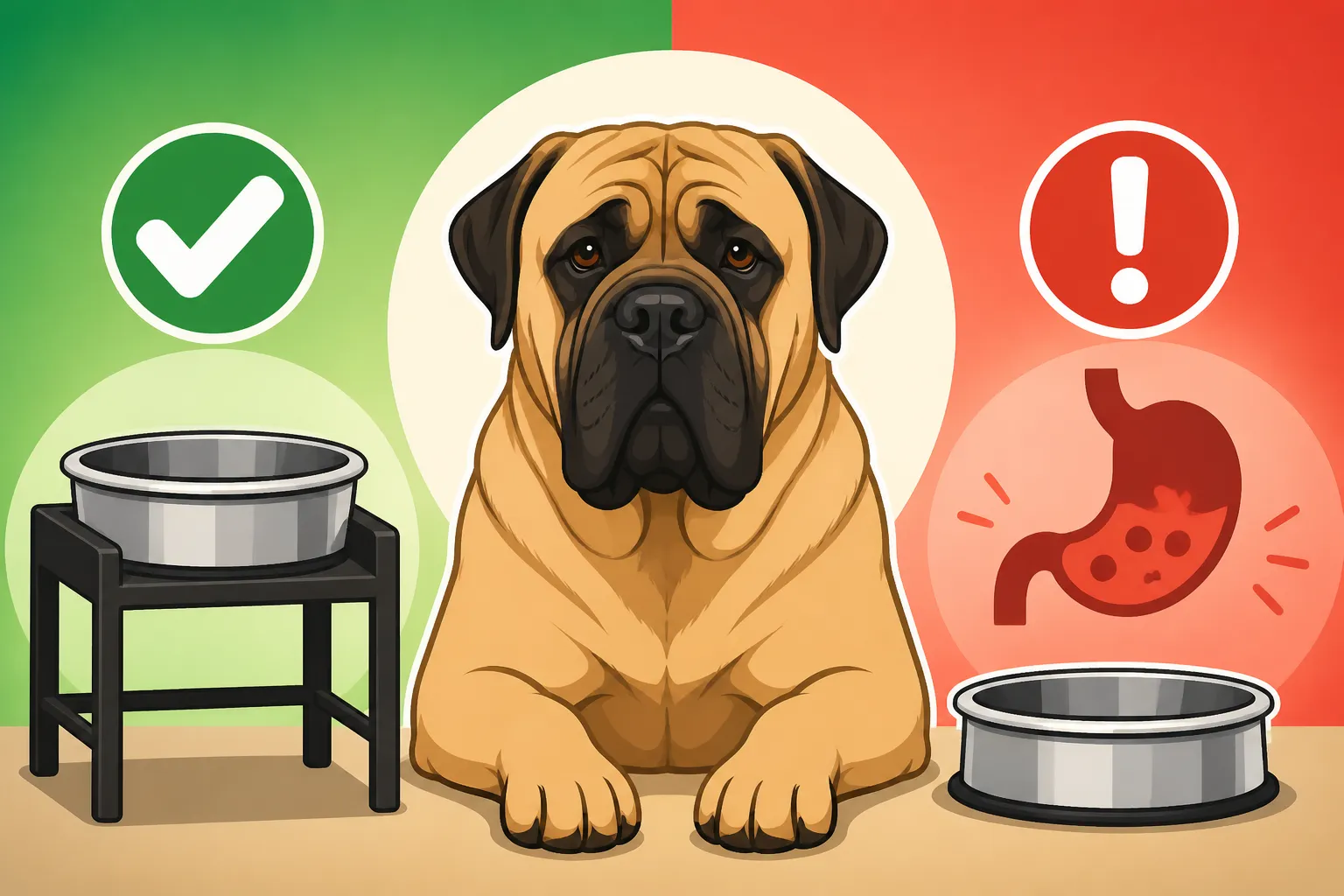
It’s important to remember that bloat is a multi-factorial condition, and no single factor is usually the sole cause. However, understanding what the research indicates, even if it contradicts past advice, is crucial for making the best decisions for our Mastiffs. Therefore, based on current veterinary consensus, feeding your Mastiff from a ground-level bowl is generally recommended over an elevated one to help mitigate bloat risk.
Real Factors That Influence Bloat Risk in Mastiffs
While bowl height might not be the protective factor we once thought, there are several other, well-researched elements that truly influence your Mastiff's risk of bloat. Focusing on these areas can make a genuine difference in managing and reducing the chances of this life-threatening condition. Knowing the signs is also critical; for instance, the first sign a Mastiff is bloating can be subtle but crucial.
Eating Habits and Meal Management
How your Mastiff eats can be just as important, if not more so, than the bowl itself. This is an area where owners have significant control and can implement effective preventative strategies.
- Slow Down the Eating: Rapid consumption of food is a consistent risk factor identified in bloat studies. When a dog eats too quickly, they tend to gulp down a lot of air along with their kibble. This trapped air contributes to stomach distension. To combat this, consider using slow-feeder bowls or puzzle feeders. These bowls often have ridges or compartments that force your Mastiff to eat around obstacles, significantly slowing down their intake. Another simple trick is to place a large, heavy, smooth rock (too big for them to swallow) in their regular bowl, which they have to eat around. For very enthusiastic eaters, spreading their food out on a large baking sheet can also work wonders.
- Multiple, Smaller Meals: Instead of feeding one massive meal a day, splitting their daily ration into two or three smaller meals can reduce the load on their stomach at any one time. For a growing Mastiff, this is especially important, and it helps manage the overall volume of food in the stomach. This practice helps prevent the stomach from becoming overly full and distended, lessening the chances of a bloat episode.
- Post-Meal Rest: This is a big one. Vigorous exercise or excitement immediately before or after eating is strongly linked to an increased risk of bloat. Think about how a Mastiff's gastropexy should be done, often accompanied by strict rest protocols. After a meal, your Mastiff should have a calm, quiet period. Avoid walks, intense playtime, or anything that causes them to jump around or get overly excited for at least an hour before and two hours after eating. This allows their stomach to properly digest without being jostled or stressed. Many owners find designating a specific "quiet zone" for an hour or two after meals to be very effective.
Genetic Predisposition and Other Risk Factors
Unfortunately, some aspects of bloat risk are beyond our direct control, but knowing them helps us stay vigilant and proactive.
- Breed Predisposition: Mastiffs are unfortunately high on the list of breeds prone to GDV. Their characteristic deep, narrow chests are a significant anatomical risk factor. Other giant breeds like Great Danes, Saint Bernards, and Weimaraners share this predisposition. This genetic component means that even with perfect management, the risk can't be entirely eliminated.
- Age and Sex: Bloat tends to occur more frequently in older dogs, with the risk increasing significantly after the age of seven. While both sexes can be affected, some studies suggest intact males might have a slightly higher risk, though this isn't a universally consistent finding.
- Temperament: Interestingly, studies have shown a correlation between temperament and bloat risk. Anxious, fearful, or highly stressed dogs may be more prone to bloat. This highlights the importance of creating a calm, secure environment for your Mastiff and managing any anxiety they might experience.
- Family History: If your Mastiff’s parents or close relatives experienced bloat, their own risk is elevated. Responsible breeders are often transparent about this, but it's something to discuss when considering a puppy. This connection underscores why knowing the health history, like whether a Mastiff's short life is getting shorter due to conditions like bloat, is so important.
Proactive Veterinary Care and Preparedness
Even with the best preventative measures, bloat can still happen. Being prepared and working closely with your vet is paramount.
- Recognize the Signs: Time is absolutely critical when bloat strikes. Knowing how long a bloating Mastiff has before surgery can literally be the difference between life and death. The classic signs include a distended abdomen (often hard to the touch), unproductive retching or gagging, restlessness, pacing, drooling, weakness, and collapse. Never wait to see if it gets better. If you suspect bloat, it's an immediate emergency.
- Emergency Plan: Have an emergency plan in place. Know the quickest route to your veterinary emergency clinic, and have their number on speed dial. Inform them you're coming with a suspected bloat case so they can prepare. Because a Mastiff is dosed by lean weight and not scale weight, and requires specialist care for critical procedures, it is important to choose your emergency vet wisely.
- Gastropexy: For Mastiffs, a prophylactic gastropexy is often recommended. This surgical procedure permanently tacks the stomach to the abdominal wall, preventing it from twisting (volvulus) even if it dilates. While it doesn't prevent the stomach from distending, it dramatically reduces the risk of the fatal twist. This procedure is often done at the same time as neutering, or as a standalone surgery, especially given that neutering changes a cystinuric Mastiff's diet and often involves anesthesia anyway. Discuss this option with your veterinarian, particularly if you have a dog with multiple risk factors. It's a significant preventative step that can offer immense peace of mind. The cost of such a procedure can be substantial, which is why having pet insurance like Healthy Paws can be an absolute lifesaver. They help cover unexpected veterinary emergencies and major surgeries, alleviating some of the financial burden during incredibly stressful times. You don't want to be making life-or-death decisions based on your wallet, and a good insurance plan can prevent that agonizing scenario.
Practical Feeding Strategies for Your Mastiff
Now that we understand the nuances of bloat risk and bowl height, let's put it into practice with solid, actionable feeding strategies for your magnificent Mastiff. These aren't just theoretical; they are daily habits that can significantly contribute to your dog's long-term health and well-being.
Ground-Level Bowls vs. Slow Feeders
Making the right choice for your Mastiff's eating setup is simpler than you might think, now that the elevated bowl myth has been debunked.
- Embrace Ground-Level Feeding: Based on current research, feeding your Mastiff from a regular bowl placed directly on the floor is the recommended approach. This encourages a more natural eating posture and, critically, does not carry the increased bloat risk associated with elevated feeders. Don't feel guilty about ditching the fancy raised stands if you have them – you're doing what's best for your dog's health. You might find your Mastiff is perfectly content and comfortable eating this way.
- The Power of Slow Feeders: If your Mastiff is a known "gulper" – the kind that inhales their food in seconds – a slow-feeder bowl is an absolute game-changer. These bowls are designed with various patterns of ridges, mazes, or bumps that force your dog to work for each mouthful. This significantly extends mealtime, reducing the amount of air they swallow and promoting better digestion. There are many robust slow feeders on the market specifically designed for large breeds, some made from durable plastics or even stainless steel, which can withstand the enthusiastic eating habits of a Mastiff. Brands like Outward Hound offer popular slow-feeder options that come in giant sizes, ensuring your Mastiff gets a genuine challenge without undue frustration. These tools truly help them chew their food more thoroughly and take their time.
Creating a Calm Feeding Environment
Beyond the bowl itself, the environment in which your Mastiff eats can play a surprisingly important role in their stress levels and digestion, both of which can influence bloat risk.
- Quiet and Undisturbed Mealtime: Imagine trying to enjoy your dinner with constant interruptions or anxiety. Your Mastiff feels the same way. Designate a quiet, low-traffic area for their feeding station. This means away from busy hallways, constantly opening doors, or other pets vying for attention. If you have multiple dogs, feed them in separate rooms or at a distance to prevent any competition or stress that could lead to faster eating. A calm environment helps them relax and focus on their meal without feeling rushed or threatened.
- Consistent Routine: Dogs thrive on routine, and mealtime is no exception. Feeding your Mastiff at roughly the same times each day helps regulate their digestive system and reduces anxiety about when their next meal is coming. Predictability brings comfort, which can contribute to a more relaxed eating pace and potentially lower stress-related bloat risk.
- Minimize Post-Meal Activity: As mentioned before, the period immediately after eating is critical. Make sure your Mastiff has a dedicated, comfortable space where they can rest undisturbed for at least an hour or two after finishing their meal. This means no enthusiastic greetings at the door, no rousing games of fetch, and no long walks. A cozy bed in a quiet corner is ideal. If you're out and about, be mindful of their meal schedule. It might be better to feed them a bit earlier or later if you know you'll be gone for a crucial post-meal window, especially since why a Mastiff only needs one hour a day often applies to low-impact activity rather than strenuous exercise. This is another area where proactive planning, and potentially pet insurance like Healthy Paws, can indirectly help by ensuring you're prioritizing your Mastiff's health over other routines, knowing you're covered if an emergency still arises.
By focusing on these practical feeding strategies, you're not just hoping for the best; you're actively implementing evidence-based practices to safeguard your Mastiff against the very real and terrifying threat of bloat. It's about empowering yourself with knowledge and making informed choices for their health.
| Factor | Past Belief/Assumption | Current Research & Recommendations for Mastiffs |
|---|---|---|
| Bowl Height | Elevated bowls prevent bloat. | Ground-level bowls are recommended; elevated bowls may increase risk. |
| Eating Speed | Not a primary concern. | Rapid eating increases air gulping; use slow feeders to mitigate. |
| Meal Frequency | One large meal is fine. | Two to three smaller meals per day reduce stomach load. |
| Activity After Meals | Normal activity is okay. | Restrict vigorous exercise/excitement for 1-2 hours after eating. |
| Genetics/Breed | Less emphasized; focus on diet. | Deep-chested breeds (like Mastiffs) are highly predisposed; genetics play a role. |
| Stress/Temperament | Not directly linked to bloat. | Anxious/stressed dogs may have higher risk; promote calm environment. |
| Preventative Surgery | Not always widely discussed/recommended. | Prophylactic gastropexy highly recommended for at-risk breeds (prevents twist). |
Disclaimer
The information provided in this article is for educational purposes only and is not intended to be a substitute for professional veterinary advice. Always consult with a qualified veterinarian regarding your Mastiff's health and any medical conditions or concerns. The risk factors and recommendations for Gastric Dilatation-Volvulus (Bloat) can vary, and your veterinarian is the best resource for personalized guidance.