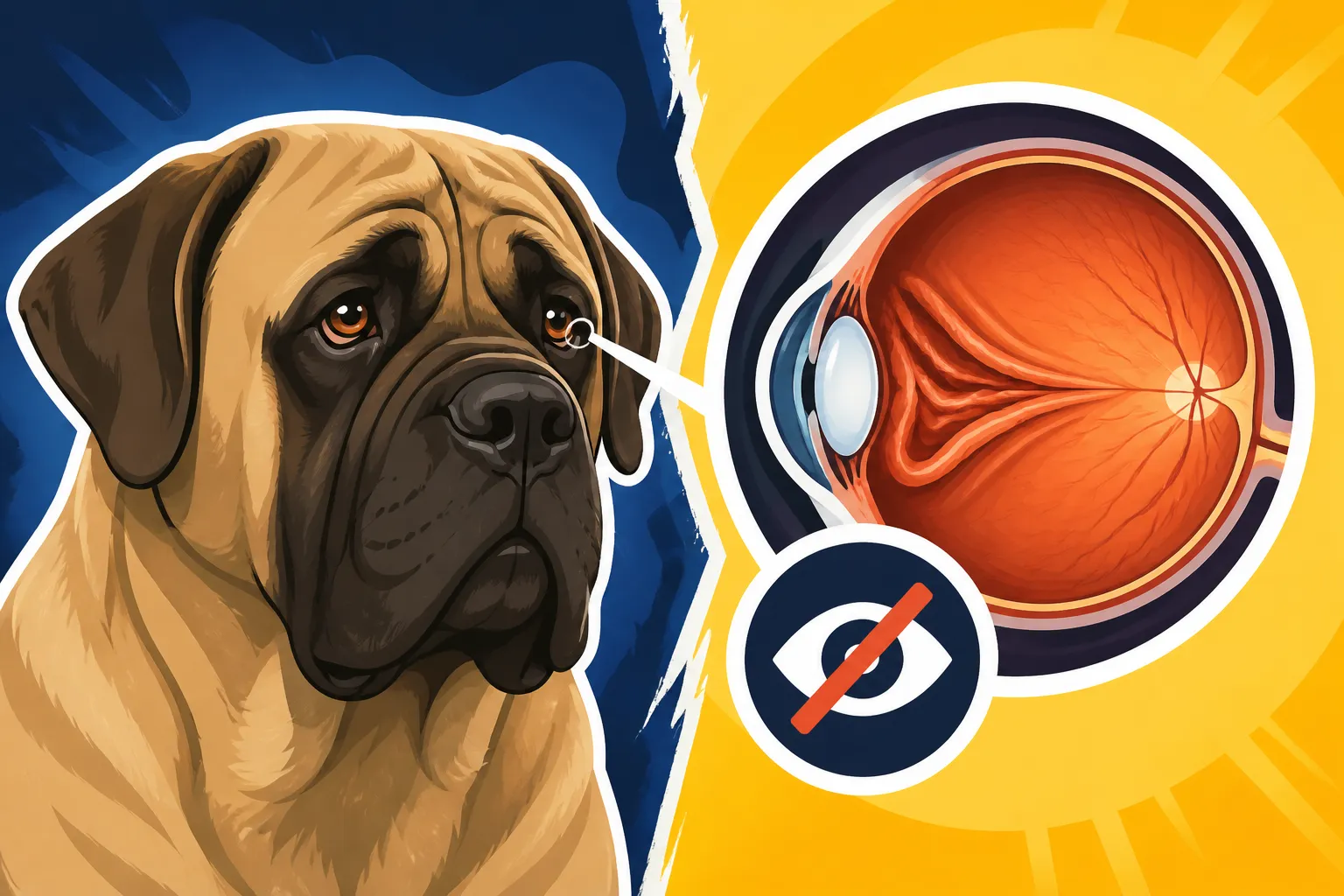
Whether a Mastiff’s Retinal Folds Cause Blindness
It’s an alarming moment for any Mastiff parent when the vet mentions something like "retinal folds" during a routine check-up, especially for such a giant, beloved companion. The immediate fear that your gentle giant might lose their precious sight is completely understandable. This guide is here to cut through the confusion and explain exactly what retinal folds are, whether they truly lead to blindness in Mastiffs, and what you can realistically expect regarding your dog's eye health.
Understanding What Retinal Folds Are in a Mastiff's Eye
Let's start by demystifying these "folds." When a veterinarian talks about retinal folds, they're referring to a condition where the retina—the light-sensitive tissue at the back of your Mastiff's eye—develops small, abnormal creases or wrinkles. It’s not necessarily a sign of impending doom, but rather a structural anomaly that can occur during the eye's development.
The Anatomy of a Mastiff's Eye and Where Folds Occur
To grasp retinal folds, it helps to picture the inside of your Mastiff's eye. The retina lines the back, much like the film in an old camera. Its job is to capture light and send signals to the brain, forming the images your dog sees. A retinal fold is essentially a small area where this delicate tissue hasn't laid down perfectly flat. Think of it like a crinkle in a piece of paper – the paper is still there, still functional, but it has a slight crease. These folds most commonly appear in the non-tapetal region of the retina, which is the part less involved in night vision, or can sometimes be seen around the optic nerve.
Temporary vs. Persistent Retinal Folds
Interestingly, many Mastiff puppies, especially those under three to four months of age, can exhibit temporary retinal folds. Their eyes are still developing at a rapid pace, and these folds are often just a transient phase in that development. Imagine a baby growing – not everything is perfectly formed immediately. Sometimes, as the eye matures and grows, these folds smooth out and disappear entirely, never to cause an issue. However, some folds can be persistent, meaning they remain present even after the puppy matures. It's the persistent ones that often spark concern, leading to questions about long-term vision.
Why Some Puppies Are Born With Them
The reasons why some Mastiff puppies are born with retinal folds can be varied. Often, it's considered a mild developmental anomaly, possibly genetic, but not always indicative of a severe inherited disease. In some cases, environmental factors during gestation, such as maternal illness or nutritional deficiencies, could play a role, though this is less commonly cited for the simple, benign folds. For a Mastiff litter, understanding "Why a Mastiff Litter Needs an Eye Exam" is crucial, as this early screening can identify these folds and differentiate them from more serious conditions. It gives breeders and prospective owners a heads-up and allows for appropriate monitoring.
Do Retinal Folds Actually Affect a Mastiff's Vision?
This is the big question, and the answer, for the vast majority of simple retinal folds in Mastiffs, is a resounding no – they typically do not cause blindness or even significant vision impairment. It's a common misconception, often fueled by the scary-sounding term "fold."
Distinguishing Benign Retinal Folds from True Eye Diseases
It’s vital to understand that a simple retinal fold is distinct from serious eye diseases that do lead to blindness. Many folds are truly benign. They are incidental findings by a veterinary ophthalmologist, much like a freckle on human skin – present, but harmless. They don't block light significantly, nor do they degenerate over time. Conditions like Progressive Retinal Atrophy (PRA), which causes gradual vision loss and eventual blindness, or severe, widespread retinal dysplasia are entirely different. With PRA, the photoreceptor cells in the retina actually die off, leading to profound vision loss, whereas a simple fold is just a structural variation. If you're concerned about other conditions, research "How Common Progressive Retinal Atrophy Is in Mastiffs" to understand the difference.
Here's a quick overview to help clarify the distinction:
| Feature | Benign Retinal Folds | Conditions That Cause Blindness (e.g., PRA, Severe Retinal Dysplasia, Cataracts) |
|---|---|---|
| Impact on Vision | Typically none; asymptomatic | Mild to severe vision loss, often progressing to blindness |
| Progression | Usually non-progressive; may resolve in puppies | Often progressive, leading to eventual blindness |
| Appearance | Small, localized creases/wrinkles in the retina | Diffuse retinal degeneration, detachment, cloudiness in the lens |
| Associated Conditions | Often isolated finding | Can be linked to systemic diseases, other ocular anomalies |
| Genetic Basis | Can be developmental/minor genetic predisposition | Often clearly inherited, specific gene mutations identified |
| Treatment | None needed | Varies by condition; some have treatments to slow progression, surgery for cataracts |
The Link to Multifocal Retinal Dysplasia (CMR1)
While simple folds are benign, there's a more serious condition called Canine Multifocal Retinopathy Type 1 (CMR1) that involves retinal folds. CMR1 is a genetic eye disease that causes multiple folds or detachments in the retina. Unlike the benign, isolated folds, CMR1 can indeed affect vision, though usually not leading to complete blindness. The extent of vision impairment depends on the severity and location of the folds or detachments. A dog with CMR1 typically has multiple, more extensive retinal folds, sometimes with bubbling or geographic lesions, which are more severe than the simple linear folds. It’s crucial for breeders to understand "What Canine Multifocal Retinopathy Does to a Mastiff" to screen their breeding stock and prevent passing this condition on. A DNA test is available for CMR1, and reputable Mastiff breeders will often test for it.
Understanding Inherited vs. Acquired Folds
Most retinal folds are considered developmental or inherited. This means they occur as the puppy grows or are passed down through genetics. Acquired folds, on the other hand, are much rarer and would typically be the result of trauma, inflammation, or an underlying systemic disease, and would likely be accompanied by other symptoms of injury or illness. The vast majority of folds found during a routine puppy eye exam fall into the inherited/developmental category, and as we’ve discussed, are usually of no major concern unless they are part of a more extensive condition like CMR1.
When to Be Concerned About Your Mastiff's Eye Health
While simple retinal folds generally don't cause blindness, it's still important to be vigilant about your Mastiff's overall eye health. There are definite signs that warrant a trip to your vet, or even a specialist, to rule out more serious issues.
Signs of Vision Impairment in a Mastiff
Mastiffs are incredibly adaptable, and with their calm demeanor, they can sometimes mask subtle vision changes. However, if you observe any of the following, it’s time to seek professional advice:
- Bumping into furniture or walls: Especially in familiar environments.
- Reluctance to go up or down stairs, or navigate new spaces: They might seem hesitant or clumsy.
- Misjudging distances: For example, when catching a treat or stepping off a curb.
- Difficulty finding toys or food: Particularly if they are moved from their usual spot.
- Dilated pupils that don't respond to light: This can indicate a problem with light perception.
- Cloudiness, redness, or discharge from the eyes: While not directly related to retinal folds, these are general signs of eye trouble.
- Changes in eye color or appearance: Such as a blueish haze, which could indicate cataracts. Knowing "Whether a Mastiff Gets Cataracts" is another important piece of the puzzle for a comprehensive understanding of eye health.
- Increased startle reflex: If your Mastiff is easily startled by sounds or movements, it could be compensating for reduced vision.
These symptoms would be a signal that something beyond a benign retinal fold might be at play, and a thorough examination is warranted.
The Importance of Specialized Eye Exams for Mastiffs
When you notice concerning signs, or as part of responsible breeding practices, a specialized eye exam by a veterinary ophthalmologist is invaluable. These specialists have the equipment and expertise to thoroughly examine the retina and other structures of the eye. They can distinguish between benign retinal folds and other more serious conditions such as multifocal retinal dysplasia, progressive retinal atrophy, or optic nerve hypoplasia. These exams are often done annually, or as recommended by your vet. "Whether a Mastiff Should Have a Yearly Eye Exam" is a common question, and for a giant breed prone to various health issues, it's a wise preventative measure, especially as they get older.
What a Veterinary Ophthalmologist Looks For
During an examination, the ophthalmologist will typically dilate your Mastiff's pupils to get a clear view of the retina. They use specialized lenses and lights, like an ophthalmoscope, to look for any abnormalities. They’ll assess the optic nerve, the blood vessels, and the overall health of the retinal tissue. When they see a retinal fold, they will determine its location, size, and whether it’s isolated or part of a broader pattern of retinal dysplasia. They can also perform other tests, such as electroretinography (ERG), which measures the electrical responses of the retina to light, especially if a progressive condition like PRA is suspected. These detailed evaluations are critical for an accurate diagnosis and appropriate advice, helping to confirm that those simple folds are indeed harmless.
Proactive Management and Monitoring of Your Mastiff's Eye Health
Responsible Mastiff ownership and breeding involve proactive measures to ensure the best possible eye health throughout your dog’s life. From selecting a puppy to ongoing care, there are steps you can take.
Breeder Screening and Health Clearances
A reputable Mastiff breeder will prioritize health testing, and that absolutely includes eye health. They should have their breeding dogs examined by a board-certified veterinary ophthalmologist. Organizations like the Orthopedic Foundation for Animals (OFA) maintain a public database of these clearances, often through the Canine Eye Registration Foundation (CERF), now known as OFA Eye Certification Registry (OFA-EYE). This certification indicates that the dog has been examined and found free of observable, inheritable eye diseases at the time of the exam. The results will specify any minor findings, such as benign retinal folds, allowing you to make an informed decision. These eye certifications are part of "The Four CHIC Tests a Mastiff Breeder Must Clear," demonstrating a commitment to health. If you are getting a puppy, ask to see the eye clearance certificates for both parents.
Regular Check-ups and Proactive Care
Even with a healthy genetic background, regular veterinary check-ups are essential for your Mastiff. During these visits, your primary veterinarian will perform a general eye examination, looking for any obvious issues like redness, discharge, or changes in vision. They can also advise you on how to spot the subtle signs of trouble at home. Maintaining good overall health, including a balanced diet and appropriate exercise, also contributes to ocular well-being. Keeping their face clean, especially around the eyes and those wonderful Mastiff wrinkles, can prevent secondary infections that might seem like eye problems. While benign retinal folds don't usually require treatment, catching other potential eye issues early can make a huge difference.
The Role of Pet Insurance in Managing Eye Conditions
Should your Mastiff unfortunately develop a more serious, blinding condition, such as severe retinal dysplasia, glaucoma, or advanced cataracts, the diagnostic tests, specialist visits, and potential treatments can be incredibly costly. A thorough eye exam, specialized imaging like an ocular ultrasound, or even surgery can quickly add up. Having a good pet insurance policy can provide immense peace of mind. Companies like Healthy Paws offer coverage for unexpected illnesses and accidents, which often includes specialist vet visits and procedures for eye conditions that do impact vision. While a benign retinal fold usually won't incur significant bills, the possibility of other, more serious eye issues, especially as your Mastiff ages and you consider "Caring for a Mastiff Past Five," makes pet insurance a valuable consideration. Healthy Paws can help buffer the financial strain if more intensive diagnostics or treatments are needed to maintain your Mastiff's vision or comfort. This way, you're prepared for the unexpected, ensuring your Mastiff gets the best possible care without economic hardship.
Disclaimer
This article is intended for informational purposes only and is not a substitute for professional veterinary advice. Always consult with a qualified veterinarian or veterinary ophthalmologist for any concerns regarding your Mastiff's health, diagnosis, or treatment options.