Which Water Bowl Suits a Mastiff’s Jowls
If you've ever shared your home with a magnificent Mastiff, you know the post-drink ritual all too well. It starts innocently enough: your gentle giant lumbers over to the water bowl, takes a long, satisfying gulp, and then… WHOOSH! A majestic head shake sends water flying in every direction, transforming your kitchen floor into a miniature swimming pool. Those glorious, ample jowls, while a hallmark of the breed's regal appearance, are also incredibly efficient water carriers, creating a constant challenge for cleanliness and dryness. This guide is here to walk you through the frustrating reality of Mastiff hydration and help you discover which water bowl designs can truly make a difference in managing the inevitable cascade.
The Unique Challenges of Mastiff Jowls and Water
The sheer volume of water a Mastiff can hold in its jowls, combined with the power of their head shake, creates a unique set of challenges that smaller, less jowly breeds simply don't present. It's not just about a few drops; it's about significant splashes that require daily cleanup.
The Anatomy of a Wet Mess
Let's get down to the science of the slobber. A Mastiff's jowls are deep folds of skin around their mouth, designed to give them that characteristic stoic expression. When they drink, these folds act like natural sponges and reservoirs, soaking up and holding a surprising amount of water. Imagine trying to drink from a glass with a loose-fitting sponge tucked into your cheeks – that's essentially what's happening. As they lift their head from the bowl, gravity works its magic, and the water begins to drip. But the real spectacle begins with the head shake. It’s an instinctual action, often done to clear their muzzle, but for a Mastiff, it becomes a centrifugal force experiment, flinging water several feet in every direction. Walls, cabinets, ceilings, and even unsuspecting houseguests become collateral damage in the quest for hydration.
This isn't just a minor inconvenience; it's a constant battle against dampness. Many Mastiff owners find themselves strategically placing towels or bathmats around the water bowl, only to discover they quickly become saturated. The sheer volume of water that can be displaced means that conventional approaches often fall short, leaving you with a perpetual cycle of mopping and wiping. Understanding The Anatomy Behind a Mastiff's Drool gives you a clearer picture of why this phenomenon is so pronounced in our beloved giants.
Beyond the Splatter: Hygiene and Health Concerns
While the mess itself is a primary headache, the constant dampness around the water bowl can lead to other, more serious concerns. For starters, perpetually wet floors are a slipping hazard for both humans and dogs. A Mastiff, with its immense weight, can suffer a serious injury from a fall, especially as they get older and their joints might not be as forgiving. What Bare Floors Do to a Growing Mastiff is a concern even for puppies, as slipping can exacerbate joint issues.
Furthermore, the damp environment can foster bacterial and fungal growth. Those deep jowls and facial folds, while endearing, are also prime breeding grounds for yeast and bacterial infections if not kept dry and clean. A consistently wet muzzle from drinking can contribute to skin irritation or even infections in these areas. It means you're not just wiping up water, you're also often wiping down your Mastiff's face, or at least you should be. This adds another layer to their care routine that many prospective owners don't anticipate. Regularly checking and cleaning The Wrinkles and Folds a Mastiff Owner Cleans Every Week becomes paramount, and a messy water bowl certainly doesn't help.
Common Water Bowl Types and How They Fare with a Mastiff
Navigating the world of dog bowls can be overwhelming, with countless options promising convenience and cleanliness. However, for a Mastiff, many of these "solutions" barely make a dent in the water-flinging phenomenon.
Open Bowls: The Classic Catastrophe
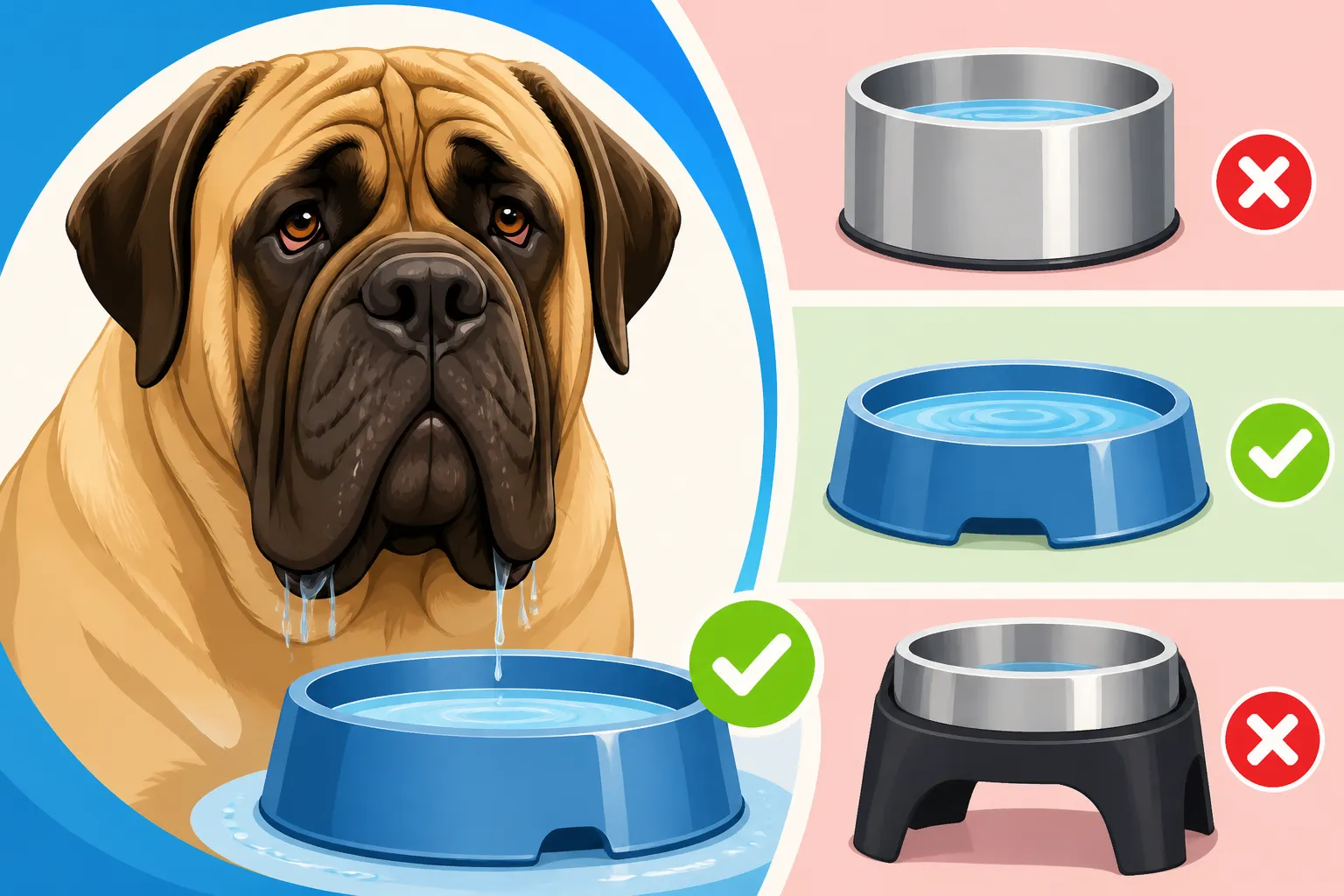
The standard, open-top bowl, whether ceramic, stainless steel, or plastic, is often the first and most common choice for dog owners. They're readily available, typically affordable, and easy to clean. You can find a huge variety on sites like Amazon or Chewy. For a Mastiff, however, these are essentially an invitation to a flood.
- Pros:
- Accessibility: Wide opening means easy access for drinking.
- Cleaning: Simple shapes make them straightforward to wash.
- Cost: Generally inexpensive.
- Capacity: Easy to find large sizes to hold enough water for a giant breed.
- Cons:
- Maximum Mess: The wide, open surface allows maximum jowl submersion and water retention, leading to extensive splashing and dripping after every drink.
- Spillage: Easily tipped over by an enthusiastic Mastiff, especially if lightweight.
- Contamination: Open bowls are more prone to collecting dust, debris, and even airborne particles.
For most Mastiff owners, the open bowl is quickly abandoned in favor of something, anything, that promises less mess. The sheer volume of water a Mastiff needs to drink in a day means constant refilling and, sadly, constant mopping if using a traditional bowl.
Slow Feeder and Splash-Proof Bowls: A Step in the Right Direction?
Many manufacturers have recognized the need for bowls that control drinking speed and minimize splashes. These often feature internal structures like ridges or floating discs that limit the surface area of the water available at any one time.
- Floating Disc Bowls: These bowls have a perforated disc that floats on top of the water. When your Mastiff pushes the disc down with their muzzle, a small amount of water wells up through the holes, allowing them to drink. This design significantly reduces the amount of water their jowls can scoop up and also prevents large gulps, which can be beneficial for breeds prone to bloat.
- Pros for Mastiffs: Dramatically reduces the amount of water held in jowls and lessens splatter from head shakes. Also helps with slower drinking.
- Cons for Mastiffs: Some Mastiffs might find it frustrating or challenging to learn how to use. The disc can sometimes get pushed out of place. Cleaning can be more involved due to multiple parts. The capacity can sometimes be smaller, requiring more frequent refills.
- No-Spill or "Travel" Bowls: These often feature a sloped, tapered design or a lip around the edge that catches splashes and funnels them back into the bowl. They're often marketed for car travel but can be surprisingly effective in the home.
- Pros for Mastiffs: Reduces accidental spills from nudging and can minimize the outward splash.
- Cons for Mastiffs: Doesn't fully address the jowl-soaking issue as the entire surface is still open. Some designs might still allow significant water to be carried out.
These types of bowls, which you can often find from brands like Kurgo or Lixit on retailers like Chewy, are definitely an improvement over the basic open bowl. They tackle some of the problems, but the inherent jowl design of a Mastiff means total dryness is still a distant dream for many.
Elevated Bowls: Good for Digestion, But What About the Drool?
Elevated feeders are often recommended for large breeds like Mastiffs to promote better posture and aid digestion by reducing neck strain during meal and water consumption. They can also look quite regal in your home, with many stylish options available. How High a Mastiff's Bowl Should Sit is an important consideration for their long-term health.
- Pros:
- Comfort: More comfortable drinking posture for tall dogs, potentially reducing strain on the neck and joints.
- Digestion: Some believe it can aid digestion and potentially reduce the risk of bloat (though scientific consensus on this is mixed, it's a common recommendation).
- Cleanliness (bowl area): Can keep the bowls cleaner by lifting them off the floor, away from crawling insects or floor debris.
- Cons:
- No Jowl Solution: An elevated bowl does absolutely nothing to prevent water from being carried out by jowls or from head shakes. The water still flies, just from a slightly higher vantage point.
- Stability: If the stand is lightweight, a large Mastiff can still knock it over.
- Cost: Elevated feeders, especially sturdy, attractive ones, can be more expensive than single bowls.
While elevated bowls offer benefits for your Mastiff's physical comfort and can make feeding more pleasant, they are not a standalone solution for the "waterfall" effect. You'll likely need to combine an elevated stand with a mess-reducing bowl design to truly tackle the issue.
What to Look For in a Mastiff-Friendly Water Bowl
Choosing the right water bowl for your Mastiff isn't just about picking the largest one. It's about smart design, durable materials, and understanding how these elements interact with your Mastiff's unique drinking style.
Material Matters
The material of your Mastiff's water bowl plays a crucial role in hygiene, durability, and even how much they enjoy drinking from it.
- Stainless Steel: This is often considered the gold standard for dog bowls, and for good reason. It's incredibly durable, resistant to rust and corrosion, and non-porous, meaning it won't harbor bacteria or odors. It's also dishwasher- safe, making cleanup a breeze.
- Pros: Hygienic, durable, easy to clean, doesn't absorb odors.
- Cons: Can be noisy if bumped, some dogs dislike the metallic taste (rare). Can get cold in winter, or warm in direct sun, changing water temperature.
- Ceramic: Ceramic bowls are heavy, which makes them less likely to be tipped over by a large Mastiff. They also look nice and can keep water cooler. However, they are prone to chipping and breaking.
- Pros: Heavy and stable, aesthetically pleasing, easy to clean if glazed and unchipped.
- Cons: Can chip or break if dropped, and once chipped, porous areas can harbor bacteria. Requires careful handling.
- Plastic: Plastic bowls are lightweight and inexpensive, but they are generally not recommended for Mastiffs. They can scratch easily, creating crevices where bacteria can grow, and some dogs can develop allergic reactions to plastic (known as "plastic chin acne").
- Pros: Inexpensive, lightweight (though this can be a con for Mastiffs).
- Cons: Prone to scratches and bacterial growth, can absorb odors, less durable, potential for allergic reactions. Not recommended for a giant breed.
When considering materials, stainless steel is often the best all-around choice for a Mastiff due to its hygiene and durability. Look for heavy-gauge stainless steel bowls, often available on Amazon, that won't easily dent or tip.
Design Features for Minimizing Mess
This is where you can truly make a dent in the water chaos. Specific design elements are engineered to reduce the amount of water your Mastiff can pick up and fling.
- Deep, Narrow Bowls: While it might seem counterintuitive to use a narrow bowl for a large dog, designs that are deeper with a smaller opening circumference can force your Mastiff to dip their muzzle more carefully, limiting the amount of water their jowls can scoop up. They'll still get wet, but less will be saturated.
- Splash-Proof and Anti-Spill Designs (as discussed above): Floating disc bowls are excellent for minimizing the immediate splash and the amount of water that clings to jowls. For example, some brands offer bowls with integrated floating inserts designed specifically for slobbery breeds, making them a popular find on sites like Chewy. These can be particularly helpful for dogs that like to play in their water or those that are just inherently sloppy drinkers.
- Weighted or Non-Skid Bases: A Mastiff can easily slide a lightweight bowl across the floor or even flip it. Look for bowls with a wide, heavy base or a non-skid rubber ring on the bottom. This prevents them from moving the bowl during drinking and reduces the chance of accidental spills. Even if the jowls are still wet, at least the entire bowl isn't ending up on its side.
Consider a multi-faceted approach here. A heavy, stainless steel bowl with a floating disc insert or a specifically designed anti-splash rim will offer the most protection against the watery aftermath.
Stability and Capacity
Beyond the material and specialized features, two fundamental aspects are non-negotiable for a Mastiff's water bowl: stability and adequate capacity.
- Stability: A Mastiff is a powerfully built dog, and even a slight bump or an enthusiastic drinking session can send a flimsy bowl skittering or, worse, overturning entirely. You need a bowl that stays put. This means looking for options with substantial weight, a wide footprint, and, ideally, a non-slip rubberized bottom. Ceramic bowls often offer inherent weight, but as mentioned, their fragility is a drawback. Solid stainless steel bowls with heavy bases or those designed to fit snugly into a weighted, non-tip stand are excellent choices. Imagine a two-hundred-pound dog nudging a lightweight bowl; it's less a nudge and more a minor earthquake. A stable bowl mitigates this common problem.
- Capacity: Mastiffs need a significant amount of water daily to stay hydrated. A small bowl, no matter how anti-splash it claims to be, will require constant refilling, which quickly becomes tiresome. While the mess-reducing features are crucial, they shouldn't come at the expense of adequate water supply. Look for bowls that hold at least 1-2 gallons of water. This ensures your Mastiff has access to fresh water throughout the day without you having to top it off every hour. Many larger capacity bowls are available through online retailers like Amazon, often specifically labeled for "giant breeds" or "large dogs." Combining a good capacity with mess-minimizing features is key.
| Bowl Type | Mess Reduction (Jowls/Splatter) | Stability for Mastiff | Cleaning Ease | Typical Cost | Best Feature for Mastiffs |
|---|---|---|---|---|---|
| Open (Standard) | Minimal | Low (if lightweight) | High | Low | Wide availability, easy to wash, high capacity easily found. |
| Floating Disc Bowl | High | Varies | Medium (multiple parts) | Medium | Significantly reduces jowl wetness and immediate splatter. |
| No-Spill (Travel) Bowl | Medium | Varies | High | Medium | Catches splashes and funnels them back into the bowl. |
| Elevated Feeder (with open bowl) | Minimal | High (if sturdy stand) | High | Medium-High | Improves posture, reduces neck strain. |
| Heavy, Narrow-Opening Bowl | Medium-High | High | High | Medium | Limits jowl access to water, hard to tip. |
Beyond the Bowl: Holistic Approaches to Managing Mastiff Water Woes
Even with the perfect bowl, a Mastiff's jowls will always be a factor. Therefore, a truly effective strategy involves more than just the vessel itself; it encompasses environmental adjustments and training.
Strategic Placement and Floor Protection
Where you place your Mastiff's water bowl can be just as important as the bowl itself. Think of it as creating a designated "splash zone" that's easy to clean and contains the mess.
- Location, Location, Location: Place the bowl in a tiled area, like a kitchen or utility room, where water won't damage flooring or soak into carpets. Avoid placing it near walls with delicate paint or wallpaper, or next to furniture you don't want constantly damp. If possible, consider having a secondary water station outdoors on a patio or concrete slab, especially if your Mastiff spends time outside. This allows for messier drinking away from your indoor living spaces.
- Heavy-Duty Mats and Runners: Invest in large, absorbent, and waterproof mats to place under and around the water bowl. Look for mats designed for entryways or utility areas, often made of rubber-backed material that won't slide around. Some owners use industrial-grade anti-fatigue mats or even cut pieces of vinyl flooring. The goal is to create a perimeter that catches all errant splashes and drips, making cleanup as simple as wiping down the mat or hosing it off. These mats need to be big enough to account for the force of a Mastiff's head shake, so think generously in terms of size. A Mastiff's ability to create a puddle extends far beyond the immediate footprint of the bowl.
Post-Drink Rituals and Training
Believe it or not, you can teach an old (or young!) Mastiff new tricks, even when it comes to managing their post-drink drool. This isn't about stopping them from shaking their head entirely, but about channeling that energy more controllably.
- The "Wipe Your Mouth" Cue: With consistent positive reinforcement, you can train your Mastiff to come to you for a quick jowl wipe after drinking, or at least to shake their head in a designated area. As soon as they finish drinking, say "Wipe your mouth!" and gently use a dedicated towel to absorb the excess water from their jowls. Reward them immediately with praise or a small treat. Over time, many Mastiffs will learn to approach you or a waiting towel after drinking. This takes patience and repetition, but the payoff in reduced mess is immense. How Often a Mastiff's Jowls Need Wiping highlights that this is an ongoing task regardless, but training can make it more predictable.
- Designated Shake Zone: If training to wipe is too ambitious, try to create a "shake zone." As your Mastiff lifts its head from the bowl, direct them to a specific spot (like over their mat, or even just outside) before they unleash the torrent. A quick "Go shake!" command, followed by praise, can help them associate a particular area with their post-drink ritual. This won't eliminate the mess, but it can confine it to a more manageable space.
Hydration Needs
While all these strategies focus on minimizing mess, it’s absolutely critical never to compromise your Mastiff’s access to fresh, clean water. They are a large breed and require significant hydration, especially in warmer weather or after exercise.
- Constant Access: Always ensure multiple sources of water are available throughout your home, particularly if you're trying out a new bowl design that might initially confuse them. Never restrict water access to try and control mess.
- Water Quality: Just as important as quantity is quality. Keep bowls scrupulously clean to prevent bacterial buildup. A quick rinse and refill with fresh water several times a day is ideal, and a thorough wash with soap and water every day or two. This is particularly important with breeds that have deep jowls, as they can sometimes leave food debris or saliva in the water.
- Recognizing Dehydration: Be vigilant for signs of dehydration, such as lethargy, dry gums, or sunken eyes, especially if you've introduced a new bowl that they might be hesitant to use. Your Mastiff's health always comes first. For some Mastiffs with specific health conditions, like those with cystinuria, ensuring adequate water intake is paramount to their well-being. How Much Water a Cystinuric Mastiff Needs underscores the critical role hydration plays in managing certain health challenges for the breed. Don't let the quest for a clean floor inadvertently impact their health.
Choosing the right water bowl and implementing strategic management techniques can significantly reduce the "waterfall effect" of a Mastiff's drinking habits. It's a journey of trial and error, but with patience and the right tools, you can keep your home drier and your Mastiff happily hydrated.
Disclaimer
This article is for general informational purposes only and does not constitute professional advice. Laws, prices and regulations vary by location and change over time. Consult a qualified professional for guidance on your specific situation.