How the Mastiff Was Bred Away From Fighting
It’s a common misconception, isn't it, to look at a majestic Mastiff and immediately think of a fierce guard dog or, worse, a fighting beast? Many people struggle to reconcile the sheer size and imposing presence of this incredible breed with the gentle, loving giants we know them to be today. This guide aims to pull back the curtain on the Mastiff’s history, showing how deliberate efforts and changing societal norms transformed them from their brutal past into the beloved family companions they are now.
The Mastiff's Ancient and Brutal Past
Let's be honest, the Mastiff hasn't always been the couch potato it often is today. Tracing their lineage back through millennia, you'll find a history steeped in conflict and demanding roles. It's a past that can be unsettling for those who adore the modern Mastiff, and it’s a past that often leads to unfair assumptions about the breed’s inherent temperament. We have to acknowledge this history to truly appreciate how far they've come.
From Roman Arenas to English Bear-Baiting
Imagine ancient Rome, where colossal dogs were thrown into brutal arenas, pitted against lions, bears, and gladiators. These powerful canines, likely ancestors of today's Mastiffs, were prized for their strength and ferocity. They weren't just fighting dogs; they were war dogs, marching alongside legions, used to intimidate and incapacitate enemies. It’s a stark contrast to the drooling, affectionate face nudging your hand for a treat. This history, unfortunately, is deeply embedded in the public consciousness, even if it's thousands of years old. People often assume that such a powerful build must imply an aggressive nature, and for centuries, that was indeed cultivated.
Fast forward many centuries to medieval England, and you find these formidable dogs, often called "Bandogs" or "Tie Dogs," still engaged in blood sports. Bear-baiting and bull-baiting were sickeningly popular forms of entertainment, and the Mastiff was at the forefront. Their immense strength, powerful jaws, and tenacious grip made them formidable participants. This period further cemented the image of the Mastiff as a brutal, unyielding fighter, a far cry from the serene dogs many of us share our homes with. It’s a reputation that took considerable time and effort to shed.
The "Bond Dog" Era
Beyond the bloody spectacles, Mastiffs also had a less glamorous, but equally demanding, role: the "bond dog" or "tie dog." These Mastiffs were typically chained during the day, released at night to guard estates, farms, and even butcher shops from poachers and thieves. Their sheer size and intimidating bark were often enough to deter intruders. This wasn't a job for a shrinking violet; it required a dog with courage, territorial instincts, and a formidable presence. This background further reinforced their image as powerful, potentially dangerous animals, designed for defense and confrontation.
The practicalities of keeping such a large, powerful dog in an agrarian society meant they were valued for their utility rather than their companionship. Their socialisation was often minimal, and their training was focused on their guarding duties, sometimes encouraging aggression. When we talk about The Mastiff That Stood Over Sir Piers Legh at Agincourt, we're talking about a dog with centuries of this type of hard-nosed purpose. It wasn't until much later that people began to appreciate their softer side, or even to breed for it.
The Shift Towards Guardianship and Companionship
The turning point for the Mastiff, and indeed for many breeds used in blood sports, came with a shift in public consciousness and, crucially, legislative action. This wasn't an overnight change; it was a gradual evolution driven by changing moral standards and a greater understanding of animal welfare. It took dedicated individuals who saw beyond the brute strength to the loyal heart within.
The Banning of Blood Sports
The 19th century brought significant changes to England, including the eventual outlawing of barbaric blood sports like bear-baiting and bull-baiting. The Cruelty to Animals Act of 1835 was a landmark piece of legislation that began to dismantle these traditions. With their primary "job" now illegal, the Mastiff breed faced a crossroads. Would they fade into obscurity, or would their inherent loyalty and impressiveness find new purpose? This period marked the beginning of a deliberate effort to breed for a different set of traits. The focus began to shift away from pure aggression and towards more stable, reliable temperaments suitable for a changing society.
This legislative change didn't just end the public spectacle; it fundamentally altered the breeding priorities. Breeders no longer needed to produce the most savage fighting dog; instead, they started to value dogs that were impressive protectors, yet tractable and calm. It was a slow process, involving many generations of selective breeding, but it was absolutely critical to the Mastiff's survival and transformation. Without this pivot, the breed as we know it might not exist today.
Changing Perceptions and Selective Breeding
As society evolved, so too did the role of dogs. The concept of a "pet" or "companion animal" began to take root more firmly, especially among the middle and upper classes. Instead of just working animals, dogs were invited into homes. This new environment demanded a different kind of dog – one that was loyal, yes, but also calm, gentle, and trustworthy. This shift in human desire directly influenced breeding goals for the Mastiff. Breeders began actively selecting for temperament, choosing dogs that exhibited less aggression and more stability.
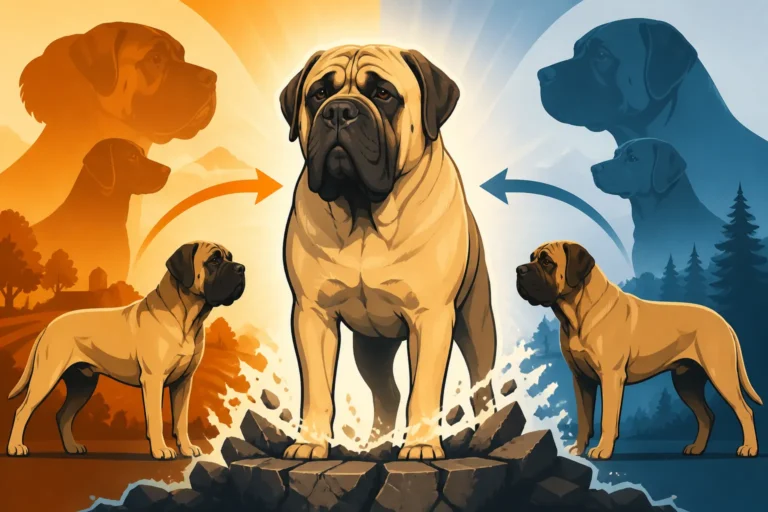
Dedicated individuals and fledgling breed clubs played a monumental role during this time. They saw the potential for a magnificent, protective, yet gentle companion in the Mastiff. They started to standardise the breed, emphasising not just physical attributes but also a stable character. This was crucial for rebuilding the breed's reputation and ensuring its long-term future. It was a conscious decision to move away from the historical baggage and cultivate the gentle giant we recognise today. This is also why understanding the importance of Which Four Tests the Mastiff Club of America Requires is so vital for responsible breeders today – it's a continuation of ensuring sound health and temperament.
The Modern Mastiff: A Gentle Giant
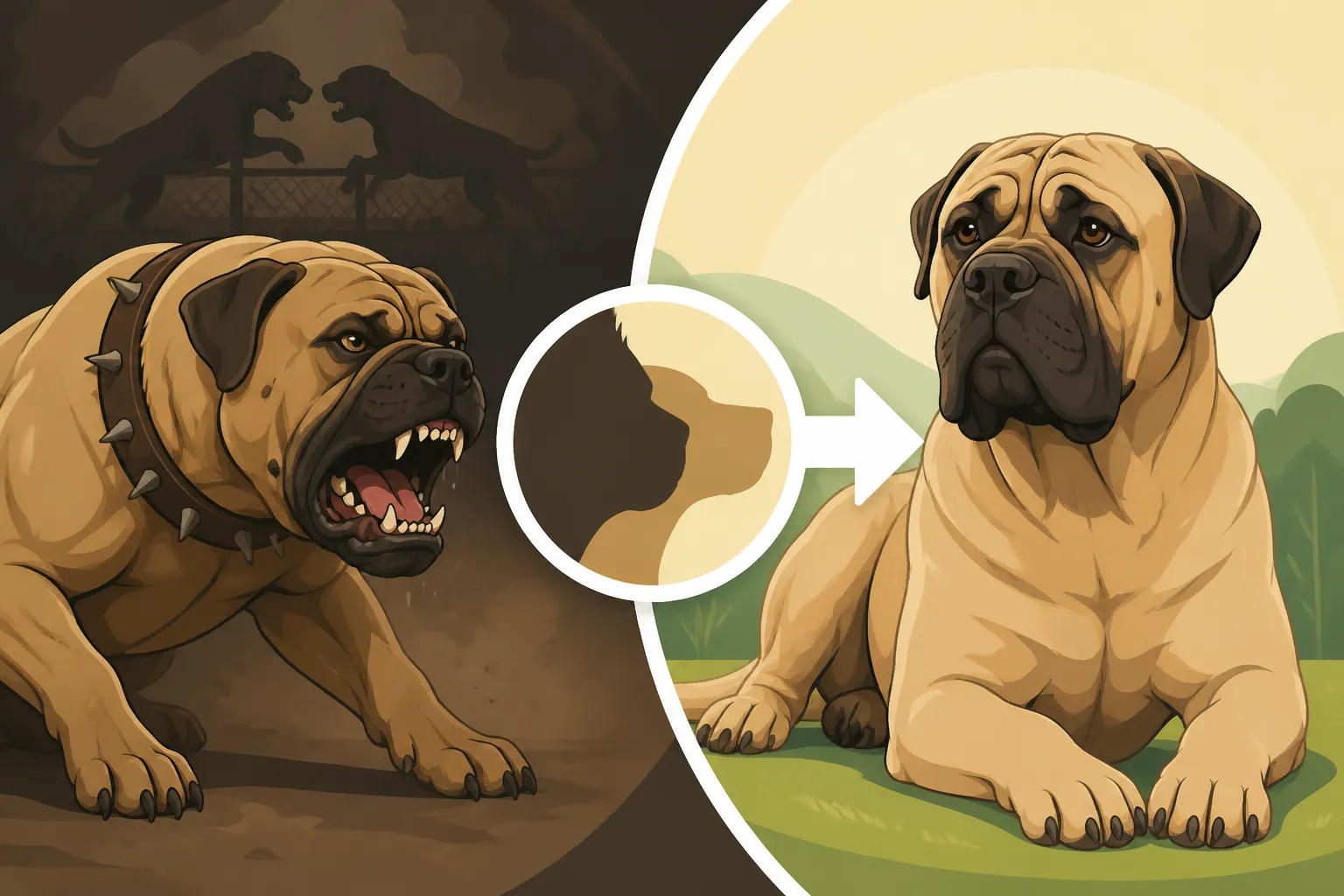
Today, the Mastiff stands as a testament to what dedicated breeding and a shift in human perception can achieve. The imposing stature remains, but the temperament has been lovingly refined over generations, leading to a dog that defies its historical reputation. If you've ever spent time with a well-bred, well-socialised Mastiff, you'll know exactly what I mean.
Temperament Over Aggression
The modern Mastiff is celebrated for its calm, benevolent disposition. They are renowned for being remarkably gentle with children and incredibly tolerant of other pets, often acting as "nanny dogs" for their families. Their protective instincts are still very much present, but they manifest as a watchful guardianship rather than unprovoked aggression. A Mastiff will typically place itself between its family and a perceived threat, using its size and deep bark as a deterrent. They are rarely quick to anger and prefer to observe and assess a situation before acting. This isn’t a dog looking for a fight; it’s a dog looking to keep its loved ones safe.
It's a misconception to think that their historical fighting past makes them inherently dangerous. A properly bred and socialised Mastiff is typically a placid, affectionate, and quiet companion. They are often described as "dignified" and "gentle," embodying a surprising sensitivity for such a large dog. They bond deeply with their families and thrive on being included in household activities, even if those activities mostly involve napping on the sofa. Their sheer presence is usually enough of a deterrent for any unwelcome visitors, making them excellent, low-key protectors.
| Trait | Historical Mastiff (Pre-19th Century) | Modern Mastiff (Post-19th Century) |
|---|---|---|
| Primary Role | Fighting, War Dog, Estate Guardian | Family Companion, Guardian |
| Desired Temperament | Ferocious, Aggressive, Tenacious | Calm, Gentle, Loyal, Patient |
| Socialization Focus | Minimal, utility-driven | Extensive, family integration |
| Interaction with Strangers | Wary, confrontational | Reserved, observant, then accepting |
| Protection Style | Direct physical engagement | Deterrence by presence, bark, body block |
| Breeding Goal | Maximize strength, fighting prowess | Optimize temperament, health, conformity |
The Role of Responsible Breeders and Clubs
The transformation of the Mastiff breed is largely owed to the tireless efforts of responsible breeders and dedicated breed clubs. Organisations like the Mastiff Club of America have played a pivotal role in establishing breed standards that not only define physical characteristics but also place a strong emphasis on temperament. They promote ethical breeding practices, encouraging health testing for conditions like hip and elbow dysplasia, cardiac issues, and eye diseases. It’s a holistic approach to ensuring the continued health and wonderful temperament of the breed.
These breeders carefully select breeding stock based on health clearances and proven temperaments, not just impressive size or looks. They strive to produce puppies that are not only sound in body but also in mind. They understand that a Mastiff's size demands a stable, predictable personality, and they work diligently to maintain these traits. They also educate prospective owners on the importance of early socialization and training to nurture the best qualities in their Mastiff puppies. It's a testament to these efforts that Mastiffs are now thriving as beloved family members. The CHIC Tests Both Mastiff Parents Must Clear are paramount in this endeavour.
Understanding the Mastiff's True Nature Today
It’s crucial to look beyond the imposing physique and understand the heart of the modern Mastiff. Their size is often the first thing people notice, but it's their gentle spirit that truly defines them. For anyone considering bringing one of these magnificent dogs into their home, grasping this distinction is absolutely vital.
Size as a Deterrent, Not an Offense
Let’s face it: a Mastiff is a big dog. We're talking about a breed that can easily weigh over 150 pounds, with some males pushing 200 pounds or more. This sheer size alone is often enough to deter unwanted visitors, making them excellent natural guardians without ever needing to show aggression. They don't need to be aggressive because their presence speaks volumes. A deep, resonant bark from a dog that looks like a small pony is usually all it takes to send an unexpected guest reconsidering their intentions. This natural deterrent is a key reason why many families feel incredibly safe with a Mastiff in the house.
The misconception persists that a large dog must be aggressive or difficult to handle. This simply isn't true for the well-bred Mastiff. Their size actually often comes with a calm, almost lazy, disposition. They are more likely to lean against you for comfort or sprawl across a doorway, acting as an affectionate, immovable object. When people ask How a Mastiff Judges a Stranger at the Door, the answer is usually with a calm, watchful gaze, assessing the situation before deciding if a robust bark is even necessary. Many Mastiff owners find that a friendly wag of the tail, once a new acquaintance has been cleared, is the most "aggressive" thing their dog will do.
Living with a Modern Mastiff
Bringing a Mastiff into your home means preparing for a lot of love, a fair amount of drool, and a dog that truly sees itself as a lapdog, no matter how big it gets. They thrive on companionship and want to be wherever their people are. While they appreciate a yard, they are not dogs that will patrol endlessly; they're generally happy with a moderate walk and then settling down for a long nap, preferably somewhere comfortable. Finding a bed that can withstand a two-hundred-pound dog is a perpetual quest for Mastiff owners, but it's worth it for their comfort and joint health. Chewy, for instance, offers a great selection of orthopedic beds that can handle the weight and provide the necessary support for these giants.
Training is essential, not because Mastiffs are inherently difficult, but because managing a dog of their size requires respect and clear communication. They are intelligent but can be delightfully stubborn. Positive reinforcement and patience go a long way. They learn best with gentle methods, as Why Harsh Correction Ruins a Mastiff is something every owner quickly discovers. A confident, kind leader is what they need, not a heavy hand. Regular vet check-ups are also crucial for maintaining their health, and investing in high-quality food, perhaps from a brand like Chewy, formulated for large breeds, is important for their growth and longevity.
Today’s Mastiff is a far cry from its ancient ancestors, representing centuries of thoughtful breeding and evolving human-canine relationships. They are loyal, affectionate, and incredibly gentle, making them wonderful companions for those prepared for a very large, very loving family member. Their intimidating size is their most formidable defense, but their tender heart is their greatest treasure.
Disclaimer
This article is for general informational purposes only and does not constitute professional advice. Laws, prices and regulations vary by location and change over time. Consult a qualified professional for guidance on your specific situation.